Kreousa was a daughter of Erechtheus, king of Athens, and a sister of Prokris and Oreithyia (Apollodorus 3.15.1, paraphrased). She married Xouthos, son of Hellen, and was mother of Achaios and Ion, ancestors of the Achaeans and the Ionians (Apollodorus 1.7.3; Pausanias 7.1.2, paraphrased).
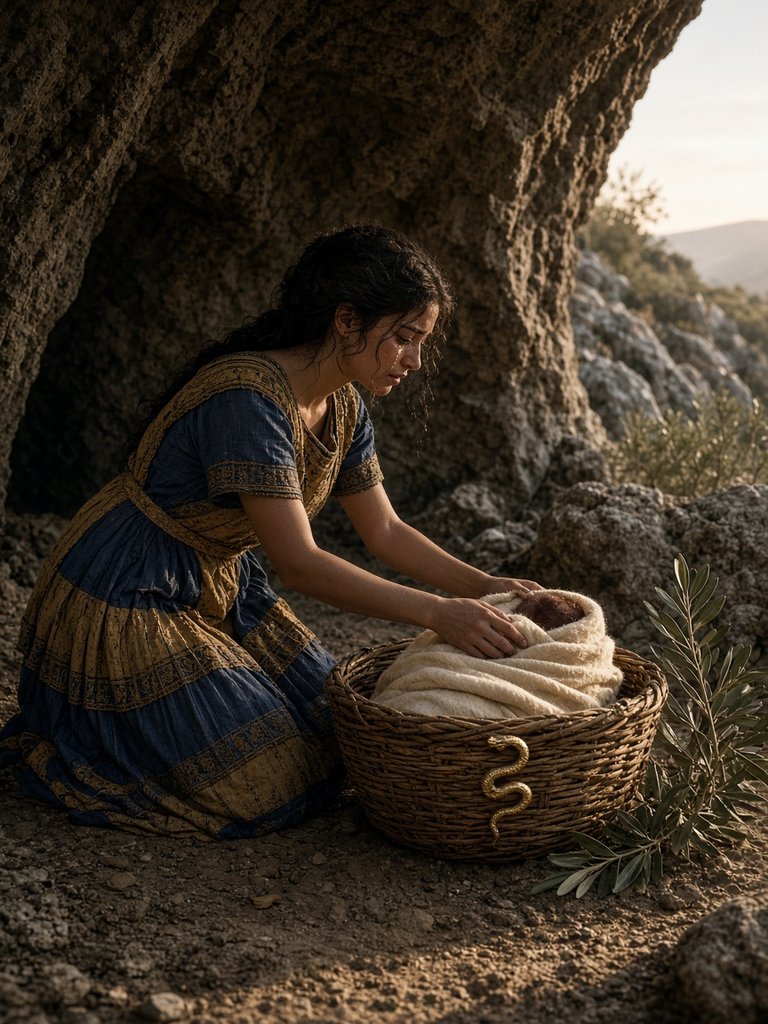
In Euripides’ Ion she has a secret. As a girl she was taken by Apollo in a cave under the Long Rocks of the Acropolis, bore a son there in secret, and left him in a round cradle with tokens, believing he would die. Hermes carried the child to Delphi (Ion 1–56, 881–922, paraphrased).
Years later, childless, she came with Xouthos to consult the oracle. When Apollo gave Xouthos the temple boy as his son, Kreousa, in bitterness, plotted to poison him; discovered, she fled to the altar, and the boy would have killed her until the priestess brought out the old cradle, and she recognized her son. Athena appeared to confirm the truth (Ion 517–1622, paraphrased).
Epithets
- Ἐρεχθηΐς · Erechthēïs
- daughter of Erechtheus
Symbols and virtues
A hidden birth, a mother’s grief, and recognition. Symbols: the cave, the cradle, the serpent tokens.
Myths
- Daughter of Erechtheus. Apollodorus 3.15.1.
- Wife of Xouthos. Apollodorus 1.7.3; Pausanias 7.1.2.
- The child in the cave. Euripides, Ion 1–56.
- The poison and the recognition. Euripides, Ion 1106–1622.
Sources
Euripides, Ion; Apollodorus 1.7.3, 3.15.1; Strabo 8.7.1; Pausanias 7.1.2–5.
Quotations in public-domain translations (Evelyn-White 1914, Butler 1898/1900, Taylor 1792); other authors paraphrased.