The Symposium, Wine Service, and Ceramic Typology
In ancient Greece, wine (oinos) was rarely drunk neat. To drink unmixed wine (akraton) was considered a sign of barbarism; civilized Greeks mixed their wine with water in large communal vessels (kraters), adjusting the ratio to the tone of the gathering. This ritual took place at the symposium (symposion, literally "drinking together"), an exclusive elite male drinking party that combined political debate, philosophy, poetry, music, and playful games like kottabos.
The vessels crafted for the symposium were masterpieces of ceramic engineering and artistic expression. Potters used iron-rich clay and a sophisticated three-stage oxidation-reduction-reoxidation firing process to achieve the iconic glossy black gloss, contrasted against the natural red clay body or highlighted with black-figure and red-figure painting. Each vessel type had a strict functional form designed for a specific phase of the wine service: mixing, ladling, pouring, and drinking.
1. The Krater (Mixing Bowl)
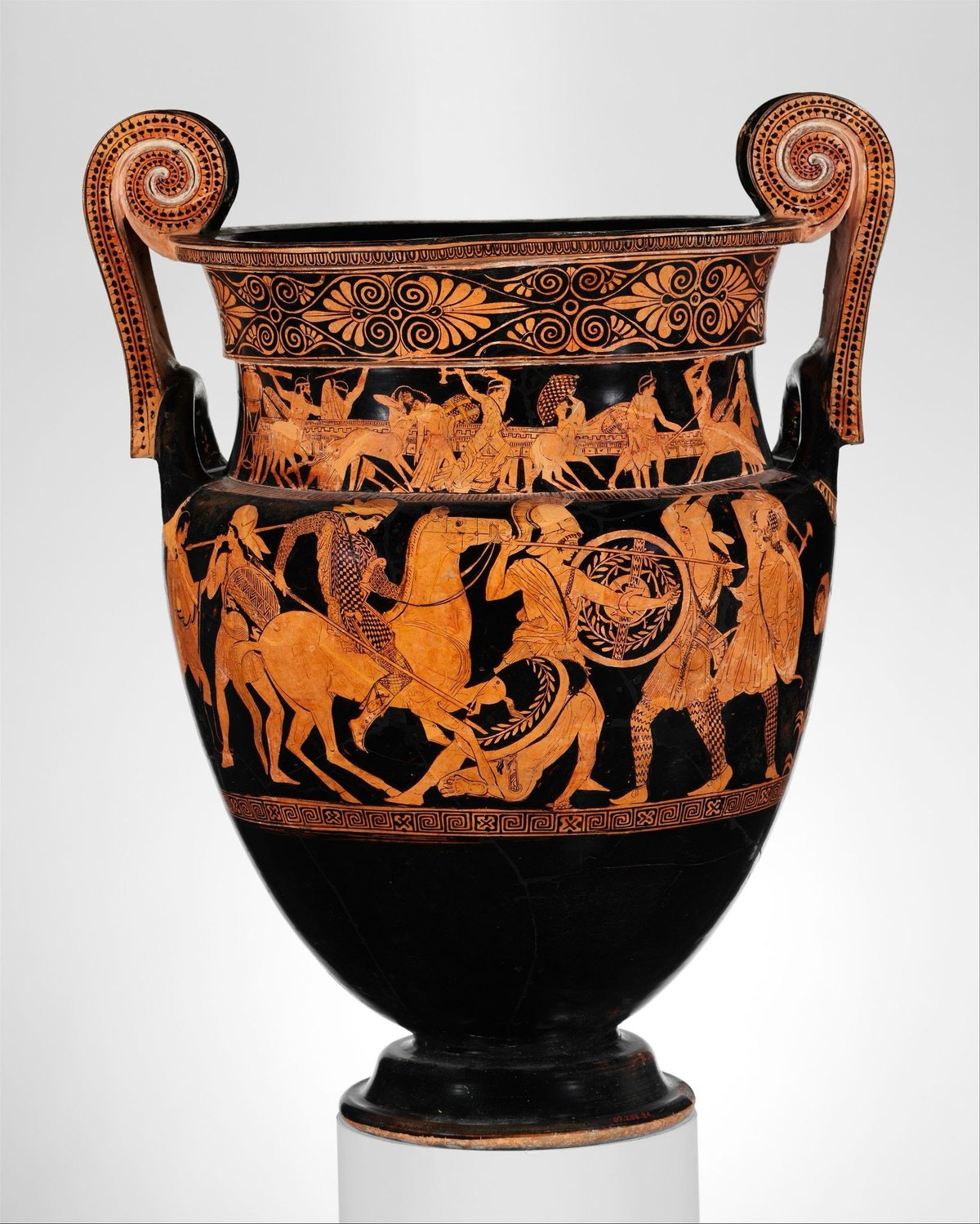
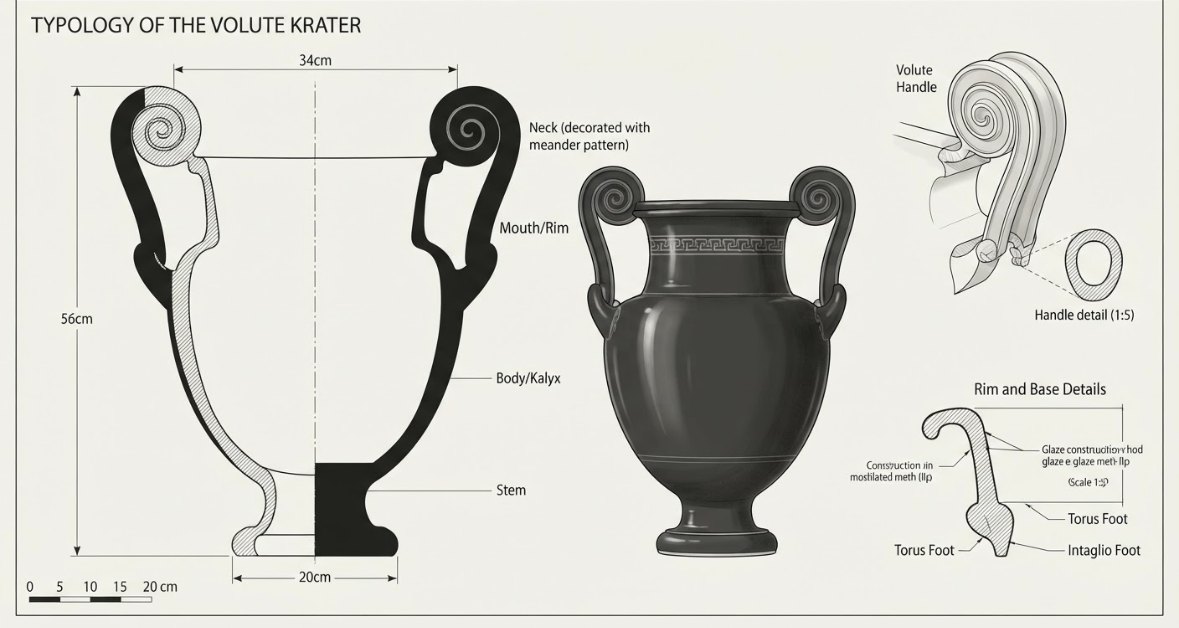
Function and Use: The krater (from kerannymi, "to mix") stood at the literal center of the symposium. Placed on the floor of the banquet room, it held the bulk mixture of water and wine managed by the symposiarch (master of ceremonies). Slaves ladled the mixture from the krater into pitchers (oinochoai) for distribution to individual drinking cups.
Morphological Characteristics:
- Wide Mouth & Deep Body: Designed for easy access by ladles (kyathoi) and to allow vigorous stirring of wine, water, and sometimes aromatics or spices.
- Distinct Sub-types: Variations include the column-krater (with heavy pillar-like handles), volute-krater (with grand spiraled handles, sometimes used as grave markers), calyx-krater (shaped like an inverted flower calyx), and bell-krater (resembling an inverted bell).
- Black Gloss Application: Typically a rich, glossy black exterior framing detailed figural friezes, with the interior fully glazed to keep it watertight.
2. The Kylix (Drinking Cup)
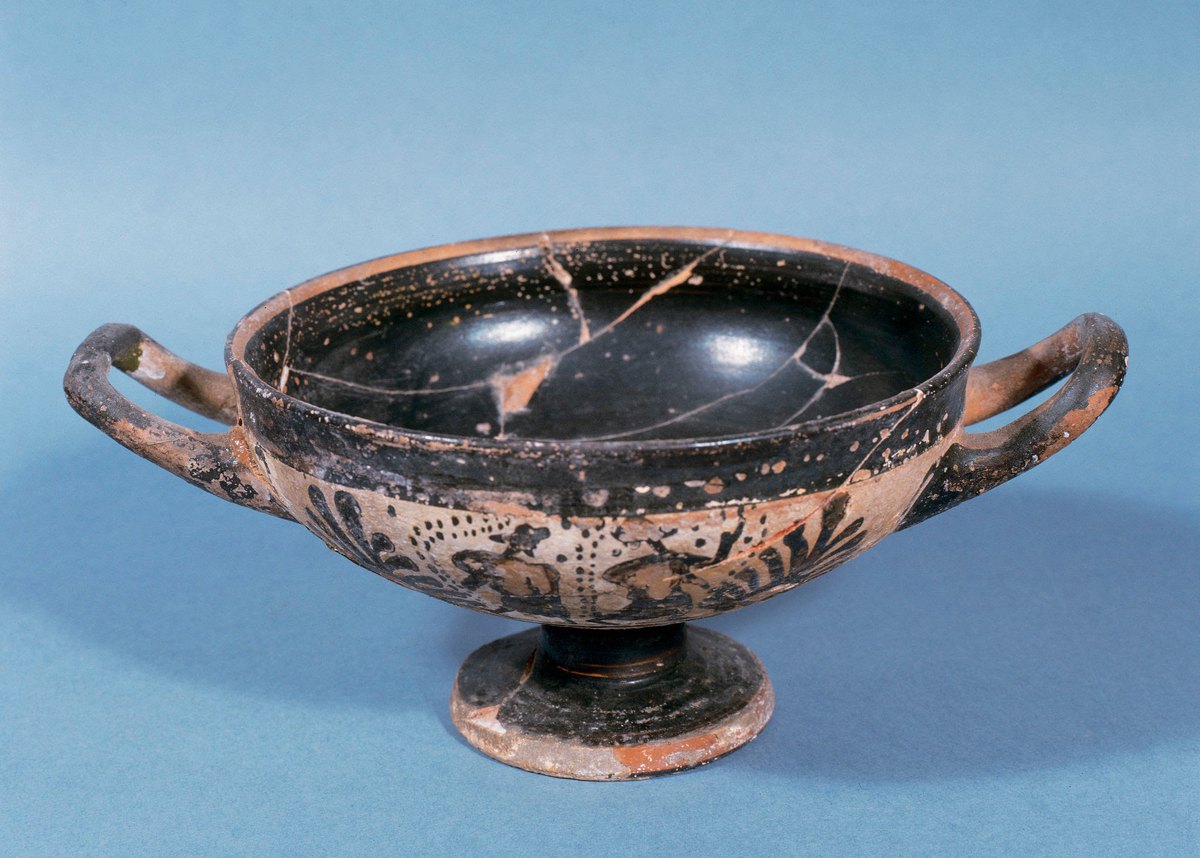
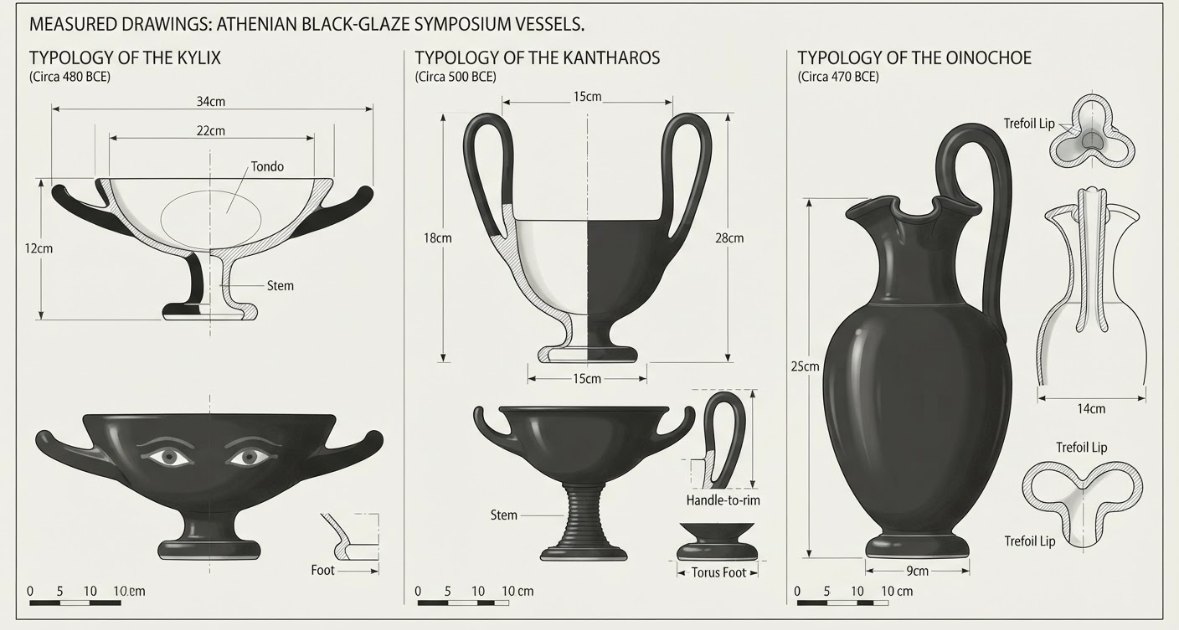
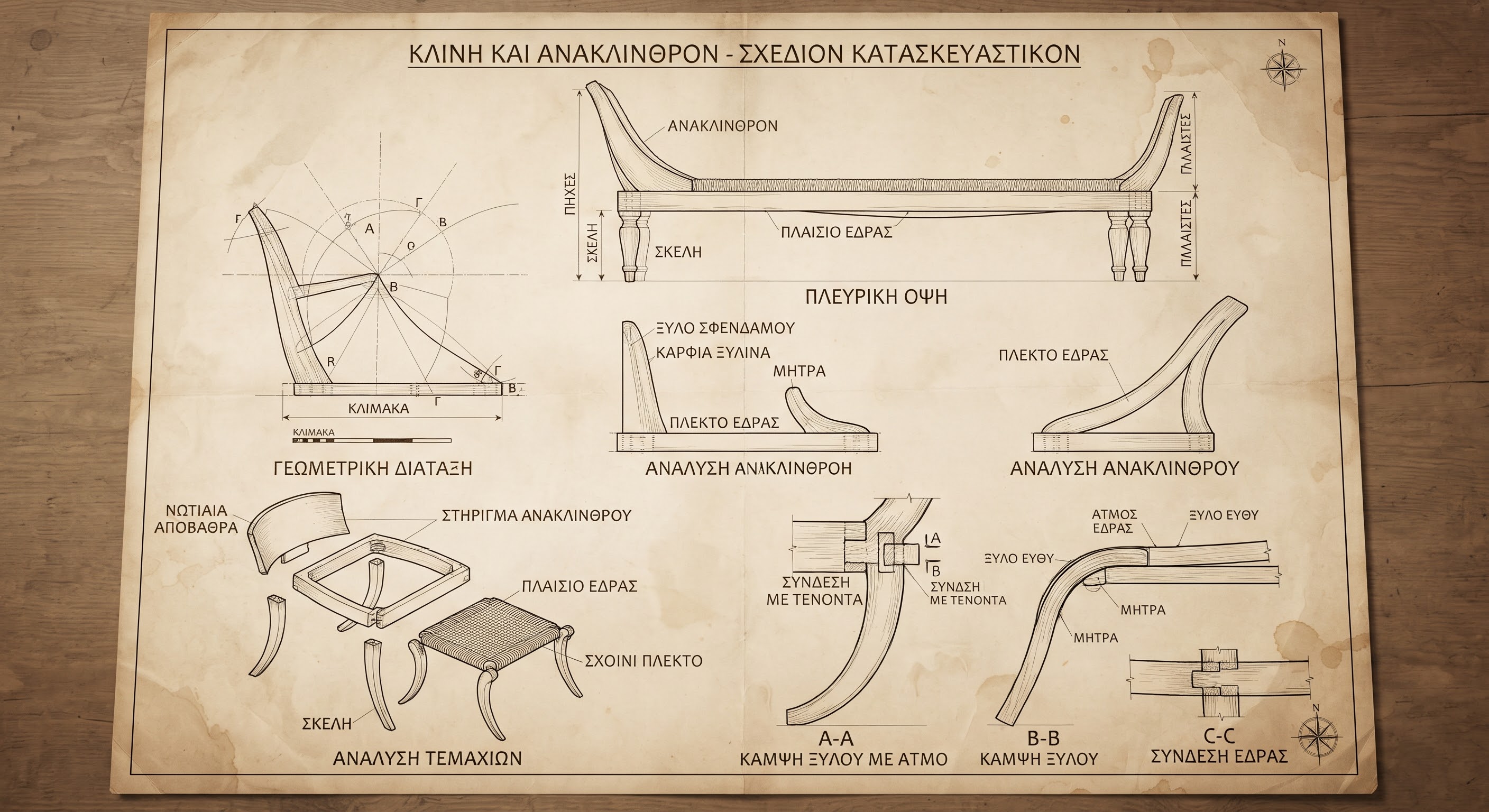
Function and Use: The kylix was the quintessential symposium drinking cup. Its wide, shallow profile meant that drinkers reclining on couches (klinai) could empty the cup while looking across at their companions or gazing down into the interior medallion (tondo), which often featured playful, mythological, or satirical wine-themed imagery revealed only as the wine was drained.
Characteristics:
- Shallow Bowl & Broad Foot: A wide, shallow basin balanced on a slender stem rising from a conical foot.
- Horizontal Handles: Two symmetrical horizontal handles extend outward from the rim or just below it, so the cup can be held easily with one or two hands while reclining.
- The Tondo: The interior circular field is a primary canvas for vase painters, creating a dramatic reveal as the drinker finished the contents.
3. The Kantharos (Deep Drinking Cup)
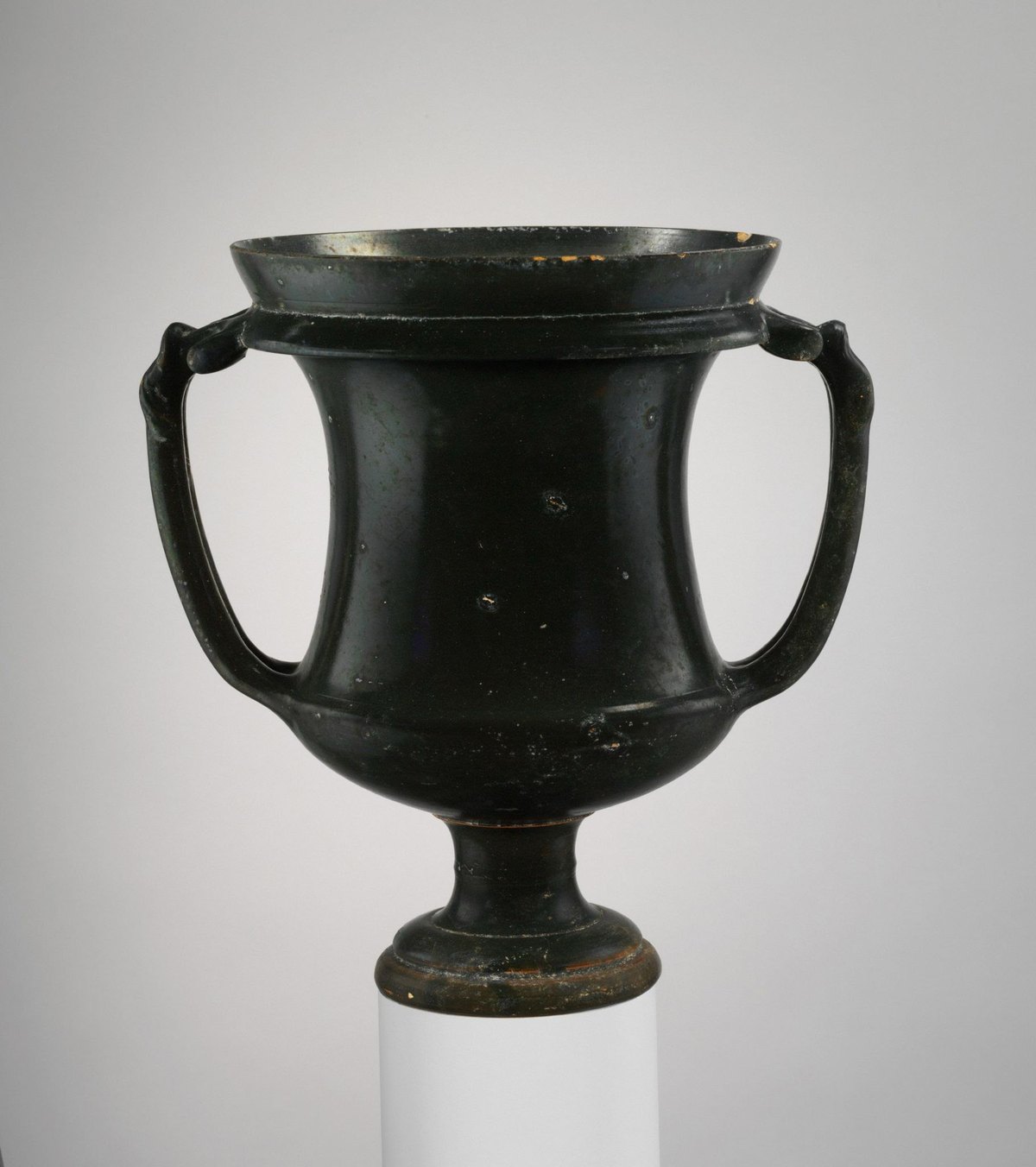
Function and Use: The kantharos was a deep drinking cup closely associated with Dionysus, god of wine and theater, and is often shown in art held by Dionysus or his followers (satyrs and maenads). With its capacity and tall vertical handles, it was often used for toasts, ritual libations, or the heavier drinking phases of the symposium.
Characteristics:
- Deep Basin & High Loop Handles: A deep cup body with prominent high-swung vertical handles that rise above the rim.
- Pedestal Base: Usually set on a high ring or trumpet-shaped foot.
- Black Gloss Finish: Often fine, metallic black-gloss monochrome (Classical or Hellenistic black-gloss wares), emphasizing clean lines over painted decoration.
4. The Oinochoe (Wine Pouring Jug)
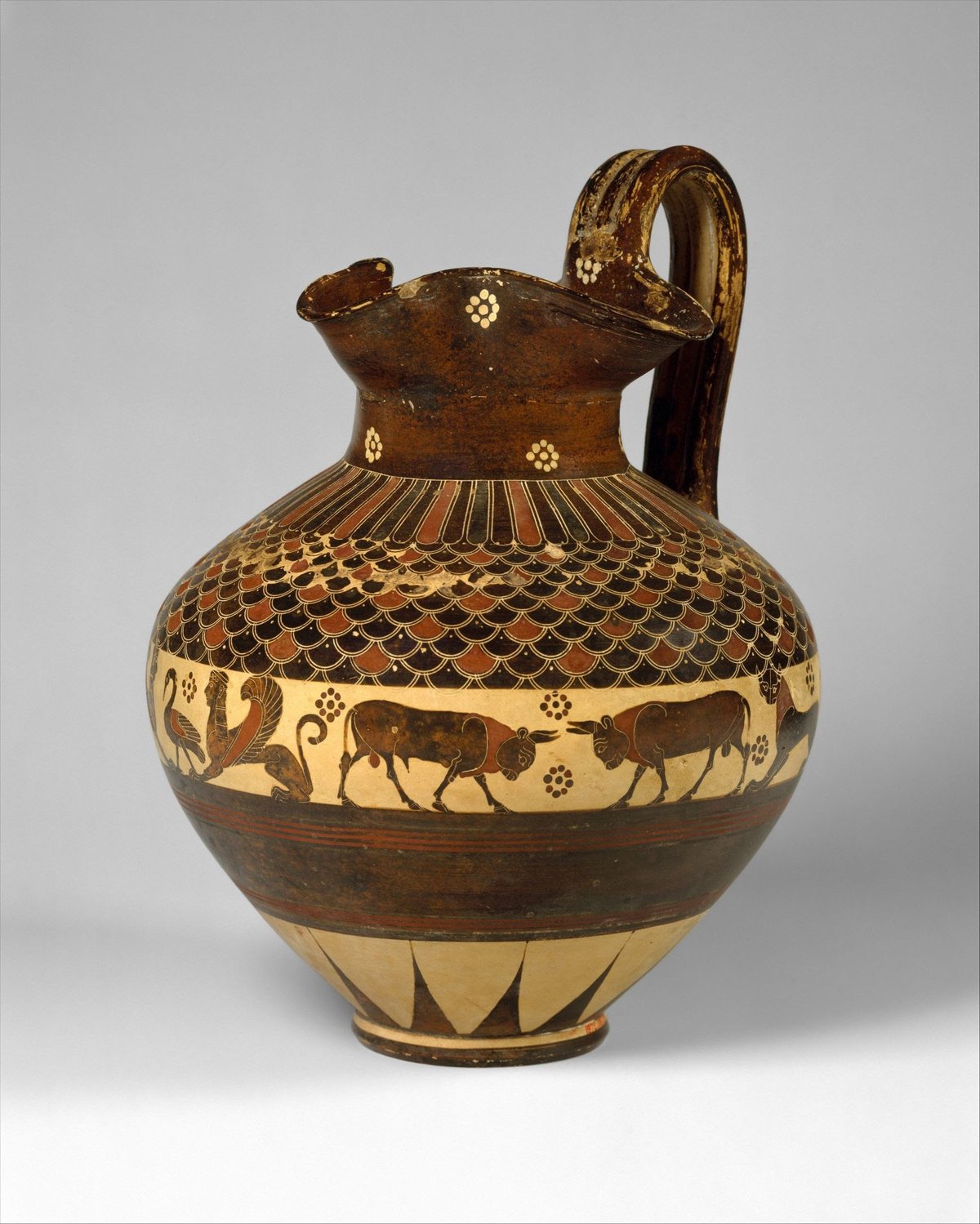
Function and Use: The oinochoe was the main vessel for carrying mixed wine from the central krater to individual cups like the kylix and kantharos. Slaves or cupbearers (oinochooi) carried the jug around the room to refill guests' cups through the evening.
Characteristics:
- Trefoil Lip: A three-lobed mouth that channels liquid smoothly into cups without spilling.
- Single Vertical Handle: A high-arched loop handle opposite the spout for a secure grip when pouring.
- Body Shapes: Various bulbous or ovoid bodies with flat or ring bases, either fully black-glossed or decorated with friezes of animals and mythological scenes.