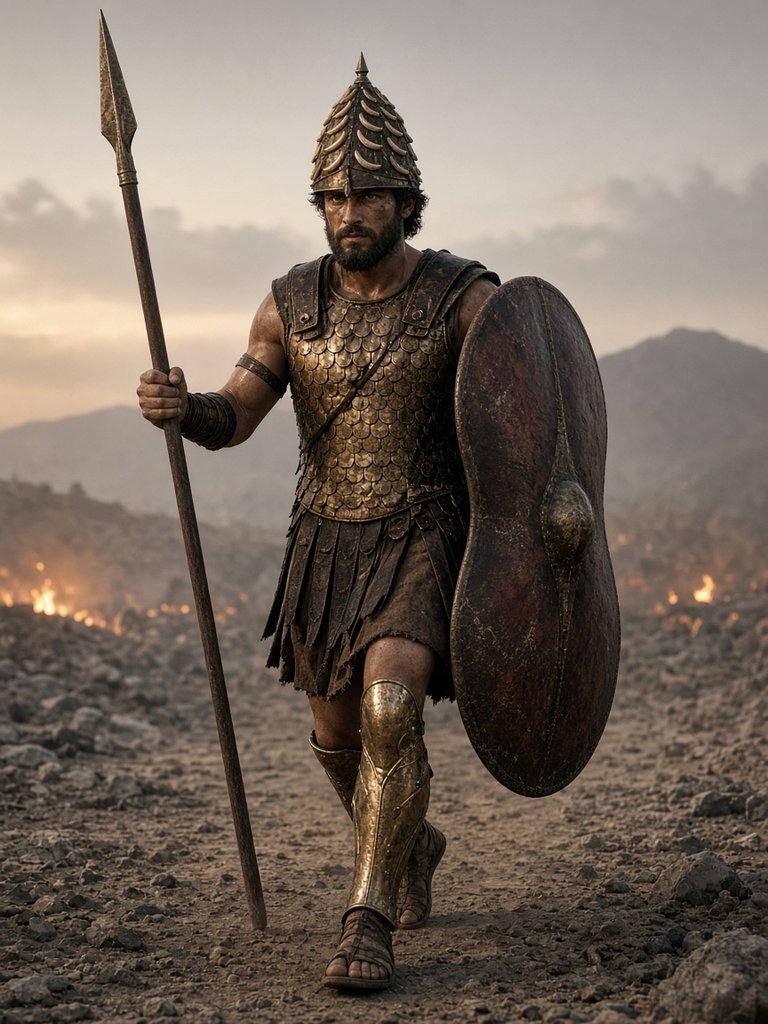
Diomedes, son of Tydeus, leads the men of Argos and Tiryns to Troy. In the fifth book of the Iliad Athena gives him his day of glory: “She made a stream of fire flare from his shield and helmet like the star that shines most brilliantly in summer after its bath in the waters of Oceanus” (Iliad 5.4–6, tr. Butler).
With her help he wounds Aphrodite as she carries Aineias from the field, and then Ares himself (Iliad 5.330–351, 5.855–863, paraphrased). Meeting the Lycian Glaukos he finds that their grandfathers were guest-friends, and they exchange armour, gold for bronze (Iliad 6.215–236, paraphrased). With Odysseus he goes on the night raid in which they kill the spy Dolon and the Thracian king Rhesos (Iliad 10, paraphrased).
Later tradition sent him west to Italy, where he founded Argyripa in Daunia and refused to fight again against the Trojans (Virgil, Aeneid 11.243–295; Strabo 6.3.9, paraphrased). Pindar says that Athena made him immortal (Nemean 10.7, paraphrased).
Epithets
- Τυδεΐδης · Tudeïdēs
- son of Tydeus
- βοὴν ἀγαθός · boēn agathos
- good at the war-cry
Symbols and virtues
Courage guided by wisdom, and loyalty to a guest-friend. Symbols: the blazing helmet, the spear, the horses of Rhesos.
Myths
- His day of glory. Iliad 5.1–8.
- Wounding Aphrodite and Ares. Iliad 5.330–351, 5.855–863.
- Glaukos and the exchange of armour. Iliad 6.215–236.
- The night raid. Iliad 10.
- Argyripa. Virgil, Aeneid 11.243–295.
In the poets
“She made a stream of fire flare from his shield and helmet like the star that shines most brilliantly in summer after its bath in the waters of Oceanus.”Homer, Iliad 5.4–6, tr. Samuel Butler (1898), public domain.
Sources
Homer, Iliad 5, 6.215–236, 10; Pindar, Nemean 10.7; Virgil, Aeneid 11.243–295; Strabo 6.3.9.
Quotations in public-domain translations (Evelyn-White 1914, Butler 1898/1900, Taylor 1792); other authors paraphrased.