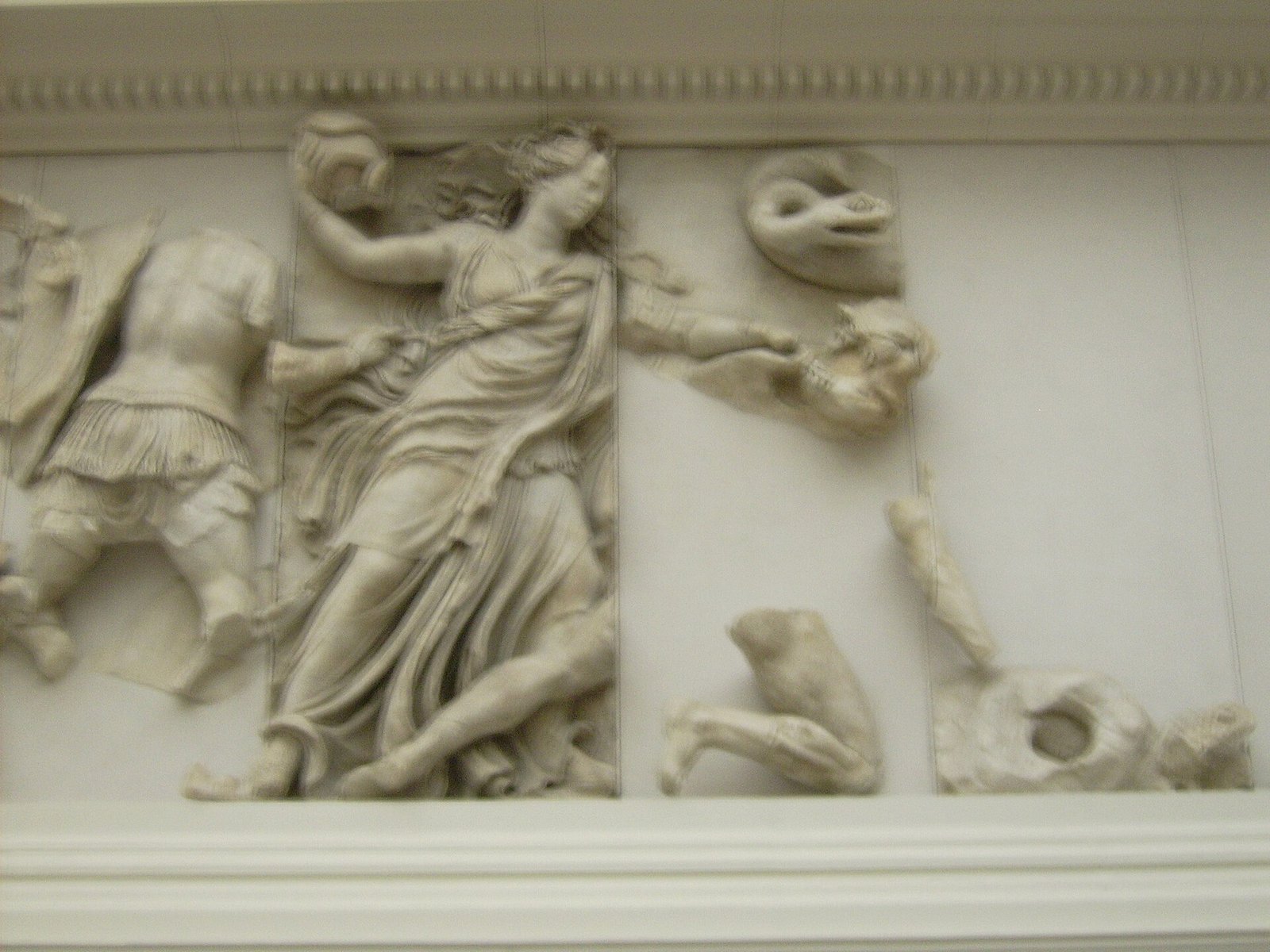
The Erinyes were born from the drops of blood that fell on Earth when Kronos struck down Ouranos (Theogony 183–185). Agamemnon swears by them, who under the earth punish whoever swears a false oath (Iliad 19.258–260), and above all those who shed the blood of kin. In Aeschylus they pursue Orestes until Athena persuades them to accept a home beneath the Areopagus as the Kindly Ones, the Eumenides (Eumenides 778–1047). Later tradition names three: Alekto, Tisiphone and Megaira (Apollodorus, Library 1.1.4).
Epithets
- Εὐμενίδες · Eumenides
- the Kindly Ones
- Σεμναὶ Θεαί · Semnai Theai
- the Revered Goddesses, their name at Athens (Pausanias 1.28.6)
Domains and symbols
Justice for blood shed and oaths broken; conscience; the curse that cannot be outrun. Admire: respect for kin, for guests and for oaths. Sacred symbols: serpents, torches, the scourge.
Myths
- Their birth. From the blood of Ouranos (Theogony 183–185).
- Orestes. They hounded him for his mother’s blood until Athena’s court acquitted him and they were given honour in Athens (Aeschylus, Eumenides).
- The grove at Kolonos. Oedipus came to rest in their untrodden grove (Sophocles, Oedipus at Colonus 36–43).
Cult sites
- Athens. The sanctuary of the Semnai beside the Areopagus (Pausanias 1.28.6).
- Kolonos. Their sacred grove (Sophocles, Oedipus at Colonus 36–43).
Offerings
Wineless libations of water and honey, poured with the face turned away, as the chorus instructs Oedipus (Sophocles, Oedipus at Colonus 466–492). Today: keep oaths, honour parents and guests.
Beneath the Divine Mind
The Erinyes are the Divine Mind as justice that returns upon the wrongdoer, personified and deified as the avenging goddesses. Like every god they stand beneath the One (The One and the Many). The three are listed in The Theogony: Alekto, Tisiphone, Megaira.
Honouring Erinyes today
- Offerings. Water and honey, without wine.
- Practice. Keep your oaths.
Hymn
For all the bloody drops that gushed forth Earth received, and as the seasons moved round she bare the strong Erinyes and the great Giants with gleaming armour.Hesiod, Theogony 183–186, tr. H. G. Evelyn-White (1914), public domain. The Orphic hymns to the Erinyes and the Eumenides are not yet given on the site.
Images
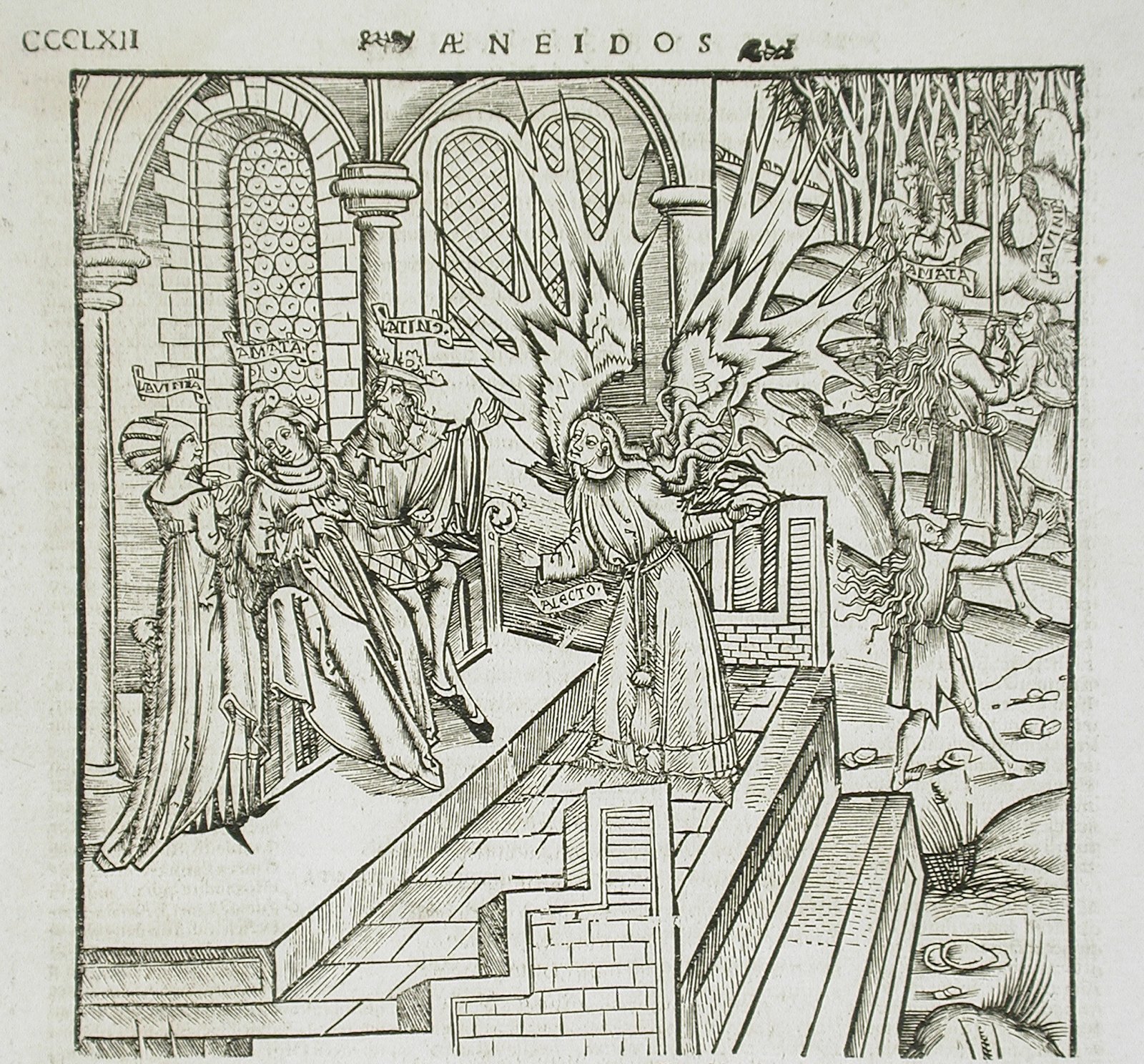
Antonio Tempesta (after); LACMA collection, Public domain, via Wikimedia Commons

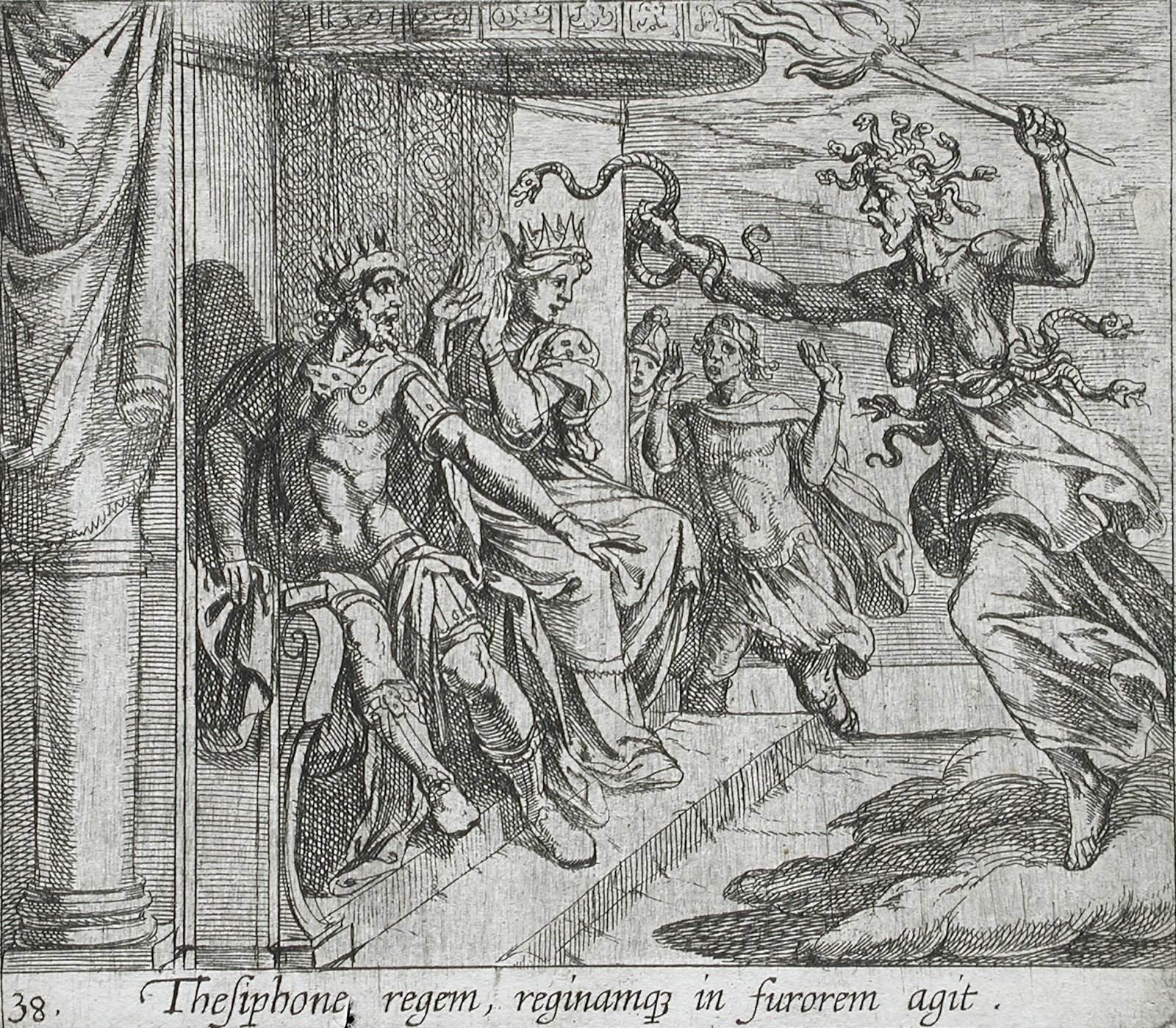
Antonio Tempesta (after); Wilhelm Janson (publisher); LACMA, Public domain, via Wikimedia Commons

Sources
Hesiod, Theogony 183–185; Homer, Iliad 19.259–260; Aeschylus, Eumenides; Sophocles, Oedipus at Colonus 36–43, 466–492; Apollodorus, Library 1.1.4; Pausanias 1.28.6.
Quotations in public-domain translations (Evelyn-White 1914, Butler 1898/1900, Taylor 1792); other authors paraphrased.
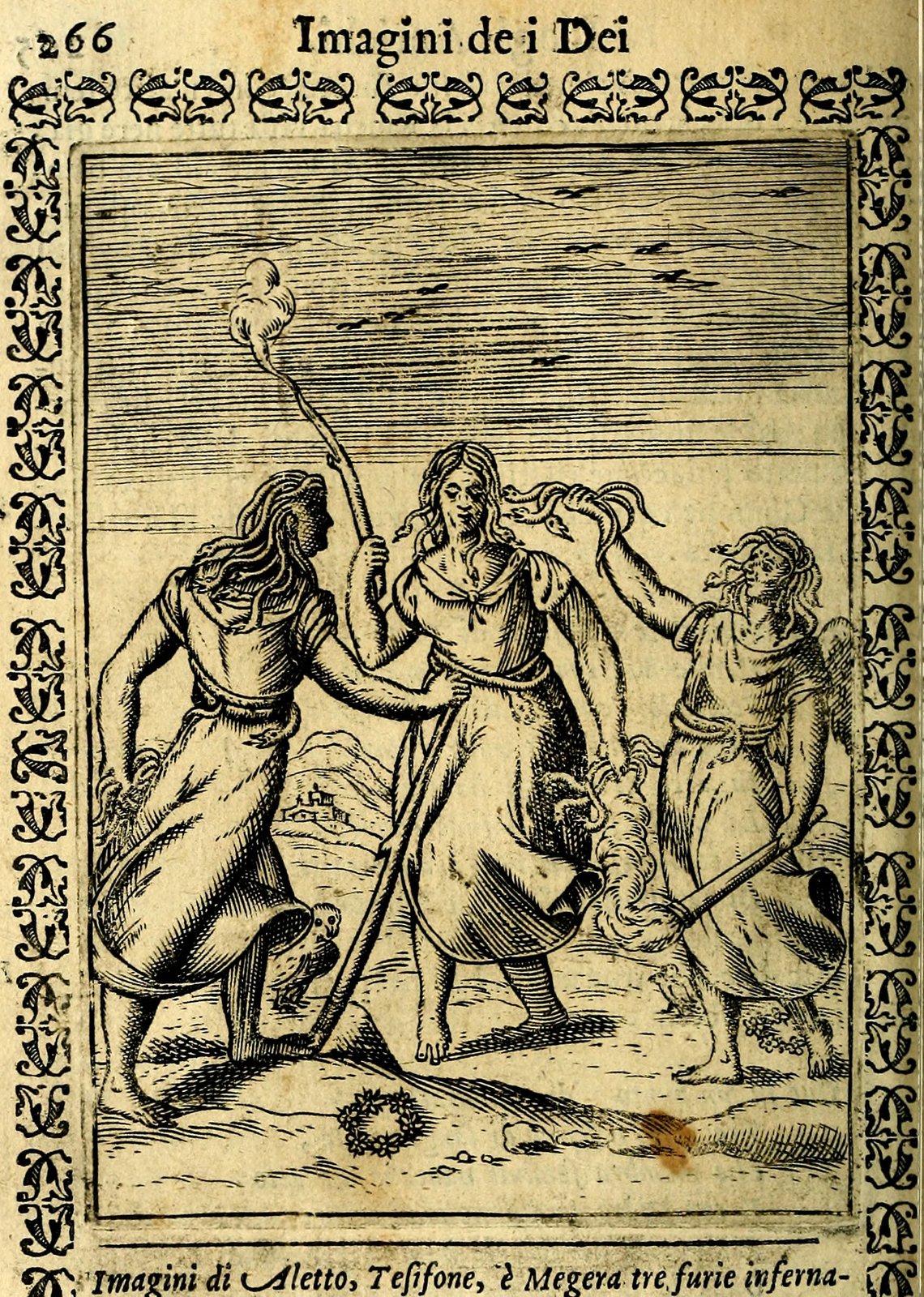
Vincenzo Cartari (text); 1608 edition woodcut, Public domain, via Wikimedia Commons
