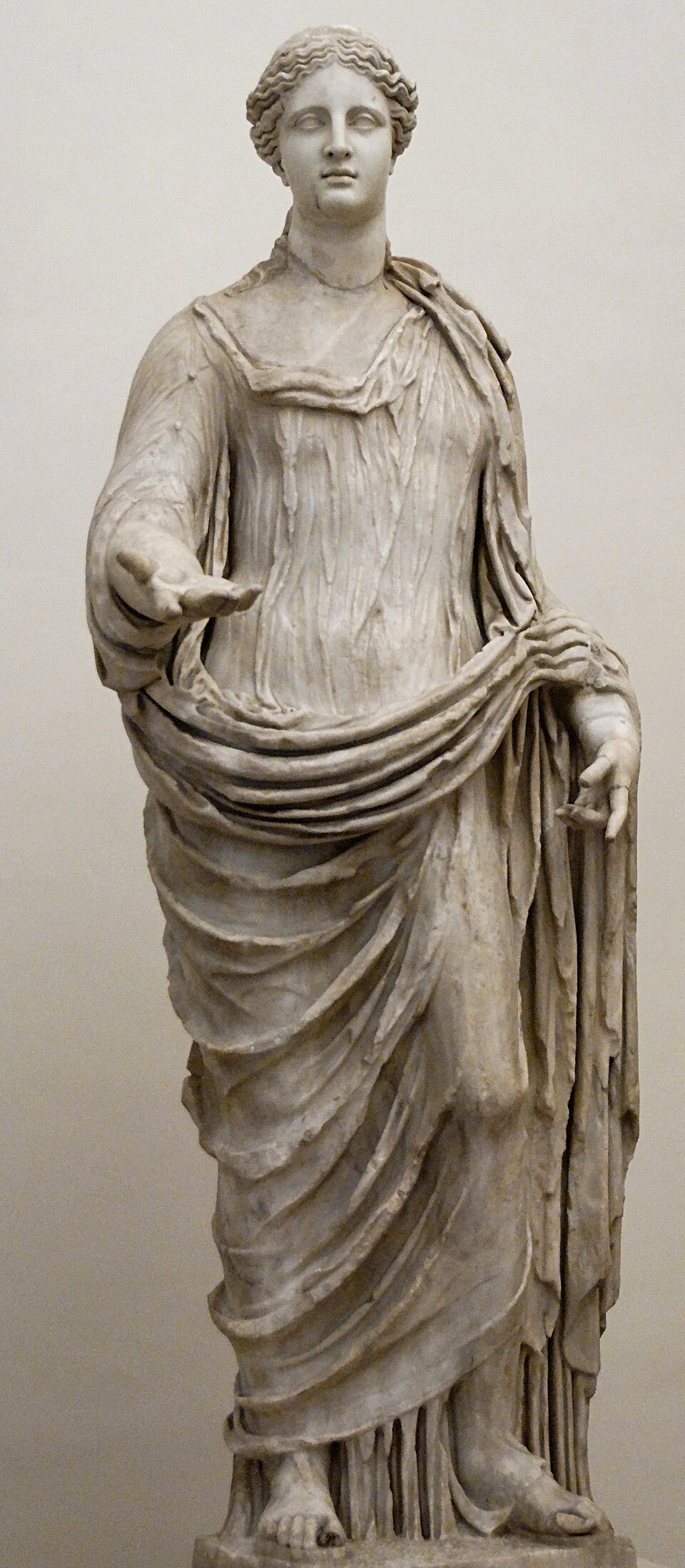
Marie-Lan Nguyen, CC BY 2.5, via Wikimedia Commons

Demeter, daughter of Kronos and Rhea, is the goddess of grain and of the tilled earth. Her grief for her daughter Persephone, carried off to the underworld, and her gift of the Mysteries at Eleusis lie at the heart of Greek religion. The Eleusinian Mysteries were celebrated for nearly two thousand years.
Epithets
- Θεσμοφόρος · Thesmophoros
- bringer of ordinances, honoured by women at the Thesmophoria
- Χλόη · Chloe
- of the green shoots
- Καρποφόρος · Karpophoros
- fruit-bearer
- Ἐλευσινία · Eleusinia
- of Eleusis
- Χθονία · Chthonia
- of the earth, honoured at Hermione (Pausanias 2.35.4–8)
- Μέλαινα · Melaina
- the black, honoured in a cave near Phigalia (Pausanias 8.42)
- Ἐρινύς · Erinys
- the wrathful, honoured at Thelpusa (Pausanias 8.25.4–7)
Myths
- The abduction of Persephone. While gathering flowers, Persephone was seized by Hades with the consent of Zeus. Demeter searched the earth for nine days with torches in her hands (Homeric Hymn to Demeter 1–90).
- At Eleusis. Disguised as an old woman, Demeter nursed the infant Demophon in the house of Keleos. Iambe made her smile with jests, and she drank the kykeon of barley, water and pennyroyal (Hymn to Demeter 98–211).
- The famine and the return. When the goddess withheld the grain, Zeus sent Hermes to bring Persephone back; because she had eaten a pomegranate seed she must spend part of each year below (Hymn to Demeter 305–413).
- The gift of the rites. Demeter showed the kings of Eleusis, Triptolemos among them, the conduct of her rites, and blessed those who see them (Hymn to Demeter 473–482).
Cult sites
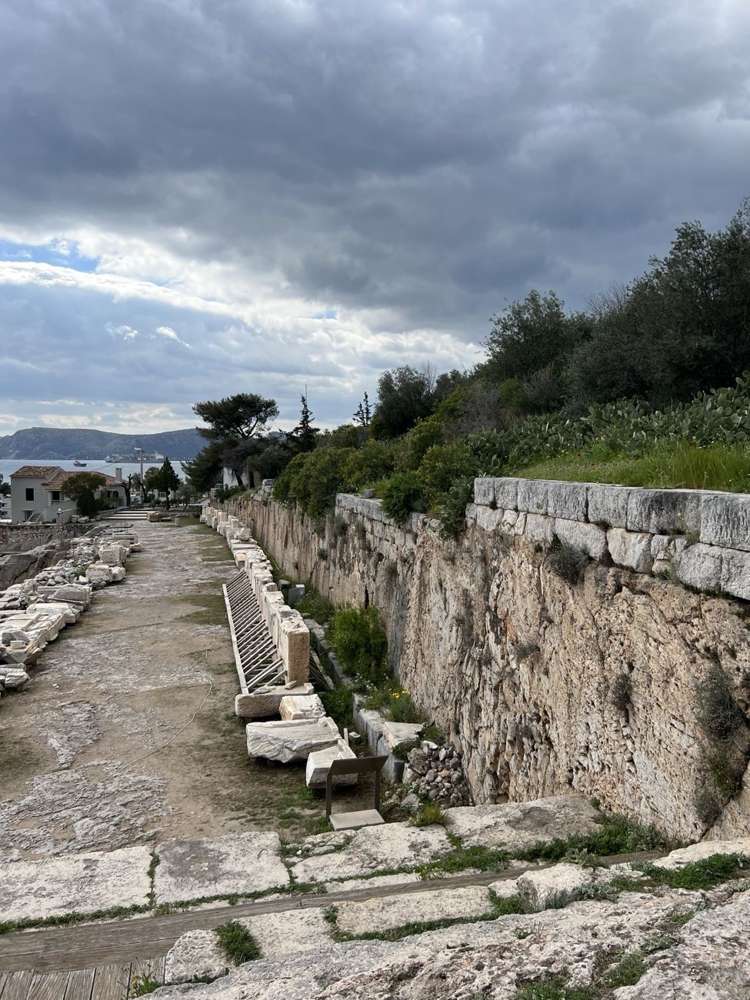
- Eleusis. Her sanctuary west of Athens, with the Telesterion, the hall of initiation, entered through the Greater and Lesser Propylaia (Pausanias 1.38.6–7).
- The Eleusinion, Athens. Her sanctuary below the Acropolis, where the sacred objects rested before the procession (Pausanias 1.14.3).
- Hermione. Sanctuary of Demeter Chthonia in the Argolid, with the festival called Chthonia (Pausanias 2.35.4–8).
- Phigalia. The cave of Demeter Melaina in Arcadia (Pausanias 8.42).
Festivals
- Greater Mysteries. From 15 Boedromion: the gathering, the cry «to the sea, initiates», and the procession along the Sacred Way to Eleusis.
- Lesser Mysteries. At Agrai by the Ilissos in Anthesterion, a preliminary purification.
- Thesmophoria. Three days in Pyanepsion kept by married women alone (Aristophanes, Thesmophoriazusae).
- Haloa. A festival of the threshing floors in Poseideon.
Offerings
Cities sent the first fruits of their barley and wheat to Eleusis, as the Athenian First-Fruits Decree laid down (IG I³ 78). Piglets were sacrificed at the Thesmophoria, and the kernos, a vessel of many small cups, carried grains and fruits. Initiates drank the kykeon in memory of the goddess.
Further epithets
- Ξανθή · Xanthe
- the fair-haired, golden as ripe grain (Iliad 5.500)
- Καλλιστέφανος · Kallistephanos
- with the beautiful crown (Homeric Hymn to Demeter 251)
- Ἁλωάς · Haloas
- of the threshing floor
Birth and the primary sources
Demeter is a daughter of Kronos and Rhea (Theogony 453–454), and by Zeus the mother of Persephone, whom the gods call Kore, the Maiden (912–914). The great source for her myth is the Homeric Hymn to Demeter. The Mysteries it founded are treated fully on the Mysteries page, and the road to Eleusis on the pilgrimage page; here the story is told for the goddess herself.
Persephone was gathering flowers in the meadow of Nysa when the earth opened and Hades carried her off in his golden chariot, with the consent of Zeus (Hymn 2.1–32). For nine days Demeter wandered the earth with torches in her hands, neither eating ambrosia nor bathing, until Hekate and Helios told her the truth (40–87). In anger she left Olympus and came to Eleusis disguised as an old woman, sat by the Maiden's Well, and was taken in by the household of Keleos. There the servant Iambe made her laugh with jests, and she refused wine and asked instead for a drink of barley, water and pennyroyal, the kykeon (192–211). She nursed the prince Demophon and would have made him immortal by laying him in the fire each night, but his mother Metaneira cried out, and the goddess revealed herself in radiance and commanded a temple to be built (231–280).
Seated in her new temple she withheld the seed, and for a year nothing grew; the race of men would have perished and the gods lost their honours, until Zeus sent Hermes to bring Persephone back (305–339). Hades gave her a pomegranate seed, and because she had eaten in the world below she must return for a third part of every year (371–374, 393–403). Demeter made the fields bear again and taught her rites to Triptolemos, Eumolpos, Keleos and Diokles; "blessed is he among men on earth who has seen these things" (473–482). Apollodorus adds that she gave Triptolemos a chariot of winged dragons and wheat to sow over the inhabited earth (Library 1.5.2). Ovid tells the Roman version, with Ceres at the spring of Cyane in Sicily (Metamorphoses 5.341–571), and Callimachus the punishment of Erysichthon, who cut down her sacred grove and was cursed with insatiable hunger (Hymn 6).
Domains and symbols
Demeter gives grain and the ordered life of the farm, the ploughed field, the threshing floor and the bread that made men civilised. As Thesmophoros she founded settled law and the marriage that sustains a household. With Persephone she holds the promise of the Mysteries for the dead. She carries ears of wheat, a sceptre and torches, and wears a crown of grain; the poppy, the pomegranate, mint and the myrtle are hers. Her animals are the pig, the great sacrifice of the Thesmophoria and of initiation; the serpents that draw her chariot; and the crane, which calls the time of sowing (Hesiod, Works and Days 448–451).
Sanctuaries and cults
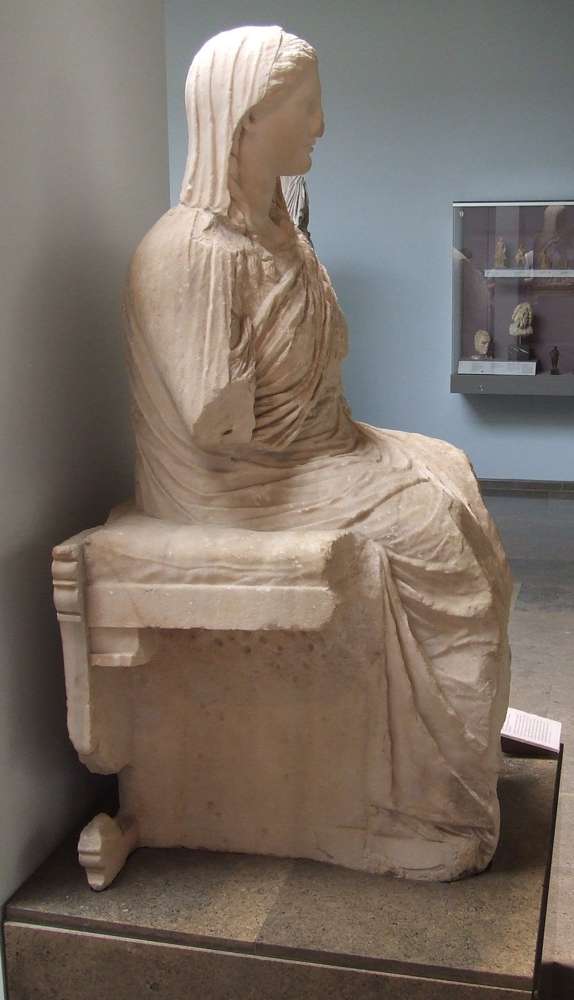
Besides Eleusis, Demeter had the Eleusinion below the Acropolis in Athens, where the sacred objects rested before the procession, and shrines throughout Greece. At Knidos stood the seated Demeter now in the British Museum. At Lykosoura in Arcadia she was worshipped with Despoina in a temple whose colossal group by Damophon survives in part. At Enna in Sicily the Sicilians showed the meadow from which the Maiden was taken (Cicero, Verrines 2.4.106–107). Women alone kept the Thesmophoria in the month Pyanopsion (11–13), with the days of Going Up, Fasting and Fair Birth. The Haloa, a women's feast of the threshing floor, fell on 26 Poseideon; the Proerosia, the preliminary to ploughing, on 5 Pyanopsion; the Lesser Mysteries at Agrai in Anthesterion; and the Greater Mysteries in Boedromion.
Statues and art
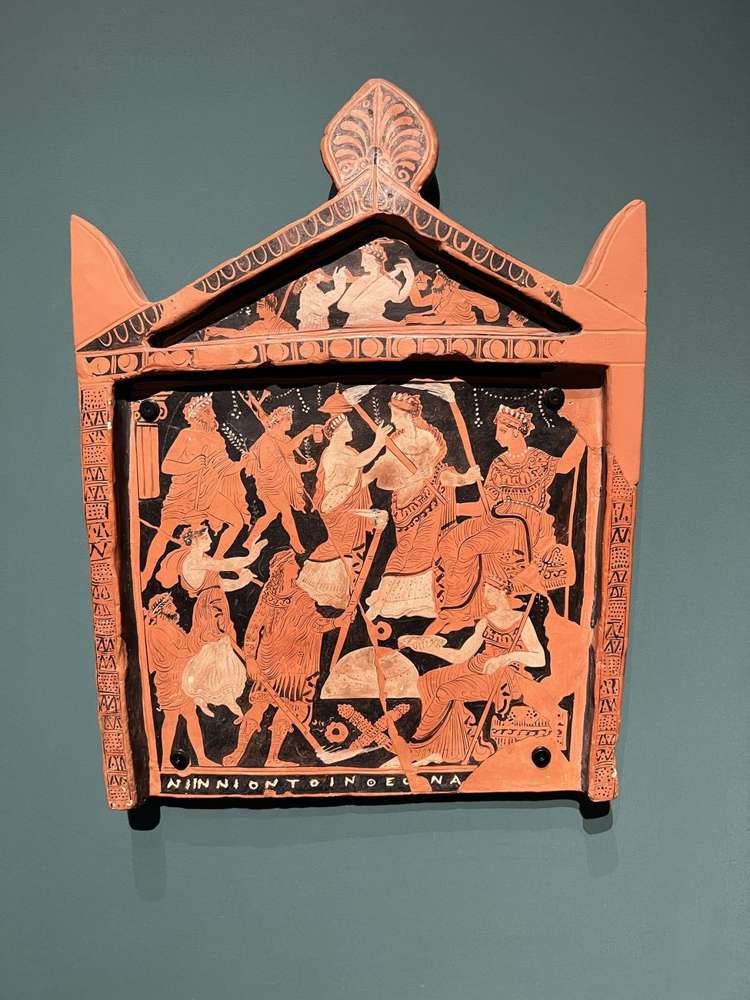
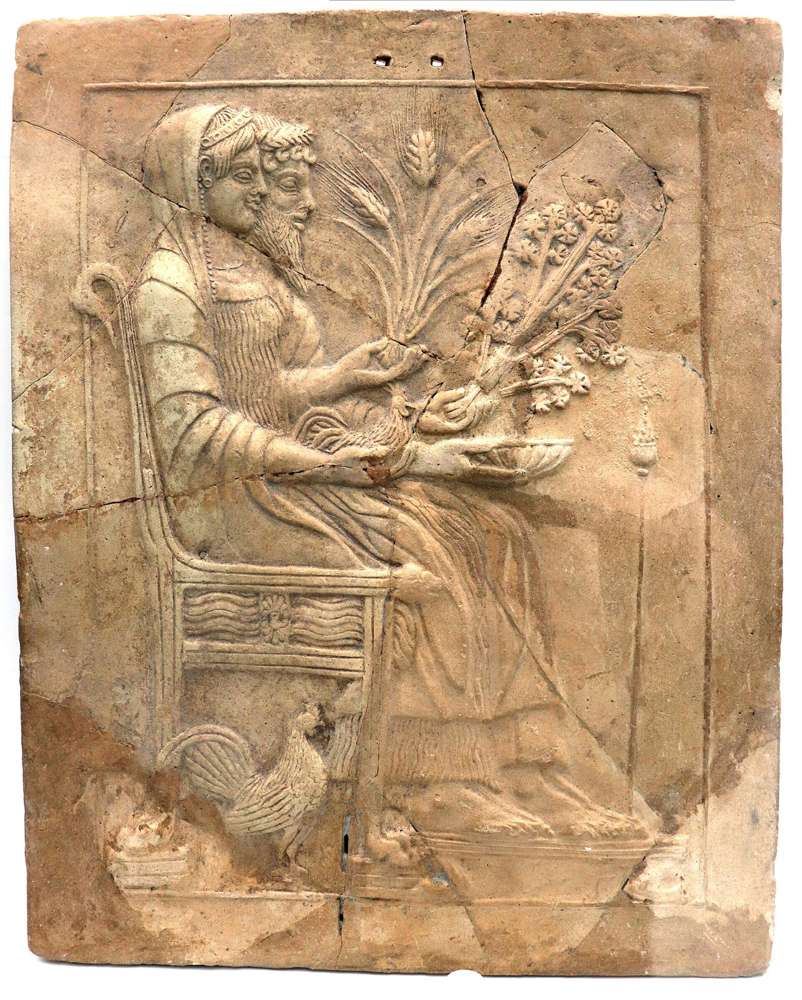
The Great Eleusinian Relief of about 440 BC, found at Eleusis and now in Athens, shows Demeter handing the ear of grain to the boy Triptolemos while Persephone crowns him; a later votive relief, below, repeats the three figures. The Demeter of Knidos, about 340 BC, sits veiled and grave. Red-figure hydriai from the fourth century show the Eleusinian gods in procession, and terracotta tablets from Lokroi in Italy show the Maiden enthroned with Hades. Pausanias describes the old wooden image of Black Demeter at Phigaleia with a horse's head, holding a dove and a dolphin (8.42.4).
Beneath the Divine Mind
Demeter is the Divine Mind as providence and nourishment: its care that sustains life and returns it through the cycle of seed and harvest, fractured off, personified and deified as the mother of grain. Her grief and her joy teach that what descends returns. She serves beneath the One, as The One and the Many sets out. She still acts in human affairs wherever bread is shared, a field is sown, or a parent's love endures loss.
Honouring Demeter today
- Offerings. First fruits of grain, bread baked at home, honey, poppies and a cup of kykeon (barley water with mint) are proper to her. Pour libations of water and honey rather than wine at her altar.
- At sowing and harvest. Pray before planting in autumn and set the first sheaf or loaf aside for her at harvest.
- The months. Keep the Proerosia and the Thesmophoria in Pyanopsion, the Haloa on 26 Poseideon, and remember the Mysteries in Boedromion. The Hierophant of Eleusis proclaimed the rites in that month; a household may read the Hymn aloud on 15 Boedromion.
- Hymn. Recite the Homeric Hymn above, or the opening of the long Hymn to Demeter.
Hymn
I begin to sing of rich-haired Demeter, awful goddess, of her and of her daughter lovely Persephone. Hail, goddess! Keep this city safe, and govern my song.Homeric Hymn 13, To Demeter. Homeric Hymns, tr. H. G. Evelyn-White (1914), public domain.
Images
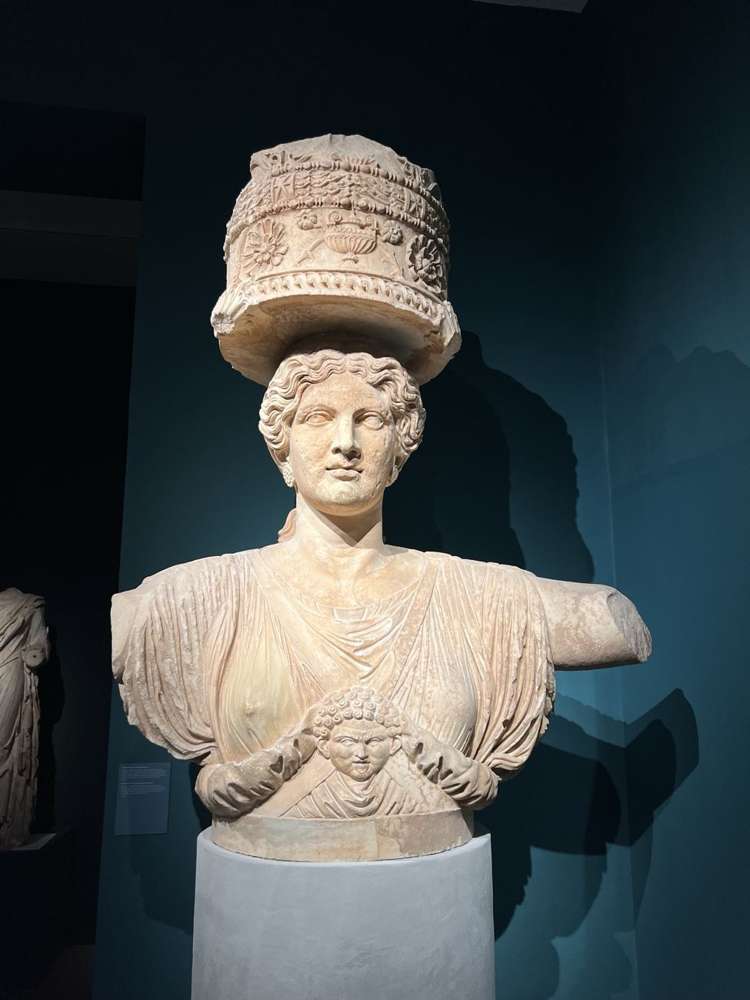
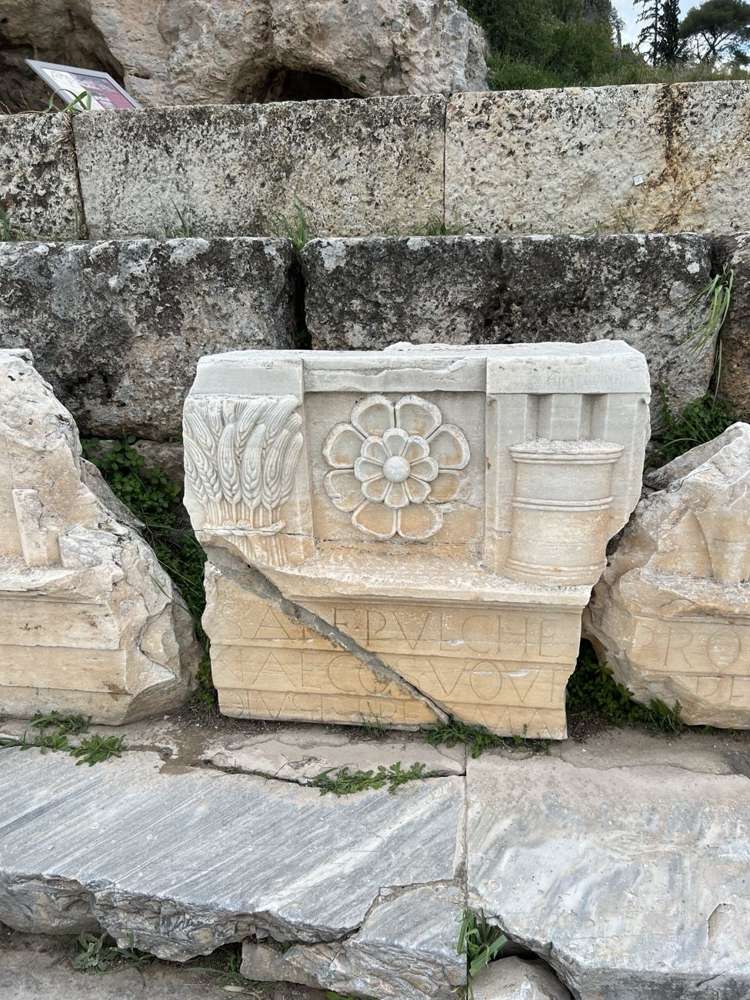
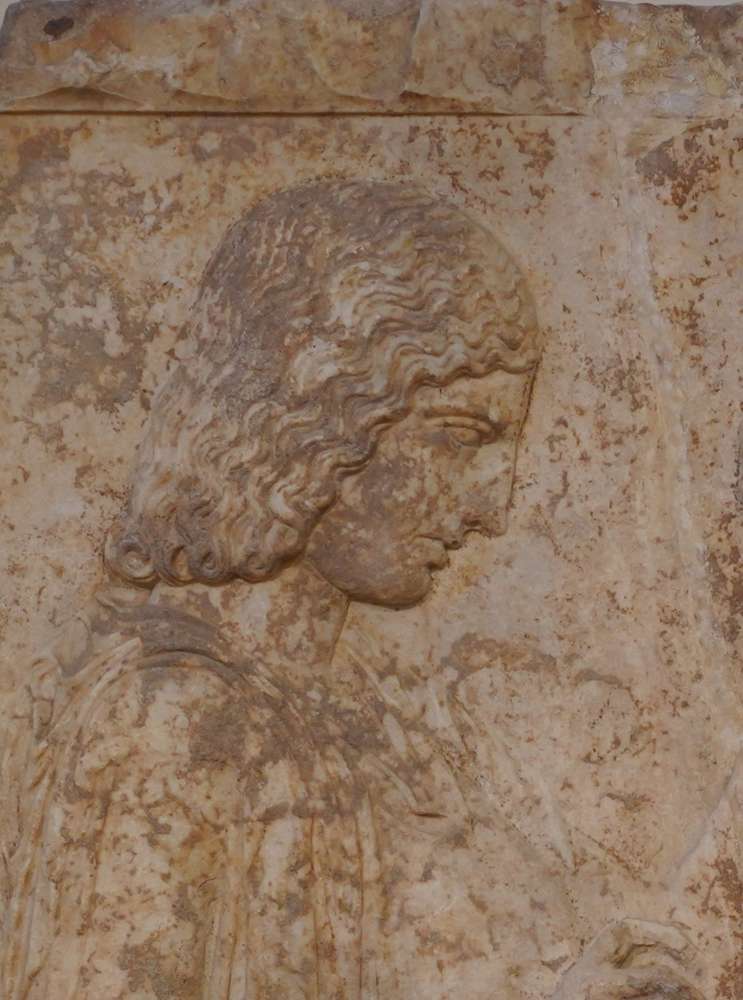
TimeTravelRome, CC BY 2.0, via Wikimedia Commons

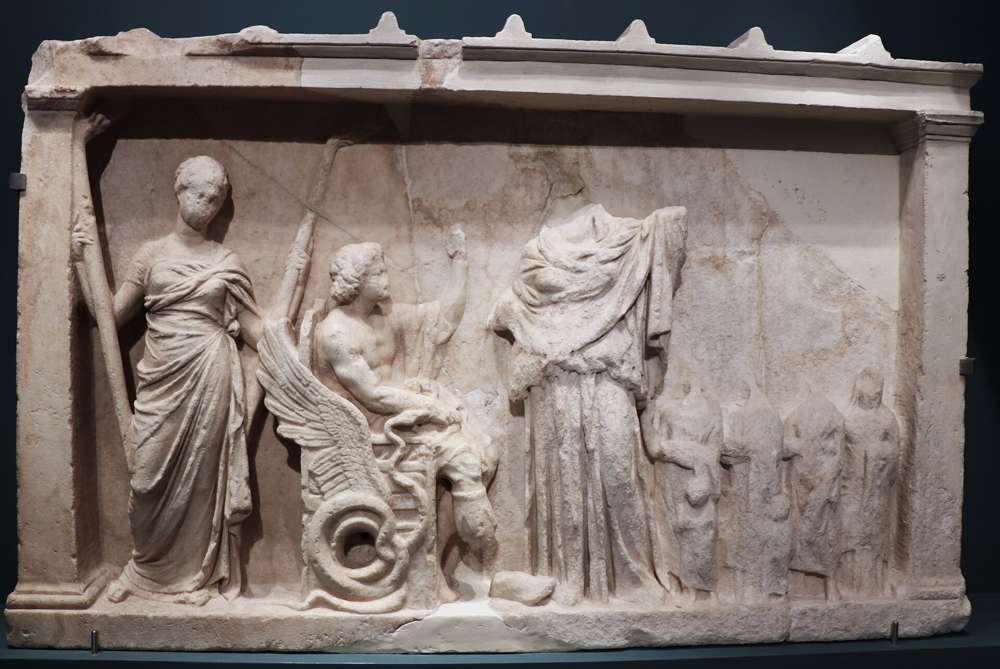
Furius, CC0, via Wikimedia Commons

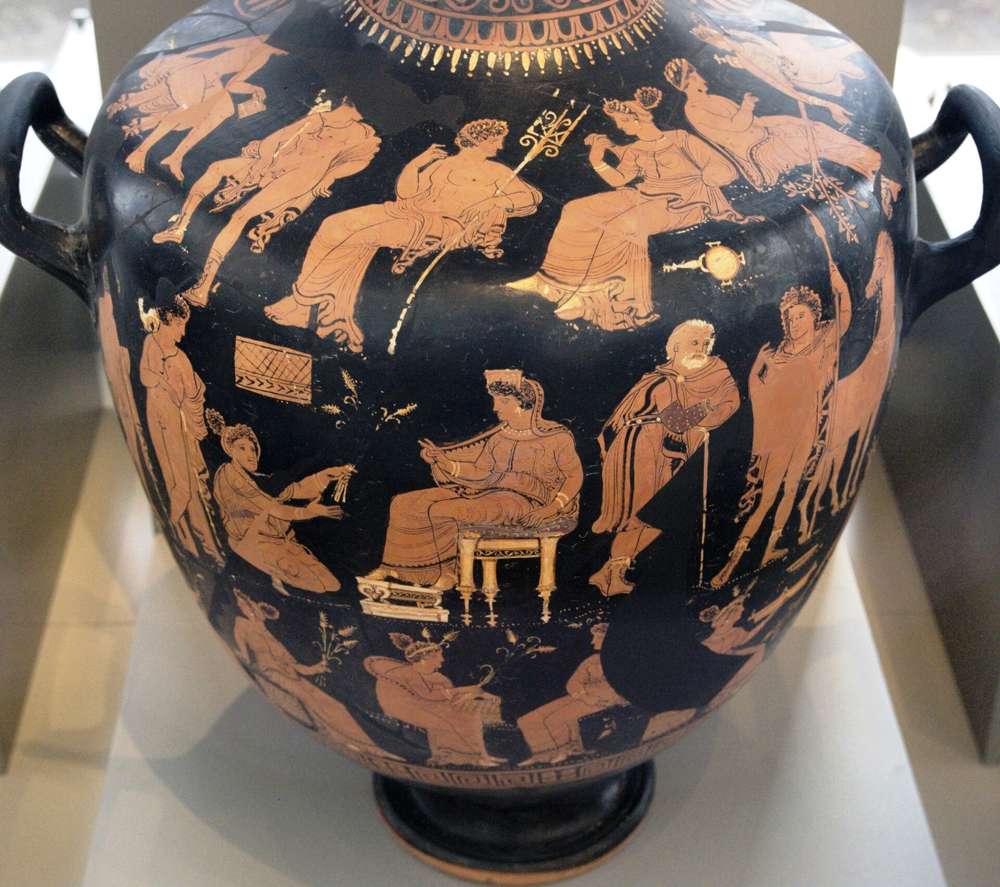
Varrese Painter, Public domain, via Wikimedia Commons

Fabien Bièvre-Perrin, CC BY-SA 4.0, via Wikimedia Commons

Sources
Homeric Hymn to Demeter (2); Hesiod, Theogony and Works and Days; Homer, Iliad 5; Callimachus, Hymn 6; Apollodorus, Library 1.5; Ovid, Metamorphoses 5; Cicero, Verrines 2.4; Pausanias 1.22, 8.25, 8.37 and 8.42.
Quotations in public-domain translations (Evelyn-White 1914, Butler 1898/1900, Taylor 1792); other authors paraphrased.