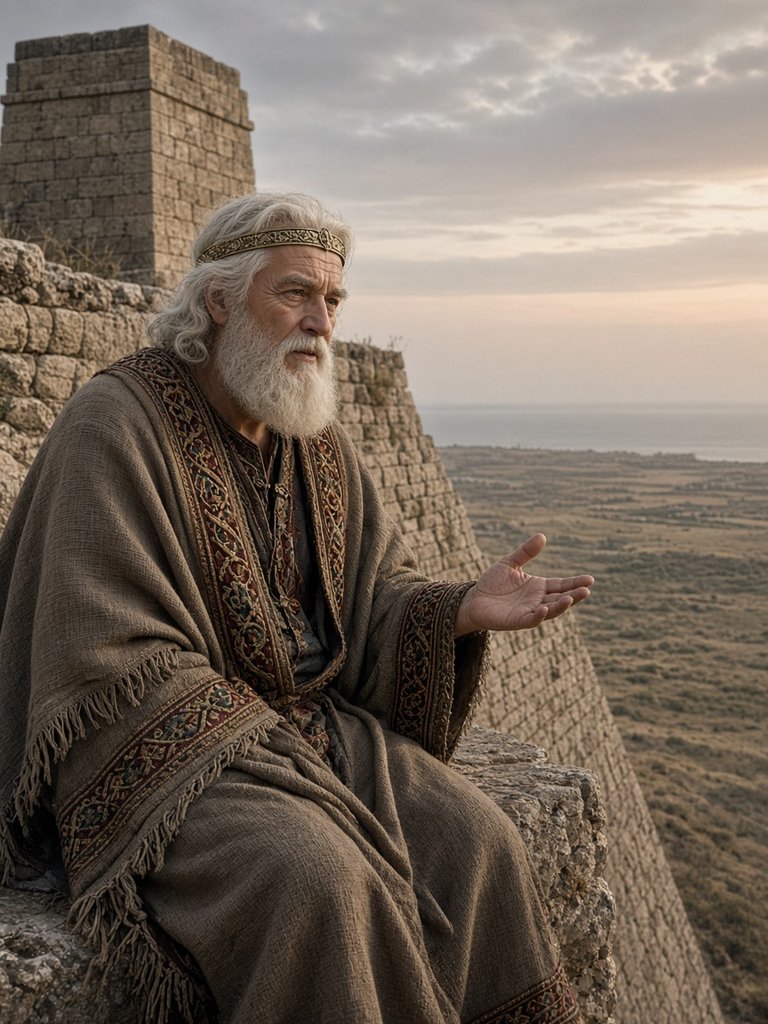
Antenor is one of the wise elders of Troy who sit with Priam on the wall at the Scaean gates (Iliad 3.146–153). His wife Theano is priestess of Athena (Iliad 6.297–300), and many of his sons fight in the war.
When Helen names Odysseus, Antenor remembers the embassy before the war: “Madam, you have spoken truly. Ulysses once came here as envoy about yourself, and Menelaus with him. I received them in my own house, and therefore know both of them by sight and conversation” (Iliad 3.204–208, tr. Butler). He goes on to describe how Odysseus’ words came “like winter snow” (Iliad 3.209–224, paraphrased).
After the duel of Paris and Menelaos he urges the Trojans to give back Helen and her treasure, but Paris refuses (Iliad 7.347–364, paraphrased). In later tradition he was spared at the sack of Troy for his good counsel, and led the Eneti to Italy to found Patavium, modern Padua (Livy 1.1; Virgil, Aeneid 1.242–249, paraphrased).
Epithets
- πεπνυμένος · pepnumenos
- wise, prudent (Iliad 3.148)
- δημογέρων · dēmogerōn
- elder of the people
Symbols and virtues
Wise counsel and the wish for peace. Symbols: the elder’s staff, the guest-house.
Myths
- On the wall. Iliad 3.146–224.
- Return Helen. Iliad 7.345–364.
- Founder of Patavium. Livy 1.1; Aeneid 1.242–249.
Cult and places
- Patavium (Padua). Honoured as founder (Livy 1.1).
In the poets
“Madam, you have spoken truly. Ulysses once came here as envoy about yourself, and Menelaus with him. I received them in my own house, and therefore know both of them by sight and conversation.”Homer, Iliad 3.204–208, tr. Samuel Butler (1898), public domain.
Sources
Homer, Iliad 3.146–224, 6.297–300, 7.345–364, 11.59, 11.221–263; Livy 1.1; Virgil, Aeneid 1.242–249.
Quotations in public-domain translations (Evelyn-White 1914, Butler 1898/1900, Taylor 1792); other authors paraphrased.