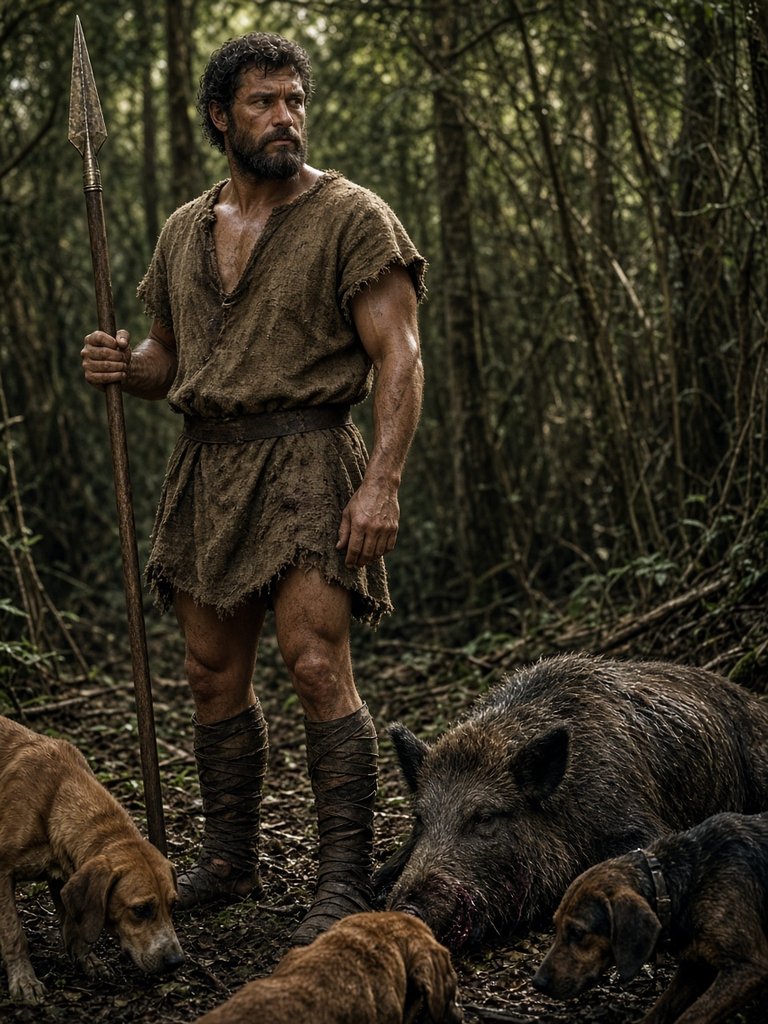
Akastos was the son of Pelias, king of Iolkos, and brother of Alkestis. Against his father’s wishes he sailed with Iason on the Argo (Apollonius, Argonautica 1.224–227, paraphrased). He is not the Dulichian king Akastos of the Odyssey (14.336).
When Medeia tricked the daughters of Pelias into killing their father, Akastos buried him, held funeral games in his honour, and drove Iason and Medeia out of Iolkos (Apollodorus 1.9.27, paraphrased). He purified Peleus of a killing, but his wife fell in love with Peleus and, rejected, falsely accused him (Apollodorus 3.13.2–3, paraphrased).
Unwilling to kill a guest, Akastos took Peleus hunting on Mount Pelion and, while he slept, hid his sword and left him to the Centaurs; Cheiron saved him (Apollodorus 3.13.3; Pindar, Nemean 4.57–65, paraphrased). Peleus later took Iolkos and killed Akastos’ wife (Apollodorus 3.13.7). His daughter was Laodameia, wife of Protesilaos (Apollodorus, Epitome 3.30).
Epithets
- Πελιάδης · Peliadēs
- son of Pelias
Symbols and virtues
Hospitality betrayed and treachery repaid. Symbols: the hidden sword, the hunt on Pelion.
Myths
- Argonaut. Apollonius, Argonautica 1.224–227.
- Funeral games for Pelias. Apollodorus 1.9.27.
- Peleus on Pelion. Apollodorus 3.13.3; Pindar, Nemean 4.57–65.
- Father of Laodameia. Apollodorus, Epitome 3.30.
Sources
Pindar, Nemean 4.54–65, 5.25–36; Apollonius, Argonautica 1.224–227; Apollodorus 1.9.27, 3.13.2–7, Epitome 3.30; Pausanias 5.17.9.
Quotations in public-domain translations (Evelyn-White 1914, Butler 1898/1900, Taylor 1792); other authors paraphrased.