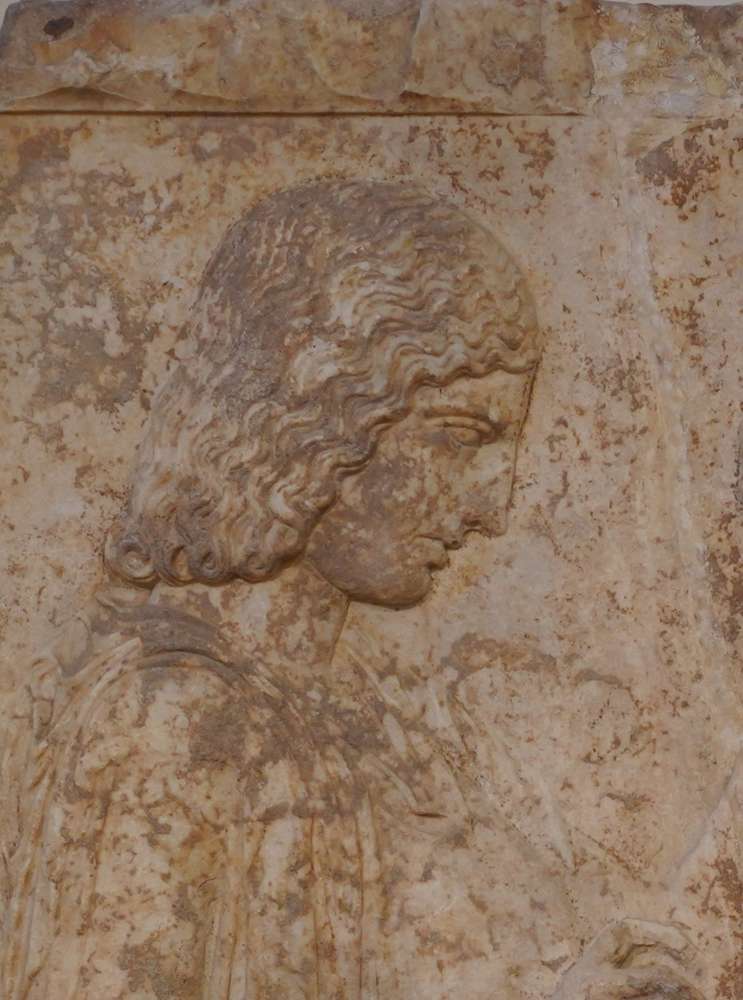
TimeTravelRome, CC BY 2.0, via Wikimedia Commons

Triptolemos was one of the princes of Eleusis to whom Demeter, at the end of her wandering, “showed the conduct of her rites and taught them all her mysteries” (Homeric Hymn to Demeter 473–476). Later tradition tells that she gave him wheat and a chariot drawn by winged serpents, and he flew over the earth sowing it (Apollodorus, Library 1.5.2). Plato names him among the just judges of the dead (Apology 41a).
Epithets
Domains and symbols
Agriculture and the spread of grain; the gift of the Mysteries to all mankind. Admire: sharing what one has received. Sacred symbols: ears of wheat, the winged chariot, the plough.
Myths
- The Mysteries. Demeter taught him and the other kings of Eleusis her rites (Homeric Hymn to Demeter 473–476).
- The winged chariot. He sowed the whole inhabited earth (Apollodorus, Library 1.5.2).
- Judge of the dead. With Minos, Rhadamanthys and Aiakos (Plato, Apology 41a).
Cult sites
- Eleusis. The Rharian plain, first sown with grain, with the threshing floor and altar of Triptolemos (Pausanias 1.38.6).
- Athens. A temple of Triptolemos by the Eleusinion (Pausanias 1.14.1).
Offerings
First fruits of grain. Today: share bread, and give grain or food to those who need it.
Beneath the Divine Mind
Triptolemos is the soul that, having received the gift of the Goddesses, carries it to others: the pattern of generous initiation beneath the Divine Mind and the One (The One and the Many). See Demeter and Persephone.
Honouring Triptolemos today
- Practice. Give bread or grain.
Hymn
Then she went, and to the kings who deal justice, Triptolemus and Diocles, the horse-driver, and to doughty Eumolpus and Celeus, leader of the people, she showed the conduct of her rites and taught them all her mysteries.Homeric Hymn 2, To Demeter, 473–476. Homeric Hymns, tr. H. G. Evelyn-White (1914), public domain.
Images
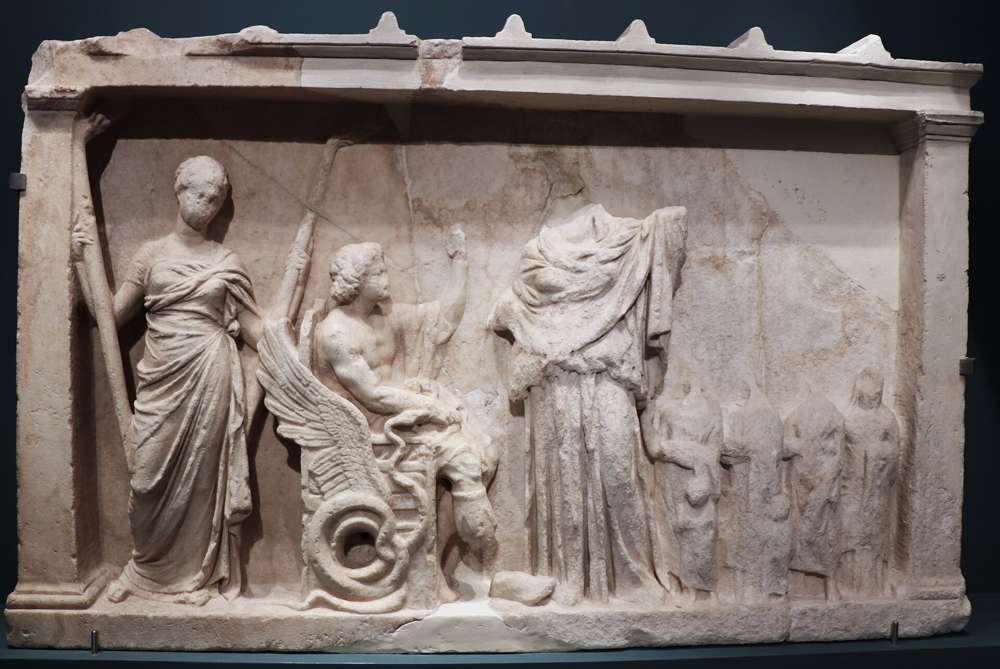
Furius, CC0, via Wikimedia Commons

Sources
Homeric Hymn to Demeter 153, 473–479; Apollodorus, Library 1.5.2; Plato, Apology 41a; Pausanias 1.14.1, 1.38.6.
Quotations in public-domain translations (Evelyn-White 1914, Butler 1898/1900, Taylor 1792); other authors paraphrased.