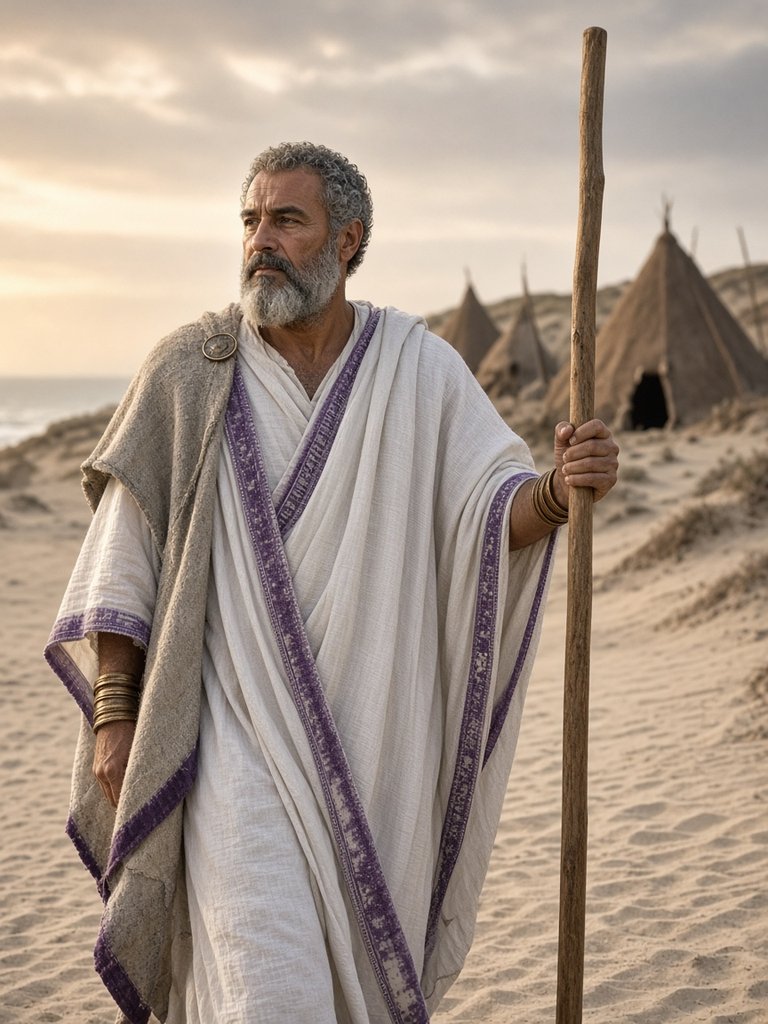
Talthybios was the herald of Agamemnon. When Agamemnon took Briseis from Achilles, he “called his trusty messengers and squires Talthybius and Eurybates” and sent them to lead her away (Iliad 1.320–325, tr. Butler). They went unwillingly, and Achilles told them they were not to blame (Iliad 1.327–348, paraphrased).
He fetched the lamb for the oath before the duel of Menelaos and Paris (Iliad 3.118–120), summoned Machaon to the wounded Menelaos (Iliad 4.192–207), and with the Trojan herald Idaios parted Hektor and Aias at nightfall (Iliad 7.273–282, all paraphrased). At the reconciliation he held the boar for Agamemnon’s oath and flung it into the sea (Iliad 19.250–268, paraphrased).
In Euripides’ Trojan Women he is the herald who brings the captive women their fates and the order that Astyanax must die (paraphrased). Herodotus says that Sparta had a shrine of Talthybios and a family of heralds, the Talthybiadai, descended from him (Herodotus 7.134, paraphrased).
Epithets
- θεῷ ἐναλίγκιος αὐδήν · theōi enalinkios audēn
- like a god in voice (Iliad 19.250)
Symbols and virtues
The herald’s sacred office. Symbols: the herald’s staff, the oath sacrifice.
Myths
- Leads Briseis away. Iliad 1.320–348.
- Parts Hektor and Aias. Iliad 7.273–282.
- The oath of Agamemnon. Iliad 19.250–268.
- Herald at the fall of Troy. Euripides, Trojan Women.
Cult and places
- Sparta. Shrine and the heralds’ clan of the Talthybiadai (Herodotus 7.134).
In the poets
“Called his trusty messengers and squires Talthybius and Eurybates.”Homer, Iliad 1.320–321, tr. Samuel Butler (1898), public domain.
Sources
Homer, Iliad 1.320–348, 3.118–120, 4.192–207, 7.273–282, 19.250–268; Euripides, Trojan Women; Herodotus 7.134.
Quotations in public-domain translations (Evelyn-White 1914, Butler 1898/1900, Taylor 1792); other authors paraphrased.