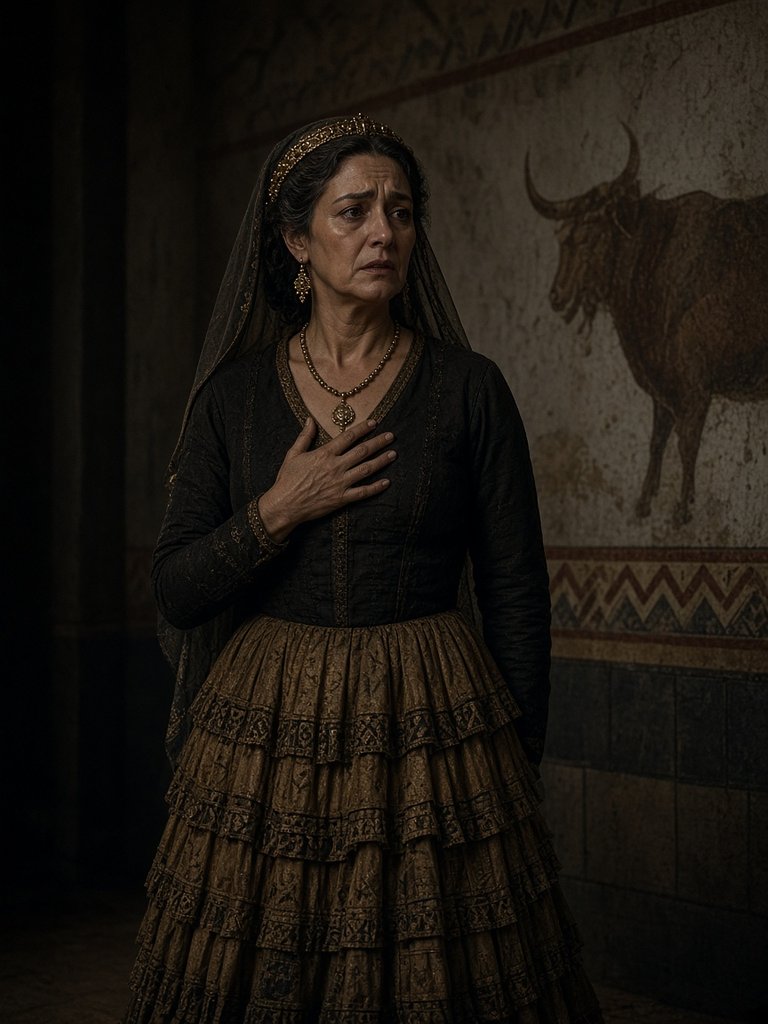
Iokaste, called Epikaste in Homer, was the daughter of Menoikeus and queen of Thebes, wife of King Laios. In the underworld Odysseus sees her: “I also saw fair Epicaste mother of king Oedipodes whose awful lot it was to marry her own son without suspecting it. He married her after having killed his father, but the gods proclaimed the whole story to the world” (Odyssey 11.271–274, tr. Butler).
Homer adds that she “went to the house of the mighty jailor Hades, having hanged herself for grief” (Odyssey 11.277–278, tr. Butler). In Sophocles’ Oedipus the King she tries to calm Oidipous by telling him oracles cannot be trusted, and is the first to understand the truth (Oedipus the King 707–725, 1056–1072, paraphrased).
By Oidipous she was the mother of Eteokles, Polyneikes, Antigone and Ismene (Sophocles; Apollodorus 3.5.8, paraphrased). In Euripides’ Phoenician Women she survives to try to reconcile her warring sons before the walls of Thebes (paraphrased).
Epithets
- Ἐπικάστη · Epikastē
- her Homeric name
- Μενοικέως θυγάτηρ · Menoikeōs thugatēr
- daughter of Menoikeus
Symbols and virtues
The terrible weight of fate and unknowing. Symbols: the veil, the palace doors.
Myths
- In the underworld. Odyssey 11.271–280.
- The truth revealed. Sophocles, Oedipus the King.
- Mother of Antigone. Apollodorus 3.5.8.
- Her sons’ war. Euripides, Phoenician Women.
In the poets
“I also saw fair Epicaste mother of king Oedipodes whose awful lot it was to marry her own son without suspecting it.”Homer, Odyssey 11.271–273, tr. Samuel Butler (1900), public domain.
Sources
Homer, Odyssey 11.271–280; Sophocles, Oedipus the King; Euripides, Phoenician Women; Apollodorus 3.5.7–8.
Quotations in public-domain translations (Evelyn-White 1914, Butler 1898/1900, Taylor 1792); other authors paraphrased.