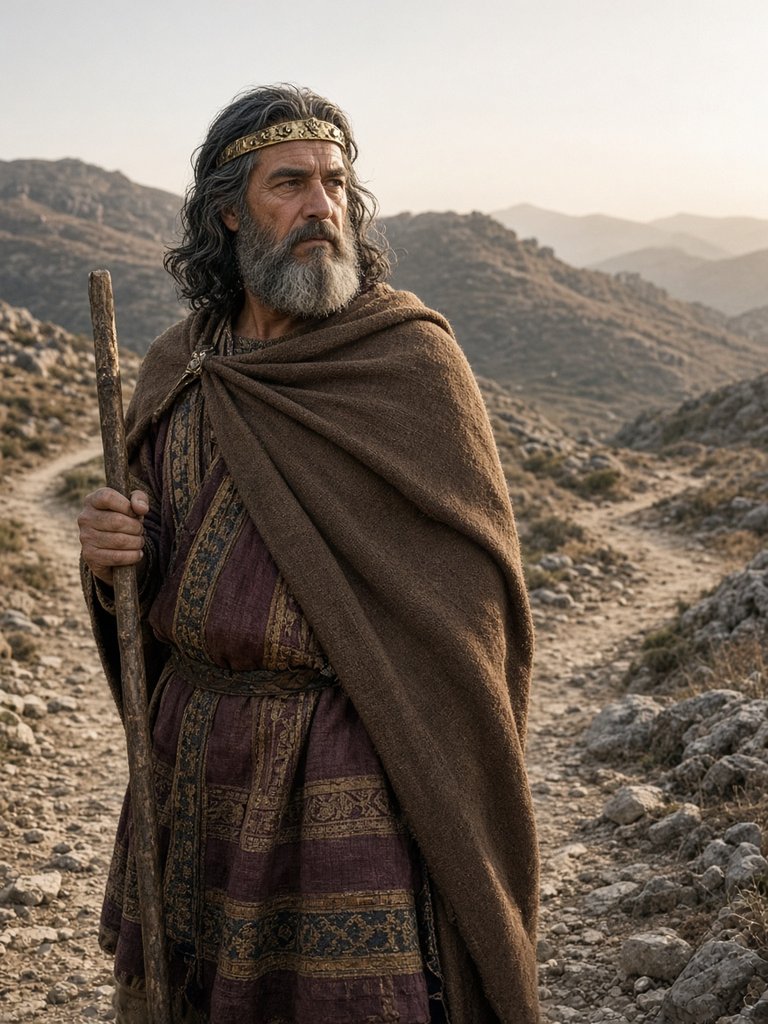
Laios, son of Labdakos, was king of Thebes and husband of Iokaste. Exiled as a boy, he lived at the court of Pelops, and was said to have carried off Pelops’ son Chrysippos, a crime that brought a curse on his house (Apollodorus 3.5.5, paraphrased).
An oracle warned him that a son born to him would kill him. When Oidipous was born, Laios pierced the baby’s ankles and had him left on Mount Kithairon, but a shepherd saved him (Sophocles, Oedipus the King 711–722, 1123–1181, paraphrased). Homer tells the end of the story without naming Laios, in Odysseus’ meeting with the dead: “fair Epicaste mother of king Oedipodes whose awful lot it was to marry her own son without suspecting it. He married her after having killed his father” (Odyssey 11.271–274, tr. Butler).
Travelling to Delphi, Laios met a young man where three roads meet in Phokis, struck him and was killed by him with his whole escort; the young man was his son Oidipous (Oedipus the King 711–813, paraphrased). Pausanias was shown the place where three roads met, and the tombs of Laios and his servant (10.5.3–4).
Epithets
- Λαβδακίδης · Labdakidēs
- son of Labdakos
Symbols and virtues
The attempt to escape an oracle that brings it about. Symbols: the place where three roads meet, the pierced ankles.
Myths
- Chrysippos. Apollodorus 3.5.5.
- The exposed son. Sophocles, Oedipus the King 711–722.
- Death at the crossroads. Oedipus the King 711–813.
Cult and places
- Phokis. His tomb by the Split Road (Pausanias 10.5.3–4).
In the poets
“He married her after having killed his father, but the gods proclaimed the whole story to the world.”Homer, Odyssey 11.273–274, tr. Samuel Butler (1900), public domain.
Sources
Homer, Odyssey 11.271–280; Sophocles, Oedipus the King; Euripides, Phoenician Women 1–62; Apollodorus 3.5.5–8; Pausanias 9.5.5–10, 10.5.3–4.
Quotations in public-domain translations (Evelyn-White 1914, Butler 1898/1900, Taylor 1792); other authors paraphrased.