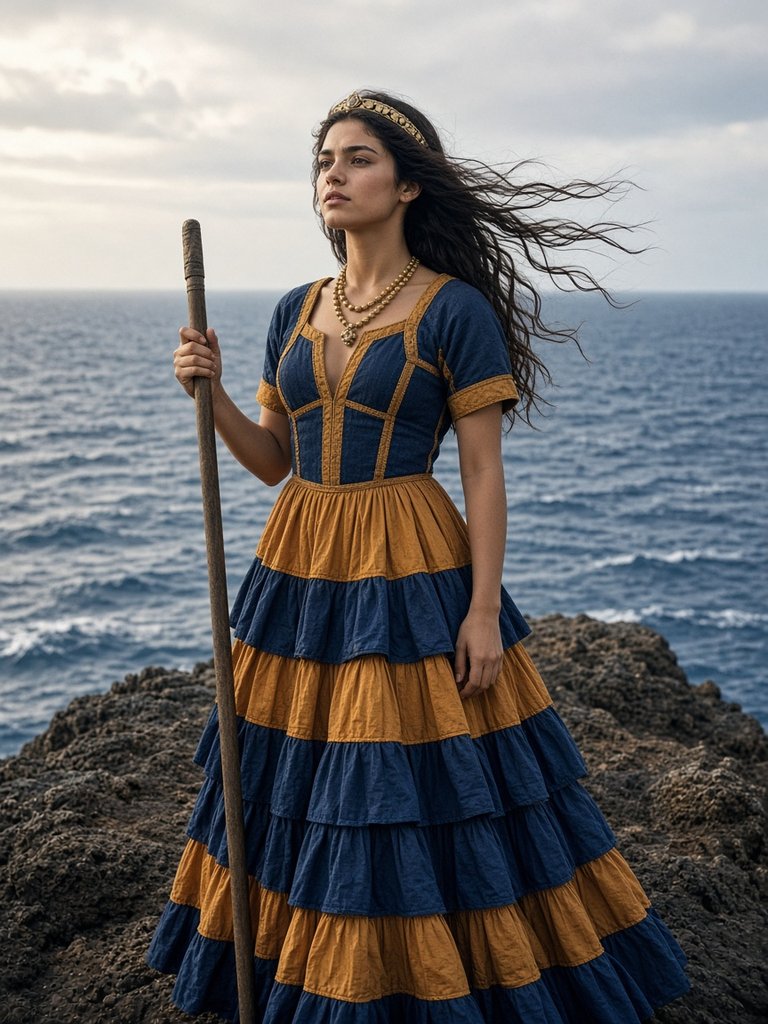
Hypsipyle, daughter of King Thoas, ruled the island of Lemnos. Its women had killed all their men; Hypsipyle alone secretly saved her father, sending him out to sea in a chest (Apollonius of Rhodes, Argonautica 1.609–626, paraphrased).
When the Argonauts landed she welcomed them, and Iason became her lover (Argonautica 1.630–909). Their son appears in the Iliad: “Many ships had come with wine from Lemnos, sent by Eueneus the son of Jason, born to him by Hypsipyle” (Iliad 7.467–469, tr. Butler). The same Euneos ransomed a son of Priam with a silver mixing-bowl (Iliad 23.740–747).
When the Lemnian women discovered that she had saved Thoas, she was sold into slavery and became the nurse of the infant Opheltes at Nemea. While she showed the Seven against Thebes the way to a spring, a serpent killed the child, and the Seven founded the Nemean Games in his memory (Euripides, Hypsipyle fragments; Apollodorus 3.6.4, paraphrased). Her sons later found and freed her.
Epithets
- Ὑψιπύλη · Hupsipulē
- high gate, the meaning of her name
Symbols and virtues
Mercy within a crime, and exile. Symbols: the chest set adrift, the spring at Nemea.
Myths
- Saving Thoas. Argonautica 1.609–626.
- The Argonauts on Lemnos. Argonautica 1.630–909.
- Mother of Euneos. Iliad 7.467–469.
- Opheltes and the Nemean Games. Apollodorus 3.6.4.
In the poets
“Many ships had come with wine from Lemnos, sent by Eueneus the son of Jason, born to him by Hypsipyle.”Homer, Iliad 7.467–469, tr. Samuel Butler (1898), public domain.
Sources
Homer, Iliad 7.467–469, 23.740–747; Apollonius of Rhodes, Argonautica 1.601–909; Euripides, Hypsipyle (fragments); Apollodorus 1.9.17, 3.6.4.
Quotations in public-domain translations (Evelyn-White 1914, Butler 1898/1900, Taylor 1792); other authors paraphrased.