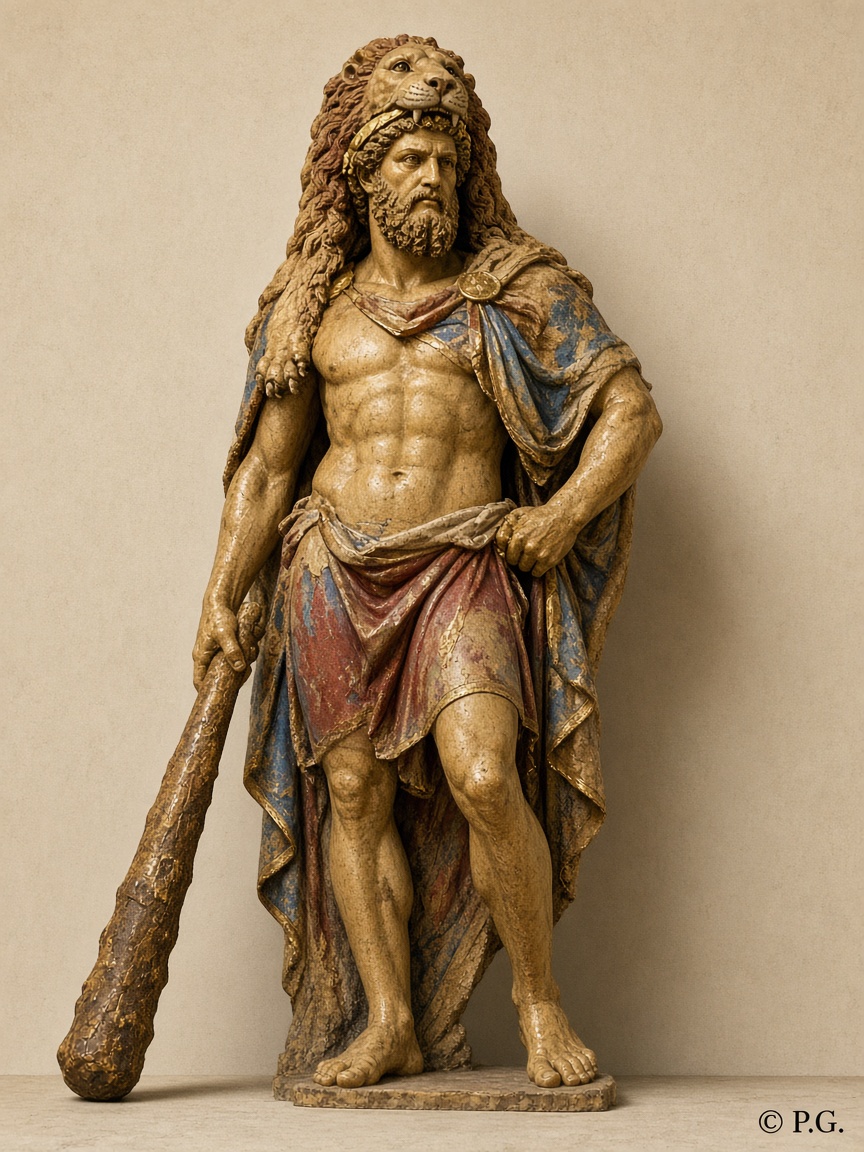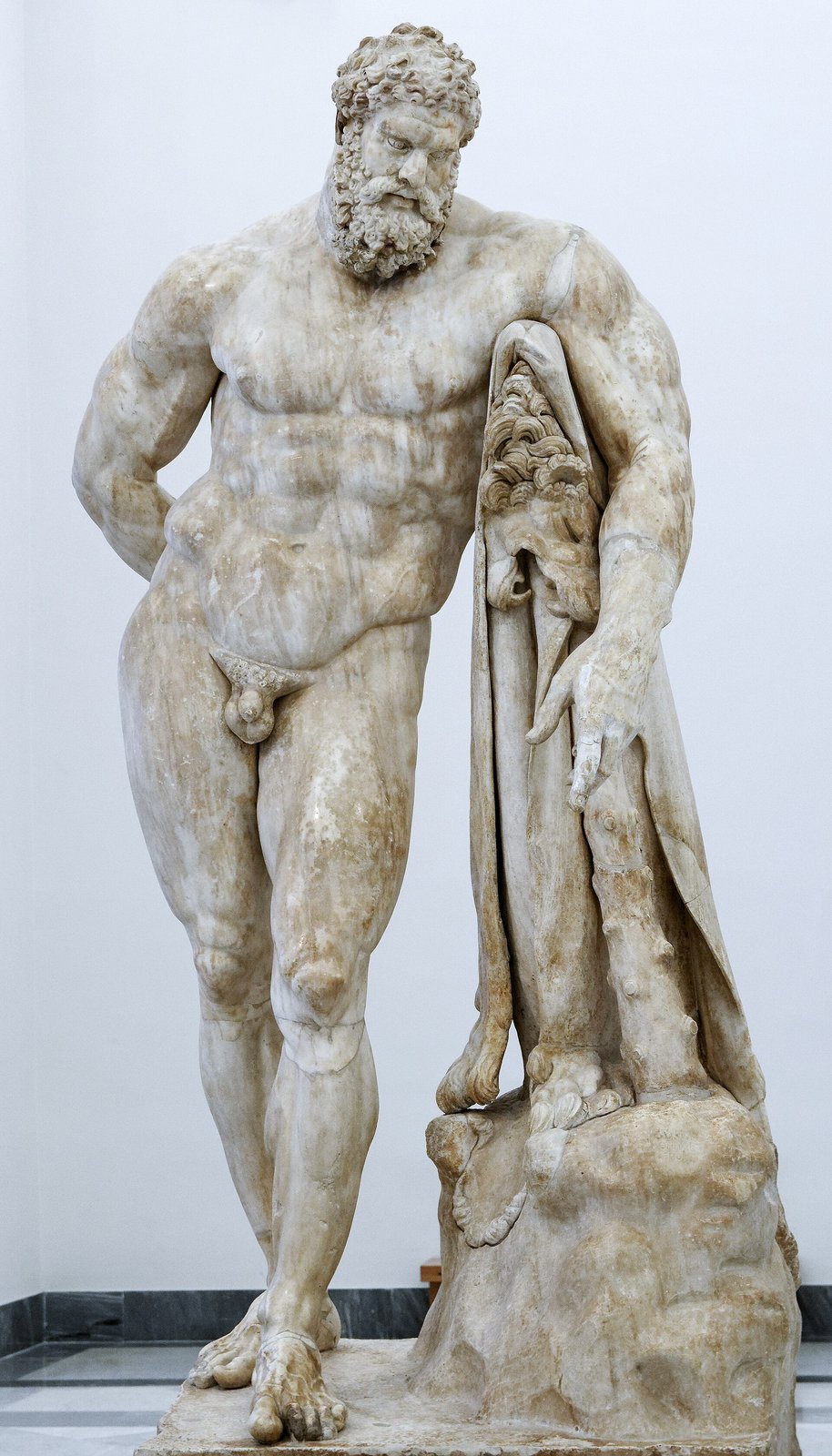
Herakles, “the son of Zeus and much the mightiest of men on earth”, was born to Alkmene in Thebes (Homeric Hymn 15; Theogony 943–944). Hera’s anger set him under Eurystheus, at whose bidding he wandered over land and sea (Iliad 19.95–133). He killed the Nemean lion, the Hydra and Geryon, and freed Prometheus (Theogony 287–332, 526–531). At the end of his labours he was taken to Olympus and given Hebe for his wife, “a deathless god for ever” (Theogony 950–955). The kings of Sparta traced their line to him (Herodotus 7.204).
Epithets
- Ἀλεξίκακος · Alexikakos
- averter of evil
- Καλλίνικος · Kallinikos
- gloriously victorious
- Ἀλκείδης · Alkeides
- grandson of Alkaios, his first name
Domains and symbols
Strength placed in the service of justice; labour; endurance; the athlete; the hero who becomes a god. Admire: courage, perseverance. Sacred symbols: the club, the lion skin, the bow.
Myths
- The labours. Hera delayed his birth so that Eurystheus would rule over him (Iliad 19.95–133).
- Monsters. The Nemean lion, the Hydra of Lerna, the three-bodied Geryon (Theogony 287–332).
- Prometheus. He killed the eagle and freed the Titan, with the consent of Zeus (Theogony 526–534).
- Apotheosis. His phantom is in Hades, but he himself is among the deathless gods, husband of Hebe (Odyssey 11.601–604; Theogony 950–955).
Cult sites
- Thasos. Herodotus found an ancient temple of Herakles there and praised the Greeks who sacrifice to him both as an immortal and as a hero (Herodotus 2.44).
- Kynosarges, Athens. His sanctuary and gymnasium outside the walls (Herodotus 5.63, 6.116).
- Sparta. Ancestor of the kings through the Herakleidai (Herodotus 7.204).
Festivals
- Herakleia. Kept in many cities; before the battle of Marathon the Athenians camped in his precinct there (Herodotus 6.108).
Offerings
Both kinds of offering: burnt sacrifice as to an Olympian, and libations poured into the earth as to a hero (Herodotus 2.44). Today: offer wine and bread, and dedicate a hard task to him.
Beneath the Divine Mind
Herakles is the soul’s ascent made visible: a mortal who, through labour and aretē, was raised to the gods. On the path to henosis he is the pattern of purification by struggle, beneath the Divine Mind and the One (The One and the Many).
Honouring Herakles today
- Altar. A club or lion image.
- Offerings. Wine and bread.
- Practice. Dedicate a hard day’s work to him.
- Hymn. Recite Homeric Hymn 15.
Hymn
I will sing of Heracles, the son of Zeus and much the mightiest of men on earth. Alcmena bare him in Thebes, the city of lovely dances, when the dark-clouded Son of Cronos had lain with her… but now he lives happily in the glorious home of snowy Olympus, and has neat-ankled Hebe for his wife. Hail, lord, son of Zeus! Give me success and prosperity.Homeric Hymn 15, To Heracles the Lion-Hearted. Homeric Hymns, tr. H. G. Evelyn-White (1914), public domain.
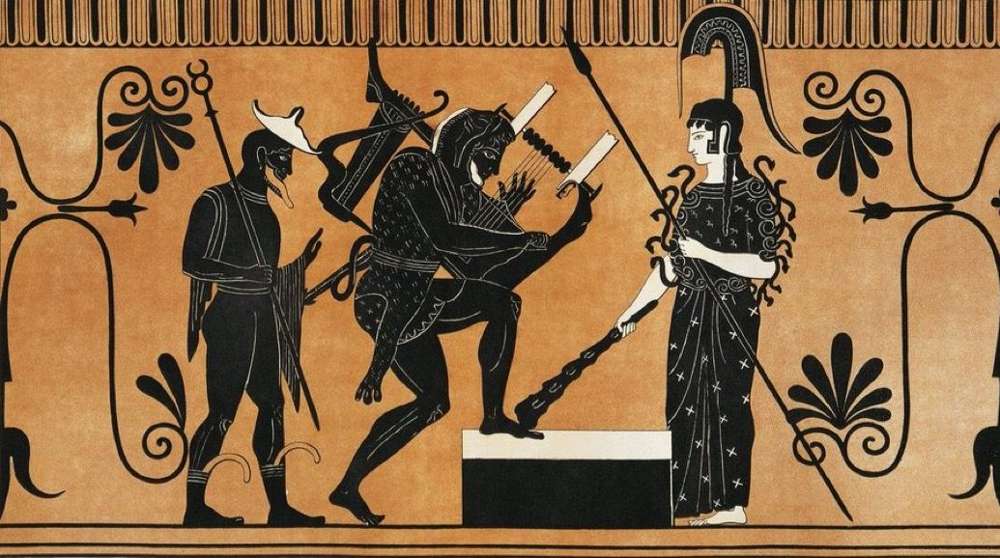
Images
Sources
Hesiod, Theogony 287–332, 526–534, 943–955; Homeric Hymn 15; Homer, Iliad 19.95–133, Odyssey 11.601–604; Herodotus 2.44, 5.63, 6.108, 6.116, 7.204.
Quotations in public-domain translations (Evelyn-White 1914, Butler 1898/1900, Taylor 1792); other authors paraphrased.