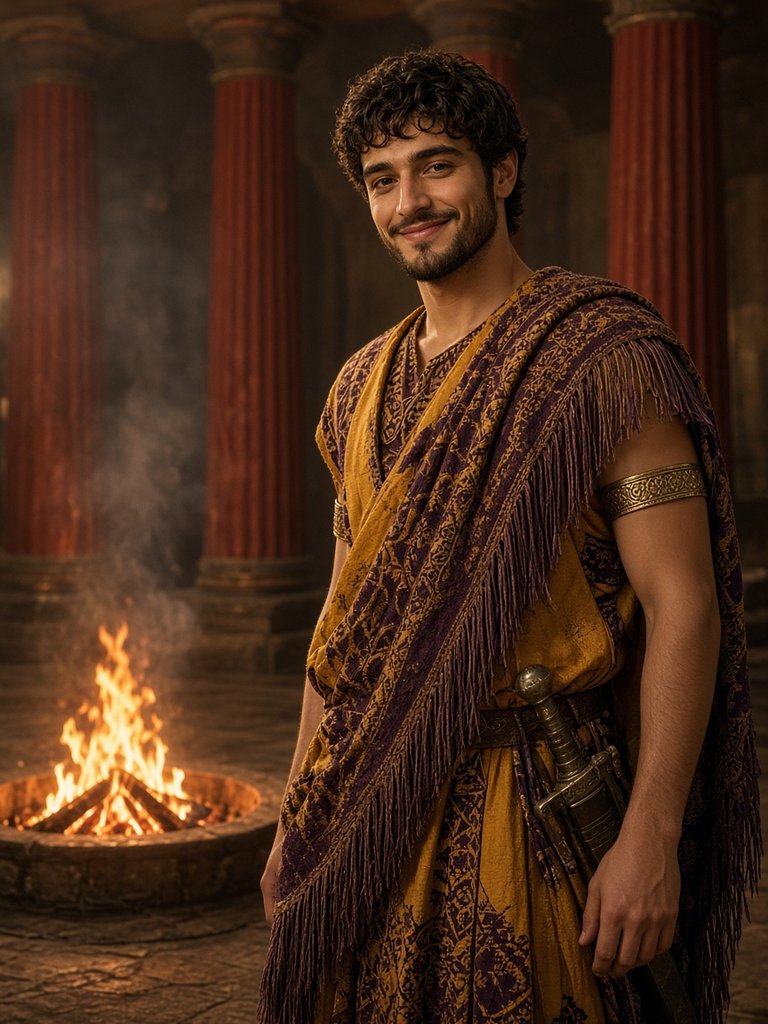
Eurymachos, son of Polybos, is, with Antinoos, the leading suitor of Penelope, and the one her father and brothers favour. He mocks the old seer Halitherses when he reads an omen of Odysseus’ return: “Go home, old man, and prophesy to your own children, or it may be worse for them. I can read these omens myself much better than you can; birds are always flying about in the sunshine somewhere or other, but they seldom mean anything” (Odyssey 2.178–182, tr. Butler).
He is a hypocrite: he swears to Penelope that no one shall harm Telemachos while he lives, while plotting his death (Odyssey 16.434–449, paraphrased). He taunts the beggar and throws a footstool at him (Odyssey 18.349–398).
When Antinoos falls, Eurymachos blames everything on him and offers to repay all the suitors have eaten. Odysseus refuses. Eurymachos draws his sword and charges, and is shot through the chest (Odyssey 22.44–88, paraphrased).
Epithets
- Πολύβου υἱός · Polubou huios
- son of Polybos
- θεοειδής · theoeidēs
- godlike in looks
Symbols and virtues
Flattery and false promises. Symbols: the sword, the footstool, the offered ransom.
Myths
- Mocking the seer. Odyssey 2.177–207.
- The false oath. Odyssey 16.434–449.
- The footstool. Odyssey 18.349–398.
- Death. Odyssey 22.44–88.
In the poets
“Birds are always flying about in the sunshine somewhere or other, but they seldom mean anything.”Homer, Odyssey 2.181–182, tr. Samuel Butler (1900), public domain.
Sources
Homer, Odyssey 1.399–411, 2.177–207, 15.16–18, 16.434–449, 18.244–398, 21.245–255, 22.44–88.
Quotations in public-domain translations (Evelyn-White 1914, Butler 1898/1900, Taylor 1792); other authors paraphrased.