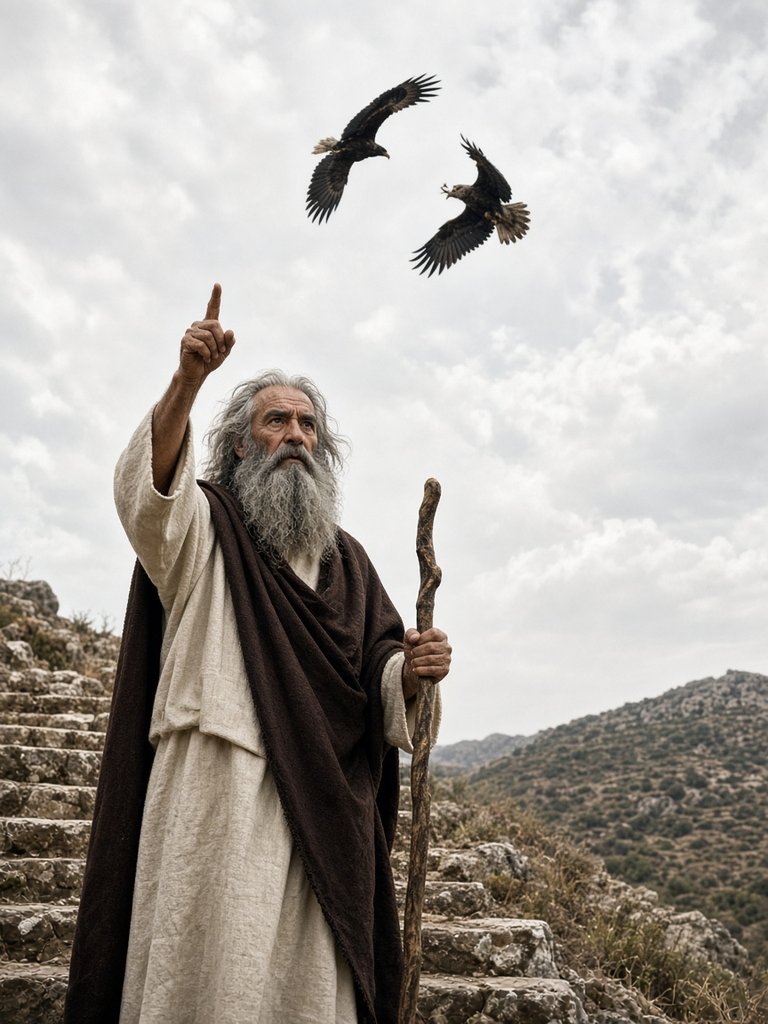
Halitherses, son of Mastor, was an old seer of Ithaca. When Zeus sent two eagles over the assembly called by Telemachos, “Halitherses, who was the best prophet and reader of omens among them, spoke to them plainly and in all honesty” (Odyssey 2.157–159, tr. Butler), warning the suitors that Odysseus was close at hand.
He reminded them that he had foretold Odysseus’ return in the twentieth year, and Eurymachos mocked him (Odyssey 2.170–207, paraphrased). He was one of the old friends of the house, with Mentor, to whom Telemachos turned (Odyssey 2.253–254; 17.67–70, paraphrased).
After the slaying of the suitors he urged the Ithacans not to march against Odysseus, saying the disaster was their own fault; more than half listened and went home (Odyssey 24.451–466, paraphrased).
Epithets
- Μαστορίδης · Mastoridēs
- son of Mastor (Odyssey 2.158)
Symbols and virtues
Honest prophecy that goes unheeded. Symbols: the two eagles.
Myths
- Omen of the two eagles. Odyssey 2.146–176.
- Mocked by Eurymachos. Odyssey 2.178–207.
- Warning to the Ithacans. Odyssey 24.451–466.
In the poets
“Halitherses, who was the best prophet and reader of omens among them, spoke to them plainly and in all honesty.”Homer, Odyssey 2.157–159, tr. Samuel Butler (1900), public domain.
Sources
Homer, Odyssey 2.146–207, 2.253–254, 17.67–70, 24.451–466.
Quotations in public-domain translations (Evelyn-White 1914, Butler 1898/1900, Taylor 1792); other authors paraphrased.