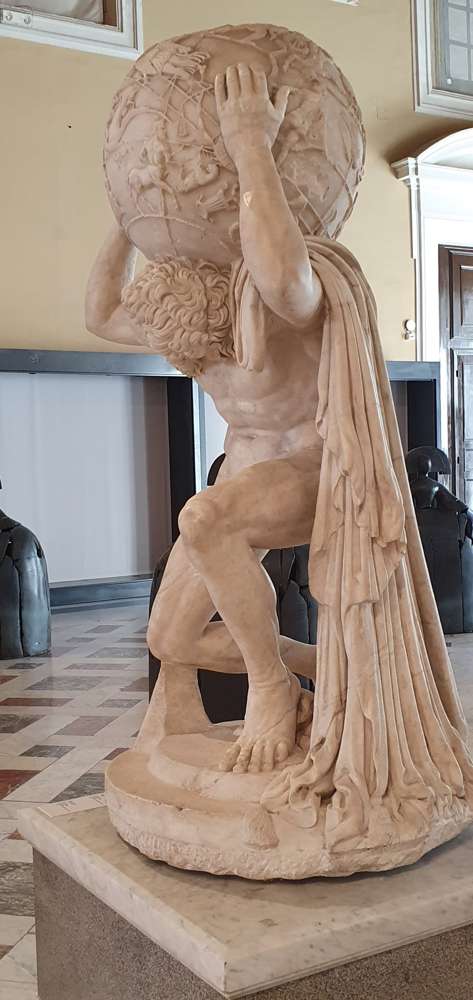
Yair Haklai, CC BY-SA 4.0, via Wikimedia Commons

Atlas, son of Iapetos and Klymene, “through hard constraint upholds the wide heaven with unwearying head and arms, standing at the borders of the earth before the clear-voiced Hesperides; for this lot wise Zeus assigned to him” (Theogony 507–520). Homer calls him the one “who knows the depths of every sea, and himself holds the tall pillars which keep earth and sky asunder” (Odyssey 1.52–54). He is the father of Kalypso, of Maia the mother of Hermes, and of the Pleiades.
Epithets
- Ὀλοόφρων · Oloophron
- of baneful mind (Odyssey 1.52)
- Ἀτλαγενής · Atlagenes
- “Atlas-born”, said of the Pleiades (Works and Days 383)
Domains and symbols
Endurance; the axis of the heavens; astronomy. Admire: steadfast bearing of a burden. Sacred symbols: the sphere of heaven, the pillars.
Myths
- The burden. Zeus set him to hold up the sky at the ends of the earth (Theogony 517–520).
- His daughters. Maia, mother of Hermes (Homeric Hymn 18.4); Kalypso (Odyssey 7.245); the Pleiades (Works and Days 383).
- The apples. Herakles took the sky on his shoulders while Atlas fetched the golden apples of the Hesperides (Apollodorus, Library 2.5.11).
Cult sites
- Olympia. The chest of Kypselos showed Atlas bearing heaven and earth, with the apples of the Hesperides (Pausanias 5.18.4).
Offerings
He had no regular cult. Today: honour him with the stars on a clear night, and with the Pleiades at their rising.
Beneath the Divine Mind
Atlas is the Divine Mind as the steadfast axis: the order that holds heaven and earth apart, personified and deified as the Titan who bears the sky. Like every god he stands beneath the One (The One and the Many).
Honouring Atlas today
- Night sky. Find the Pleiades and recite the Theogony passage below.
Hymn
And Atlas through hard constraint upholds the wide heaven with unwearying head and arms, standing at the borders of the earth before the clear-voiced Hesperides; for this lot wise Zeus assigned to him.Hesiod, Theogony 517–520, tr. H. G. Evelyn-White (1914), public domain. There is no Homeric or Orphic hymn to Atlas.
Images
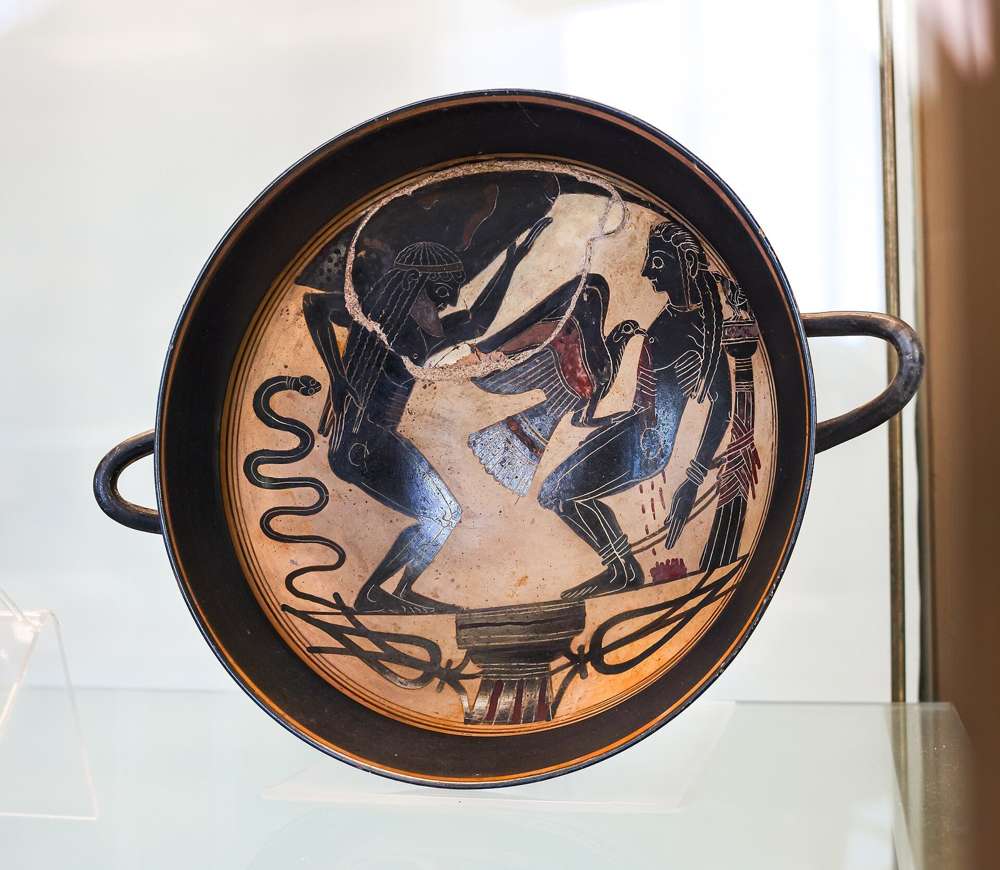
ArchaiOptix, CC BY-SA 4.0, via Wikimedia Commons

Sources
Hesiod, Theogony 507–520, Works and Days 383; Homer, Odyssey 1.52–54, 7.245; Homeric Hymn 18; Apollodorus, Library 2.5.11; Pausanias 5.18.4.
Quotations in public-domain translations (Evelyn-White 1914, Butler 1898/1900, Taylor 1792); other authors paraphrased.