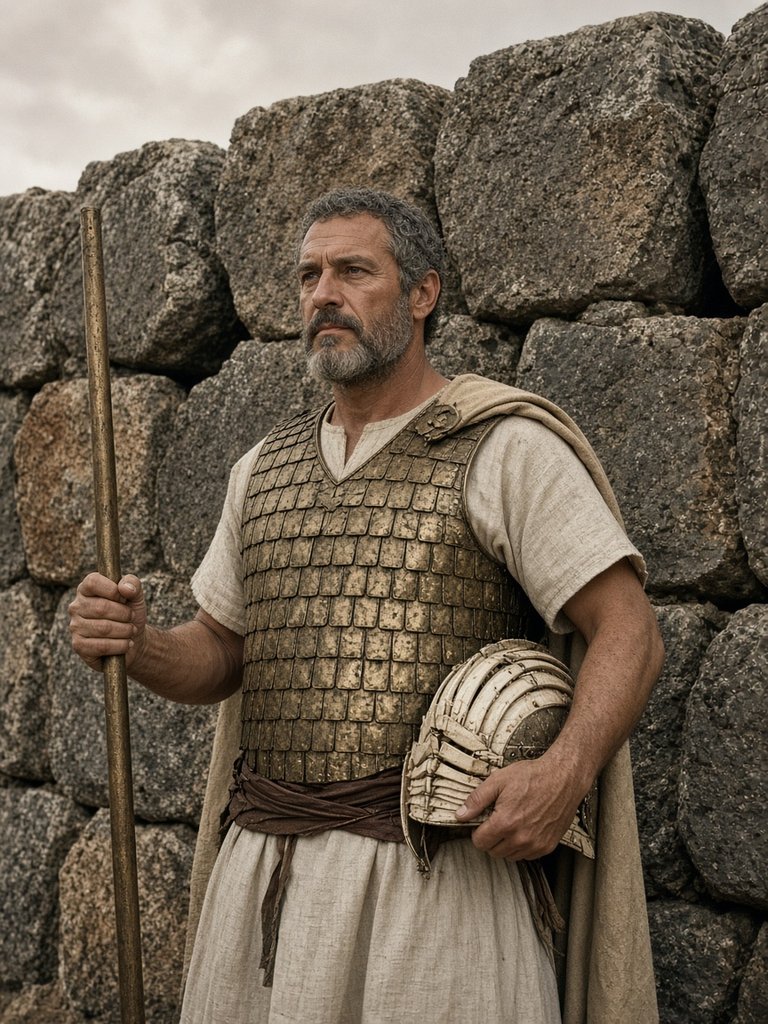
Amphitryon, grandson of Perseus, was a prince of Tiryns. He was to marry his cousin Alkmene, but killed her father Elektryon by accident and fled with her to Thebes. She would not lie with him until he had avenged her brothers on the Teleboans, and he made war on them and won (Apollodorus 2.4.6–7; Hesiod, Shield 1–56, paraphrased).
On the night of his return Zeus came to Alkmene in Amphitryon’s likeness, and she bore twins, Herakles by Zeus and Iphikles by Amphitryon (Apollodorus 2.4.8, paraphrased). In the underworld Odysseus says: “Then I saw Alcmena, the wife of Amphitryon, who also bore to Jove indomitable Hercules” (Odyssey 11.266–268, tr. Butler), and Homer often calls Herakles “son of Amphitryon”.
He raised Herakles as his own, taught him to drive horses, and died fighting for Thebes against the Minyans of Orchomenos (Apollodorus 2.4.9–11, paraphrased). The story of his double was retold in comedy by Plautus.
Epithets
- Ἀμφιτρυωνιάδης · Amphitruōniadēs
- son of Amphitryon, said of Herakles (Iliad 5.392)
Symbols and virtues
The mortal father who raises a god’s son. Symbols: the spear, the walls of Tiryns.
Myths
- The death of Elektryon. Apollodorus 2.4.6.
- War with the Teleboans. Apollodorus 2.4.7; Shield 1–56.
- Zeus in his form. Apollodorus 2.4.8.
- Father of Iphikles. Odyssey 11.266–268.
Cult and places
- Thebes. His tomb was shown beside the tomb of Iolaos (Pindar, Pythian 9.81–83; Pausanias 1.41.1).
In the poets
“Then I saw Alcmena, the wife of Amphitryon, who also bore to Jove indomitable Hercules.”Homer, Odyssey 11.266–267, tr. Samuel Butler (1900), public domain.
Sources
Homer, Iliad 5.392; Odyssey 11.266–270; Hesiod, Shield 1–56; Apollodorus 2.4.6–11; Plautus, Amphitruo.
Quotations in public-domain translations (Evelyn-White 1914, Butler 1898/1900, Taylor 1792); other authors paraphrased.