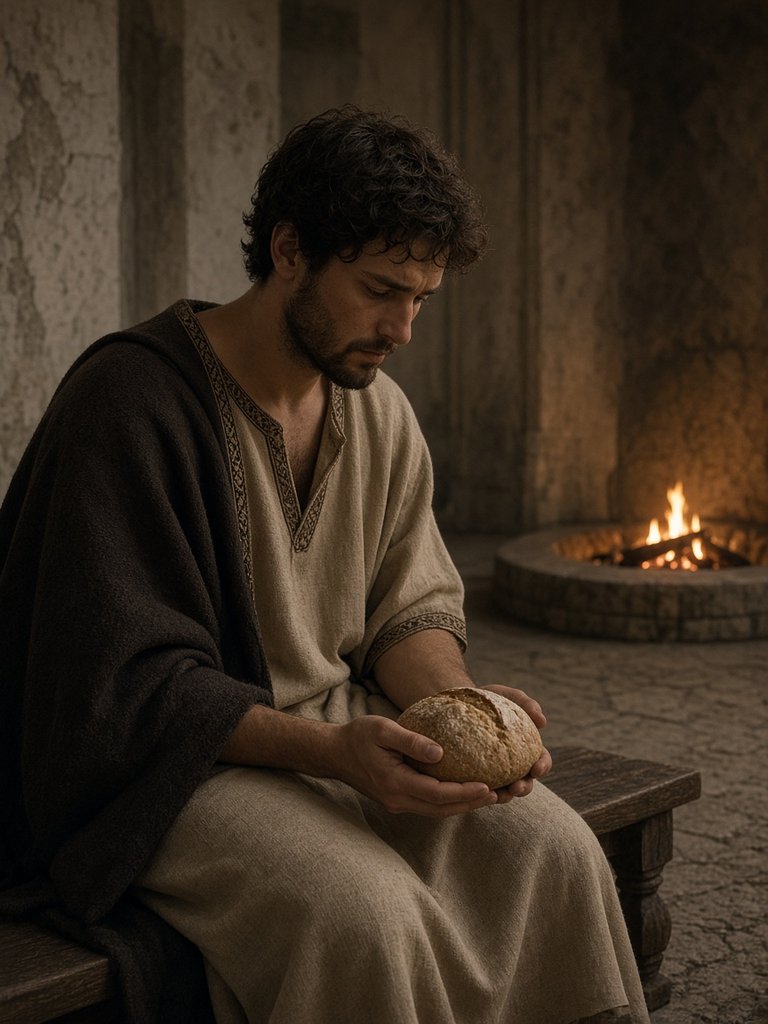
Amphinomos is the best of Penelope’s suitors. When the others plot to murder Telemachos, “Amphinomus rose to speak. He was the son of Nisus, who was son to king Aretias, and he was foremost among all the suitors from the wheat-growing and well grassed island of Dulichium; his conversation, moreover, was more agreeable to Penelope than that of any of the other suitors, for he was a man of good natural disposition” (Odyssey 16.394–398, tr. Butler). He tells them it is a heinous thing to kill one of royal blood unless the gods approve.
He treats the disguised Odysseus kindly, giving him bread and drinking to his health. Odysseus, moved, warns him plainly that the master of the house is near and will soon return in blood, and urges him to leave (Odyssey 18.119–157, paraphrased).
Amphinomos goes away troubled, but Athena had already bound him to die. In the slaughter he rushes at Odysseus with his sword and is killed by Telemachos’ spear (Odyssey 22.89–98, paraphrased).
Epithets
- Νισίδης · Nisidēs
- son of Nisos
- ἀγαθὸς φρεσίν · agathos phresin
- good of heart
Symbols and virtues
Decency that cannot escape fate. Symbols: the bread and the cup of friendship.
Myths
- Against the murder. Odyssey 16.394–406.
- Odysseus’ warning. Odyssey 18.119–157.
- Death by Telemachos. Odyssey 22.89–98.
In the poets
“His conversation, moreover, was more agreeable to Penelope than that of any of the other suitors, for he was a man of good natural disposition.”Homer, Odyssey 16.397–398, tr. Samuel Butler (1900), public domain.
Sources
Homer, Odyssey 16.351–406, 18.119–157, 18.394–428, 20.240–247, 22.89–98.
Quotations in public-domain translations (Evelyn-White 1914, Butler 1898/1900, Taylor 1792); other authors paraphrased.