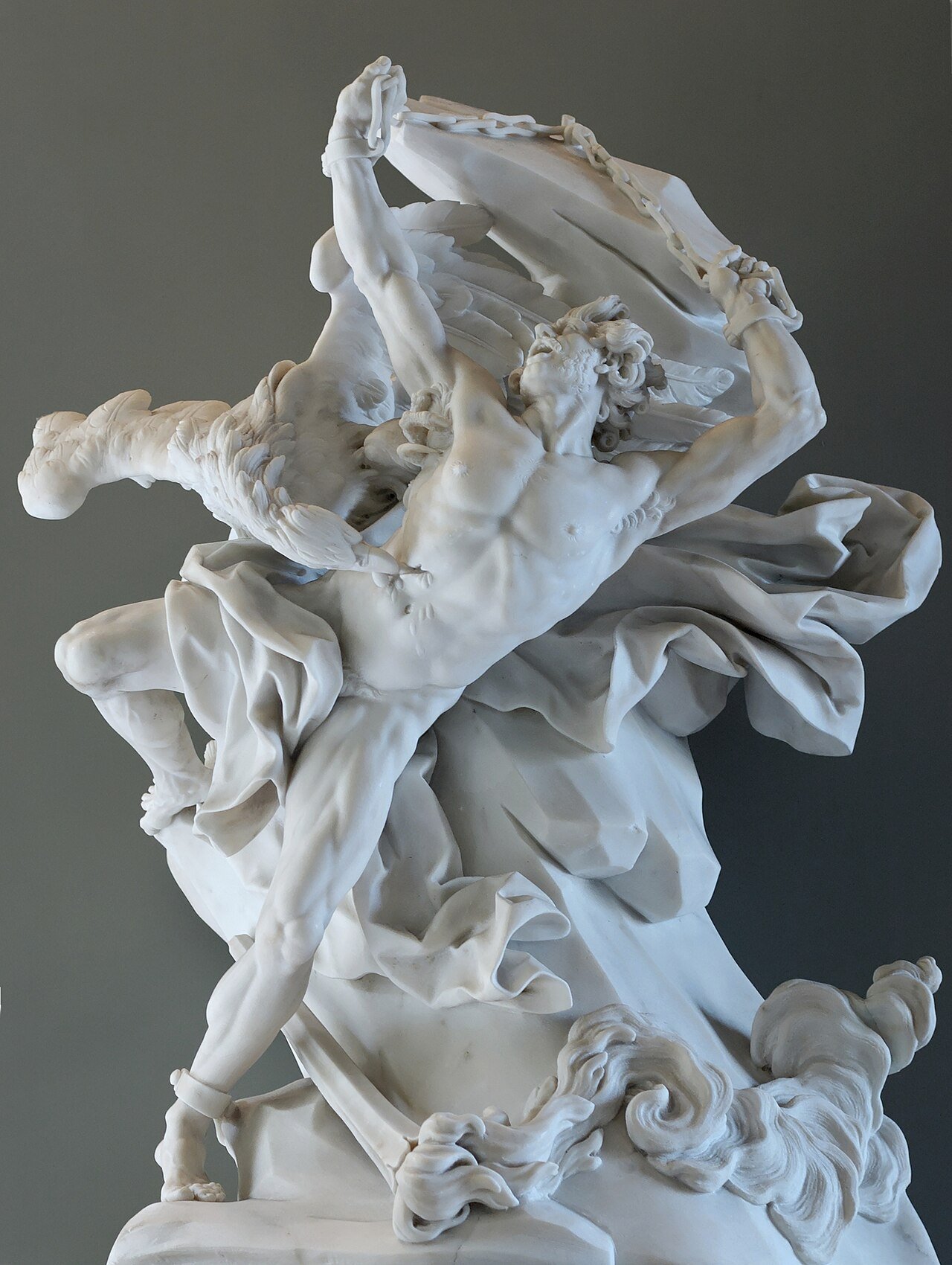
Marie-Lan Nguyen, Public domain, via Wikimedia Commons

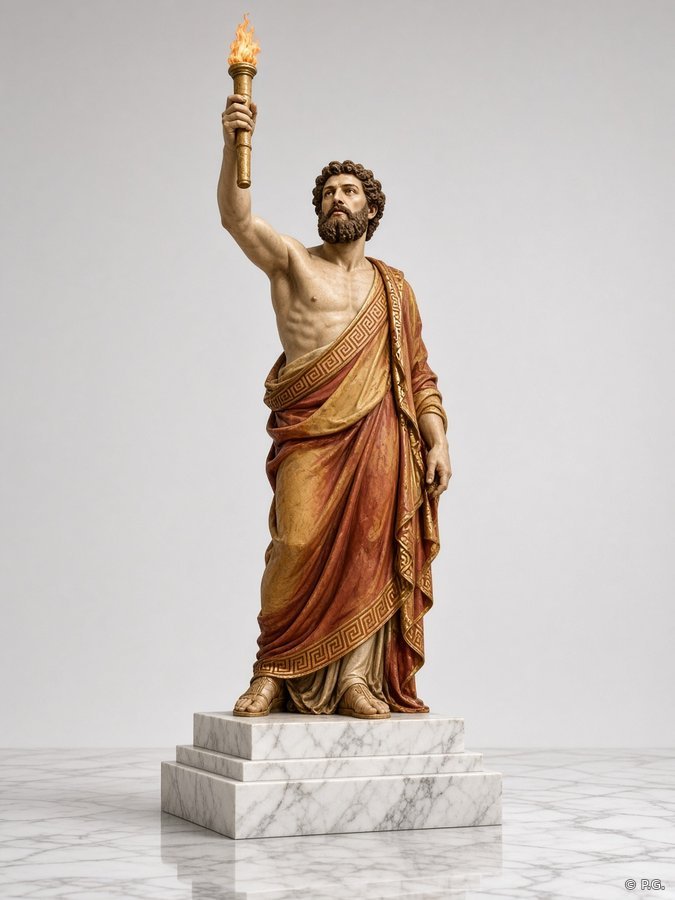
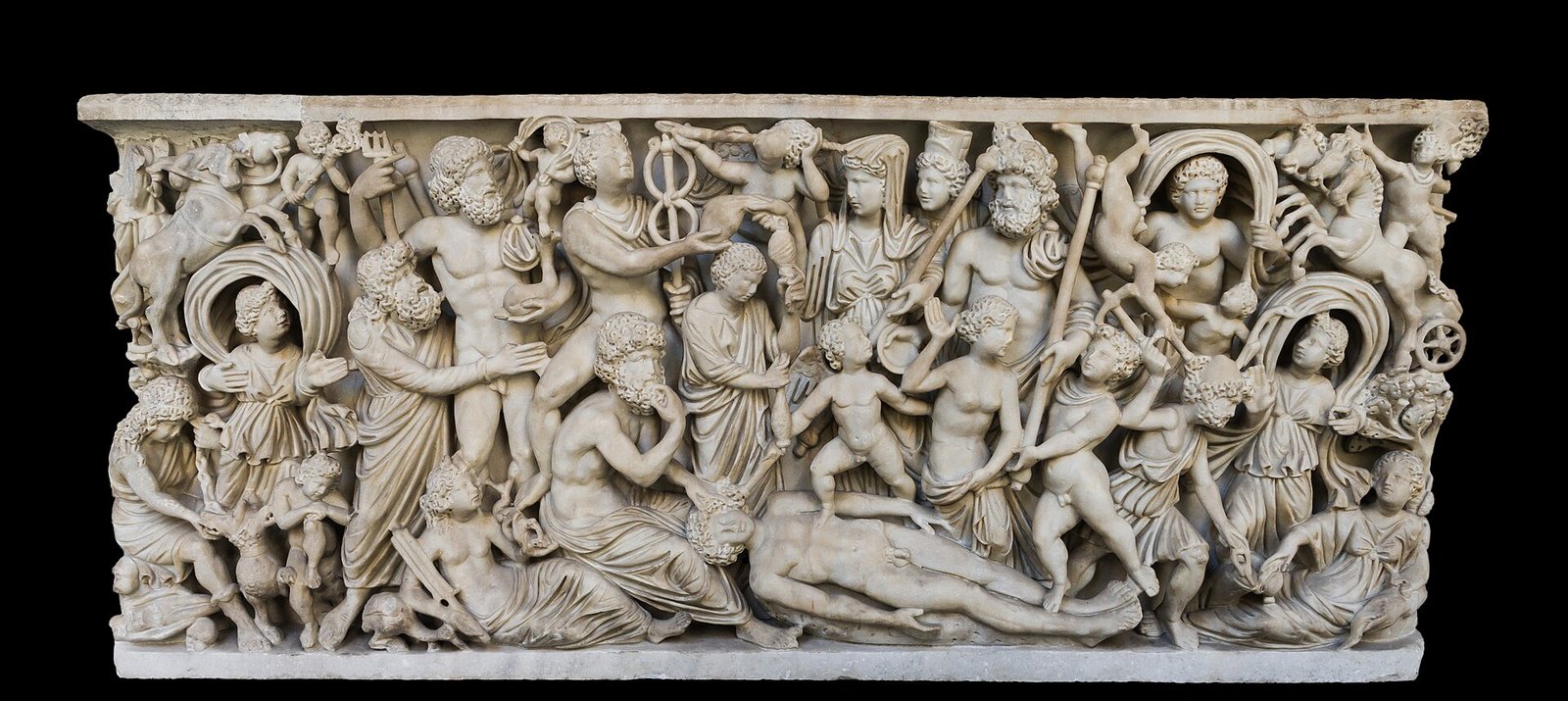
Prometheus, “clever Prometheus, full of various wiles”, is the son of the Titan Iapetos and the Okeanid Klymene, brother of Atlas and Epimetheus (Theogony 507–511). At Mekone he divided the sacrificial ox to trick Zeus, and when Zeus withheld fire he stole it in a fennel stalk (Theogony 535–569). For this he was chained and an eagle ate his liver, until Herakles freed him (Theogony 521–534). In Aeschylus he gave mortals every art (Prometheus Bound 442–506).
Epithets
- Πυρφόρος · Pyrphoros
- fire-bearer, title of a play of Aeschylus
- Ποικιλόβουλος · Poikiloboulos
- of shifting counsel (Theogony 521)
Domains and symbols
Forethought; fire, craft and the arts; the cost of the gift. Admire: foresight, the courage to serve mankind. Sacred symbols: the torch, the fennel stalk.
Myths
- Mekone. He set before Zeus the bones wrapped in fat and before men the meat; from then on men burned bones for the gods (Theogony 535–557).
- The fire. He hid fire in a hollow fennel stalk and brought it to mortals (Theogony 565–569; Works and Days 50–52).
- The eagle. Zeus bound him and sent the eagle; Herakles killed it and set him free (Theogony 521–534).
- The arts. “All arts that mortals have come from Prometheus” (Aeschylus, Prometheus Bound 506).
Cult sites
- The Academy, Athens. An altar of Prometheus from which the torch-race to the city began (Pausanias 1.30.2).
Festivals
- Prometheia. The Athenian torch-race in his honour.
Offerings
A lamp or torch, lit and carried. Today: light a flame before work with the hands.
Beneath the Divine Mind
Prometheus is the Divine Mind as forethought: its providence for mortal life, personified and deified as the bringer of fire. Plato tells his gift in the Protagoras (320c–322a). Like every god he stands beneath the One (The One and the Many).
Honouring Prometheus today
- Altar. A lamp.
- Practice. Light a flame before craft or study.
- Reading. Read Theogony 507–616.
Hymn
And ready-witted Prometheus he bound with inextricable bonds, cruel chains, and drove a shaft through his middle, and set on him a long-winged eagle, which used to eat his immortal liver; but by night the liver grew as much again everyway as the long-winged bird devoured in the whole day.Hesiod, Theogony 521–525, tr. H. G. Evelyn-White (1914), public domain. There is no Homeric or Orphic hymn to Prometheus.
Images
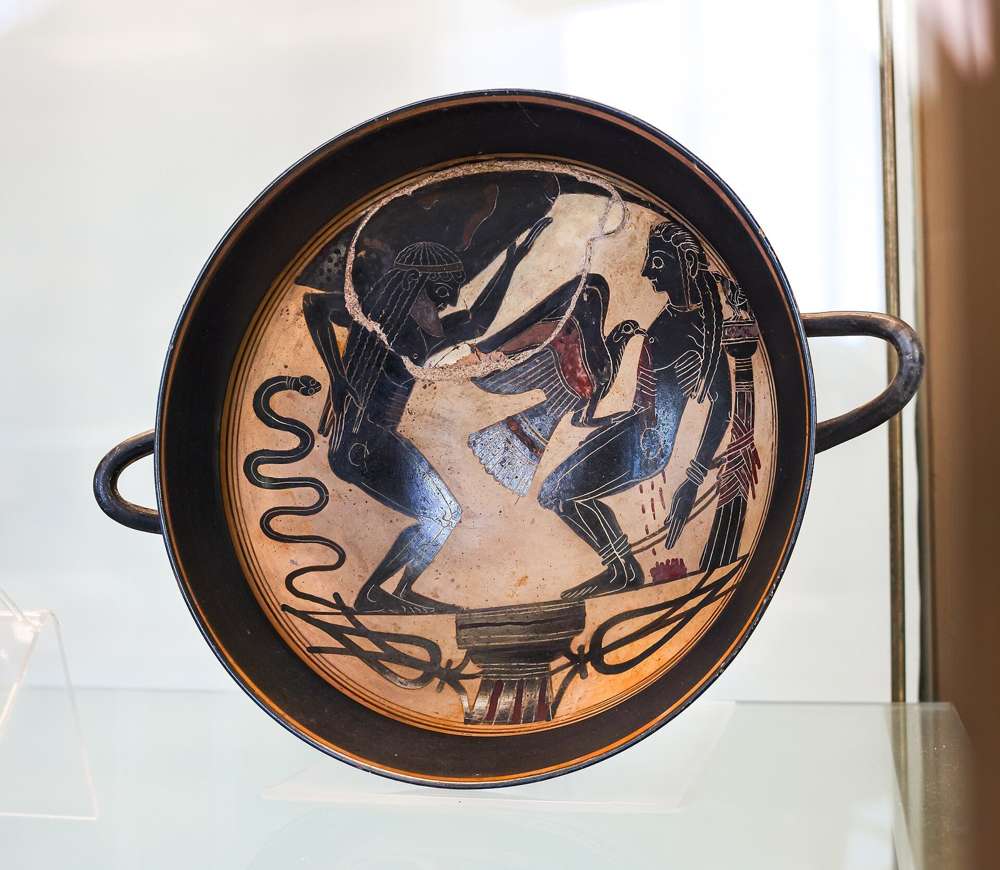
ArchaiOptix, CC BY-SA 4.0, via Wikimedia Commons

Sources
Hesiod, Theogony 507–616; Works and Days 42–105; Aeschylus, Prometheus Bound; Plato, Protagoras 320c–322a; Pausanias 1.30.2.
Quotations in public-domain translations (Evelyn-White 1914, Butler 1898/1900, Taylor 1792); other authors paraphrased.