The Metropolitan Museum of Art, CC0 (public domain), via Wikimedia Commons · museum page

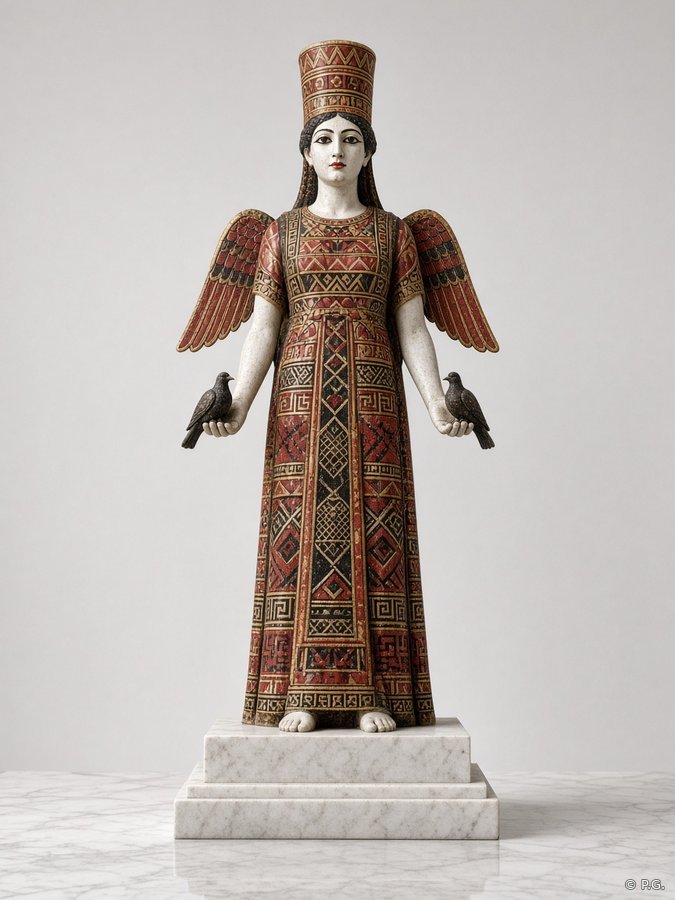
Artemis Orthia is Artemis as worshipped at Sparta in the marshy place called Limnaion by the river Eurotas. Pausanias tells that the wooden image there was the one Orestes and Iphigeneia stole from the land of the Taurians; it was found in a thicket of willows and stood upright, so that she was called Orthia, “the Upright” (Pausanias 3.16.7–11).
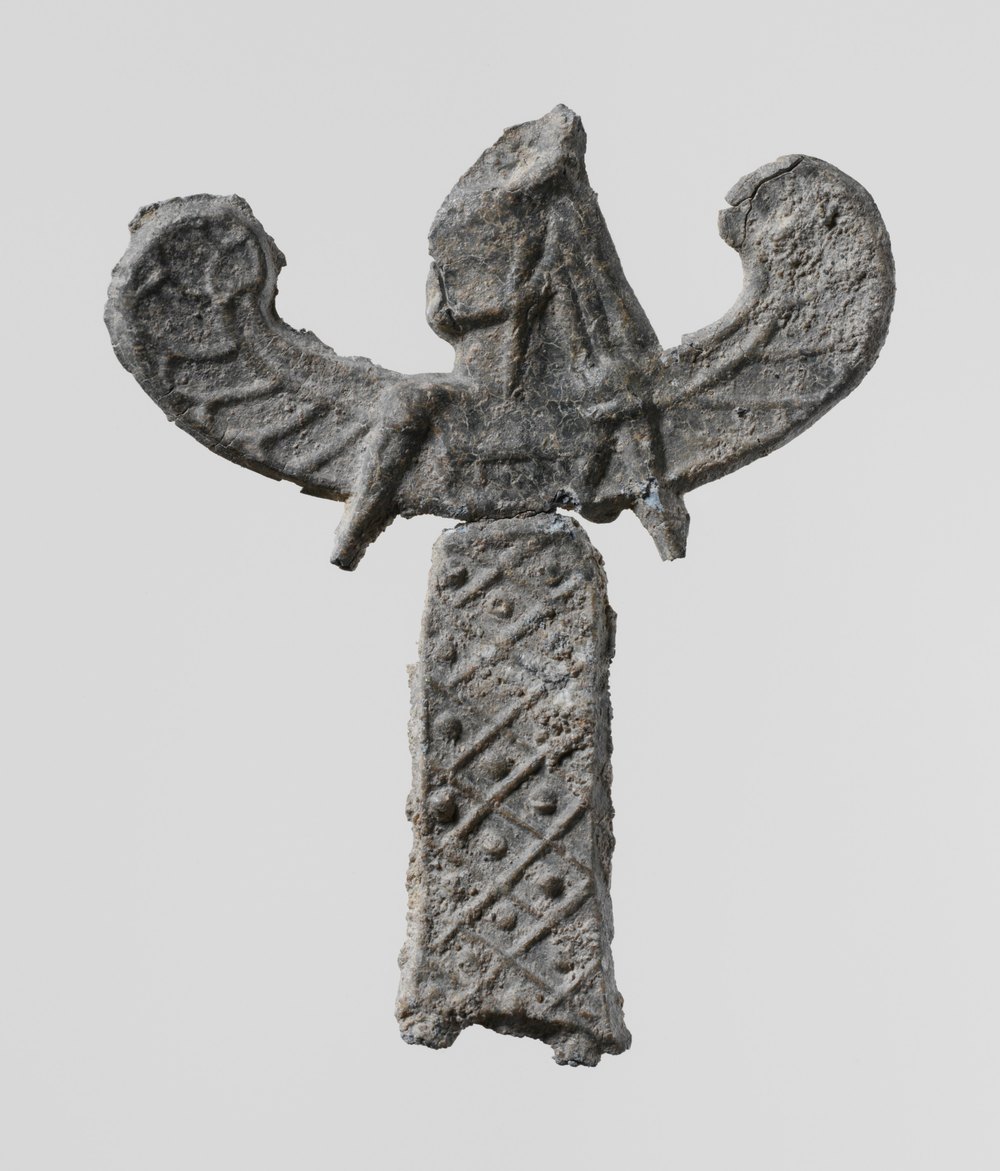
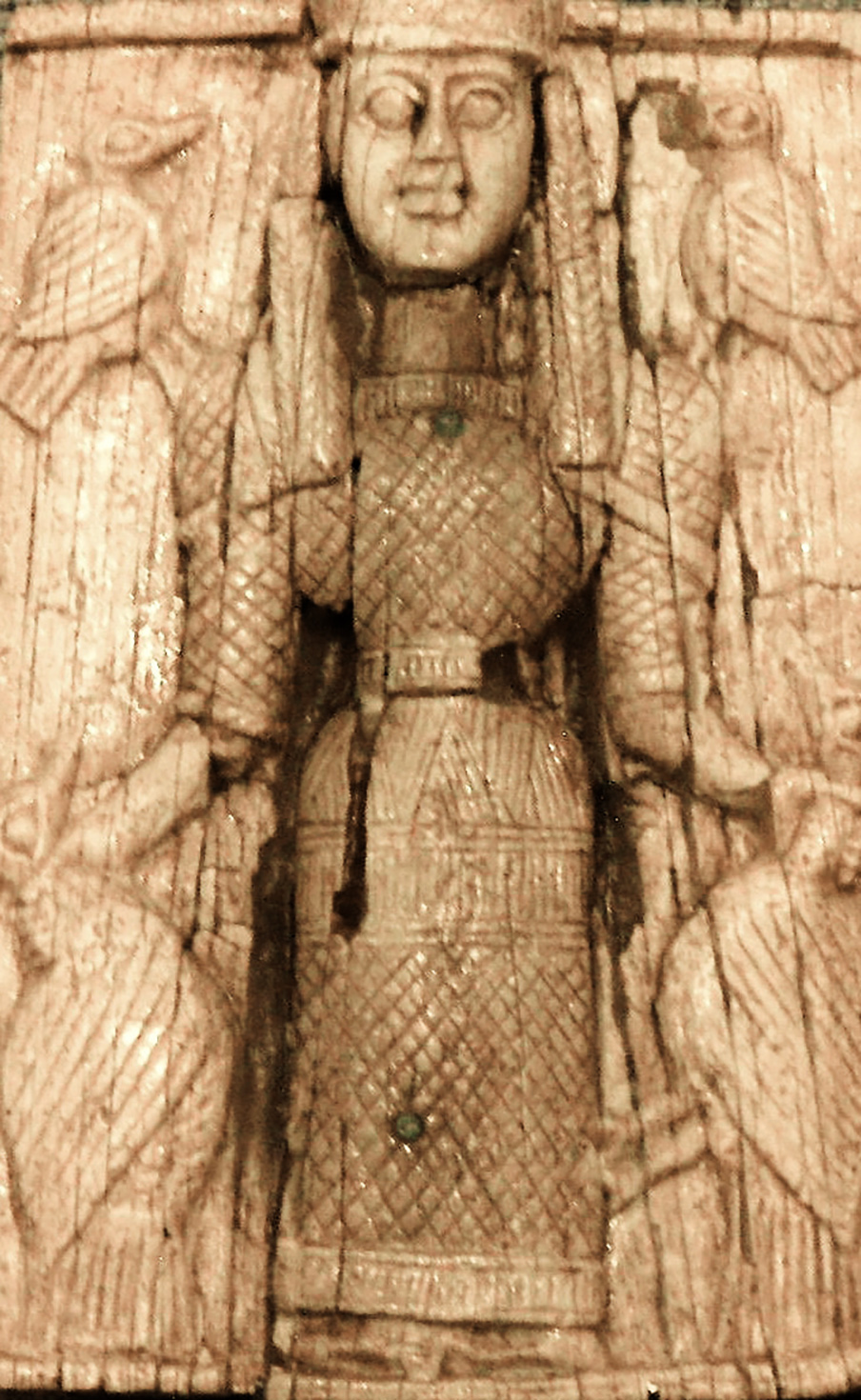
Her altar was the scene of the most famous Spartan rite. Xenophon says that Lykourgos made it an honour to steal as many cheeses as possible from the altar of Orthia while others stood by with whips (Constitution of the Lacedaemonians 2.9). Plutarch saw the boys of his own day scourged at her altar, some to death (Lykourgos 18.1). Pausanias adds that the priestess held the small image during the scourging, and it grew heavy if the floggers spared anyone (Pausanias 3.16.10–11). Excavations by the British School at Athens (1906–1910) found thousands of votive masks, ivories and lead figurines at the sanctuary.
Epithets
- Ὀρθία · Orthia
- the Upright (Pausanias 3.16.11)
- Λυγοδέσμα · Lygodesma
- “willow-bound”, because the image was found in a willow thicket (Pausanias 3.16.11)
- Ὀρθίη · Orthie
- “upright”, among the epithets of Artemis (Orphic Hymn 36.8)
Domains and symbols
The initiation of youth, endurance, the discipline of the agoge, wild nature at the river’s edge. Admire: courage, self-command. Sacred symbols: the willow, cheese offerings, the votive mask, the birds of the Mistress of Animals.
Myths
- The Tauric image. Brought by Orestes and Iphigeneia, found in a willow thicket (Pausanias 3.16.7–11).
- The cheeses. Boys stole cheeses from her altar under the whip (Xenophon, Constitution of the Lacedaemonians 2.9).
- The scourging. At her altar (Plutarch, Lykourgos 18.1; Pausanias 3.16.10–11).
Cult sites
- Sparta, Limnaion. Her sanctuary on the bank of the Eurotas (Pausanias 3.16.7).
Offerings
Cheese, wine and a hymn; in antiquity also endurance trials.
Beneath the Divine Mind
Artemis Orthia is the Divine Mind as uprightness: the goddess who stands straight and asks the young to stand straight under trial. See the Artemis card for her wider worship. Like every god she stands beneath the One (The One and the Many).
Honouring Artemis Orthia today
- Endurance. Take on one hard discipline willingly.
- Offering. Set cheese and wine before her image.
- Hymn. Recite the Orphic hymn to Artemis below.
Hymn
Hear me, Zeus' daughter, celebrated queen, Bacchian and Titan, of a noble mien: In darts rejoicing and on all to shine, torch-bearing Goddess, Dictynna divine; O'er births presiding, and thyself a maid, to labour-pangs imparting ready aid.Orphic Hymn 36, To Artemis, 1–5 (the hymn names her ὀρθίη, “upright”, at line 8). Tr. Thomas Taylor (1792), public domain; divine names as given on Hemera.
Sources
Pausanias 3.16.7–11; Xenophon, Constitution of the Lacedaemonians 2.9; Plutarch, Lykourgos 18.1; Orphic Hymn 36; R. M. Dawkins (ed.), The Sanctuary of Artemis Orthia at Sparta (1929).
Quotations in public-domain translations (Evelyn-White 1914, Butler 1898/1900, Taylor 1792); other authors paraphrased.
Marsyas, CC BY-SA 2.5, via Wikimedia Commons