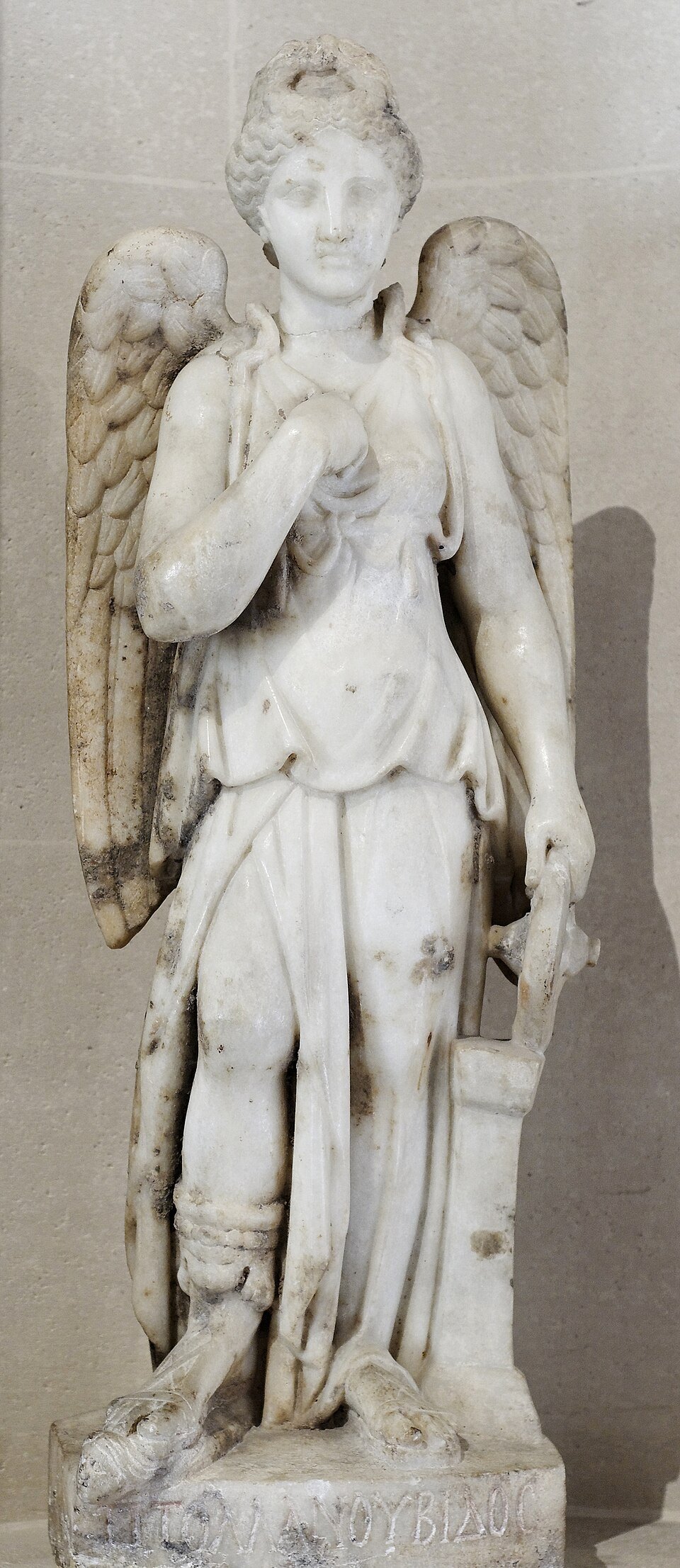
Marie-Lan Nguyen, Public domain, via Wikimedia Commons

“Also deadly Night bare Nemesis to afflict mortal men” (Theogony 223). She is the gods’ indignation at pride and undeserved fortune. Hesiod foretells that at the end of the race of iron, Aidos and Nemesis, “with their sweet forms wrapped in white robes, will go from the wide-pathed earth and forsake mankind to join the company of the deathless gods” (Works and Days 197–200). Herodotus saw her hand when Croesus thought himself the happiest of men (Herodotus 1.34).
Epithets
- Ῥαμνουσία · Rhamnousia
- of Rhamnous (Pausanias 1.33.2)
Domains and symbols
Measure and the punishment of excess; due proportion between fortune and desert. Admire: modesty, restraint. Sacred symbols: the measuring rod, the bridle, the wheel, the apple branch.
Myths
- Daughter of Night. Theogony 223.
- She leaves the earth. With Aidos, at the end of the iron age (Works and Days 197–201).
- Croesus. A great nemesis from the god fell on Croesus (Herodotus 1.34).
Cult sites
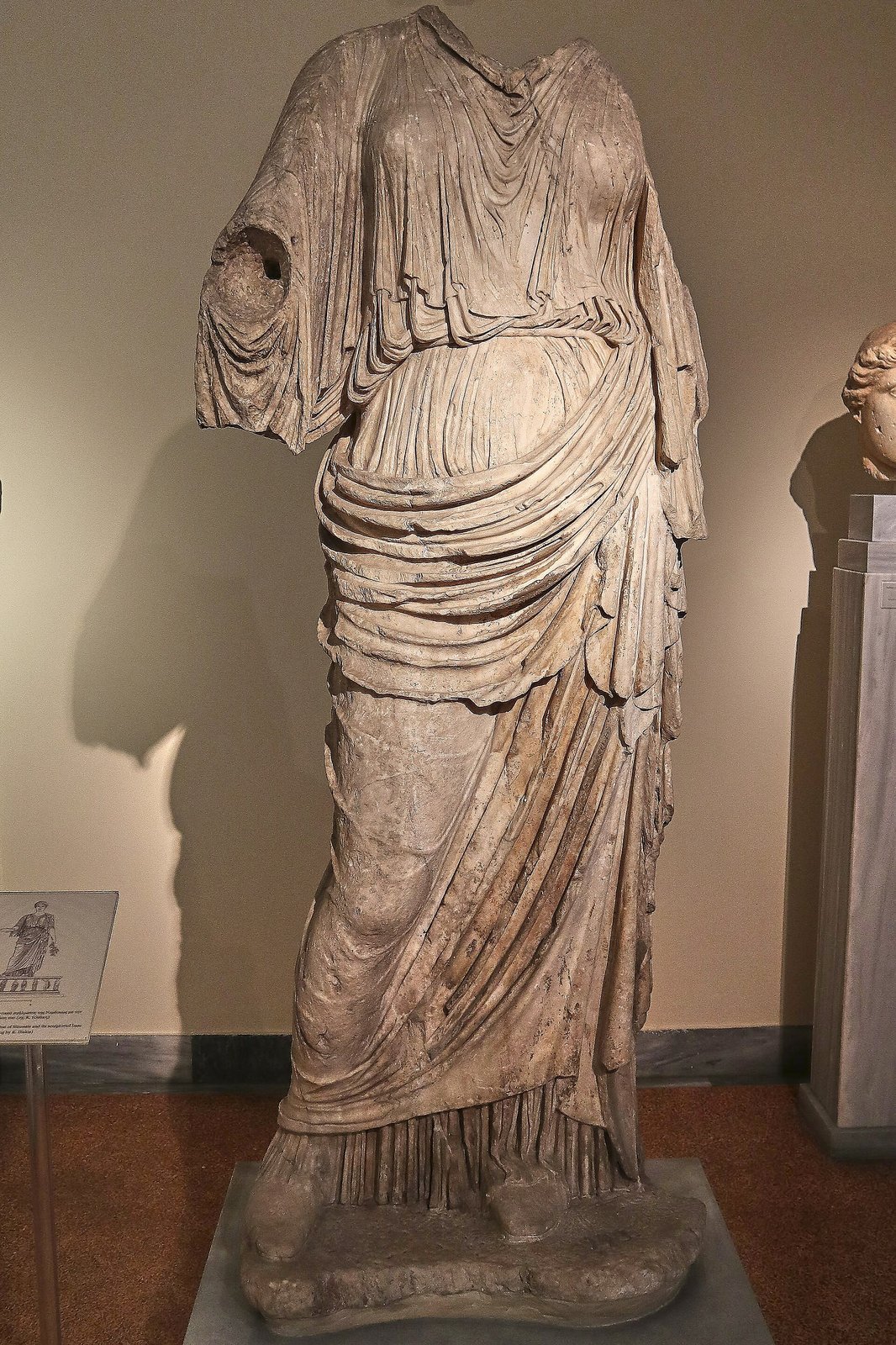
- Rhamnous. Her temple, with a statue the Persians brought marble for, to make a trophy of victory (Pausanias 1.33.2–3); beside it the small temple of Themis.
- Smyrna. Two Nemeseis, said to have appeared to Alexander in a dream (Pausanias 7.5.2–3).
Offerings
Today: speak modestly of good fortune and give part of it away.
Beneath the Divine Mind
Nemesis is the Divine Mind as measure restored: the balance that returns when excess has broken it, personified and deified as divine indignation. Like every god she stands beneath the One (The One and the Many).
Honouring Nemesis today
- Practice. When fortune favours you, give part of it away.
Hymn
And then Aidos and Nemesis, with their sweet forms wrapped in white robes, will go from the wide-pathed earth and forsake mankind to join the company of the deathless gods.Hesiod, Works and Days 197–200, tr. H. G. Evelyn-White (1914), public domain.
Images
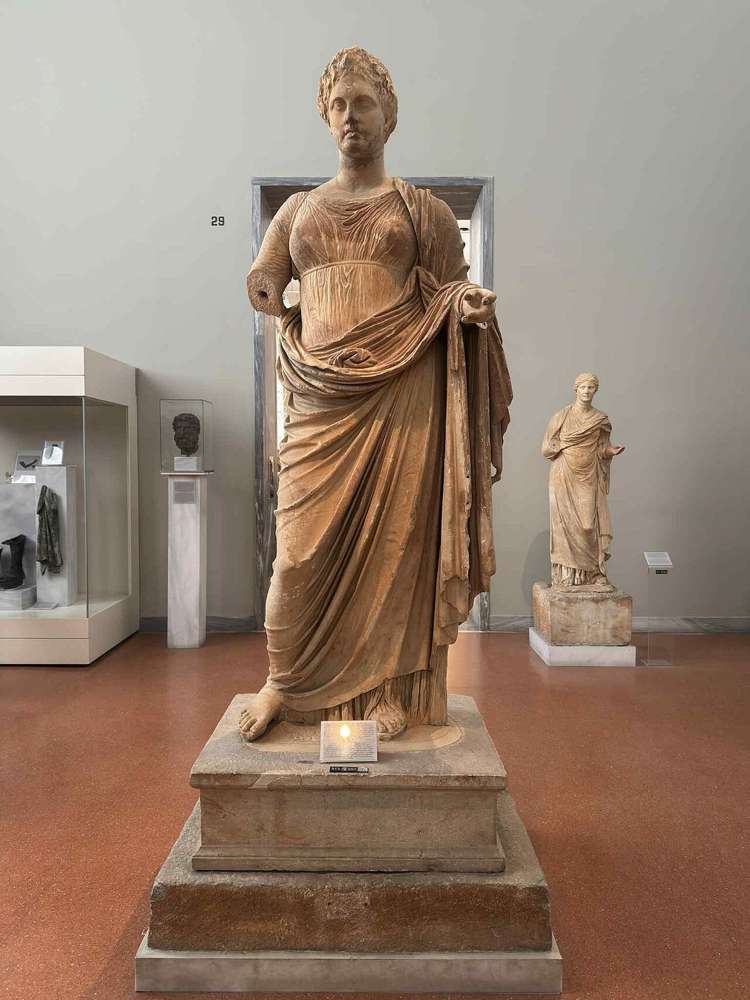
Furius, CC0, via Wikimedia Commons

Sources
Hesiod, Theogony 223, Works and Days 197–201; Herodotus 1.34; Pausanias 1.33.2–3 and 7.5.2–3.
Quotations in public-domain translations (Evelyn-White 1914, Butler 1898/1900, Taylor 1792); other authors paraphrased.