Melampous is the founder of a great family of seers. The Odyssey introduces his descendant Theoklymenos as one who “was descended from Melampus, who used to live in Pylos, the land of sheep; he was rich and owned a great house, but he was driven into exile by the great and powerful king Neleus” (Odyssey 15.225–228, tr. Butler).
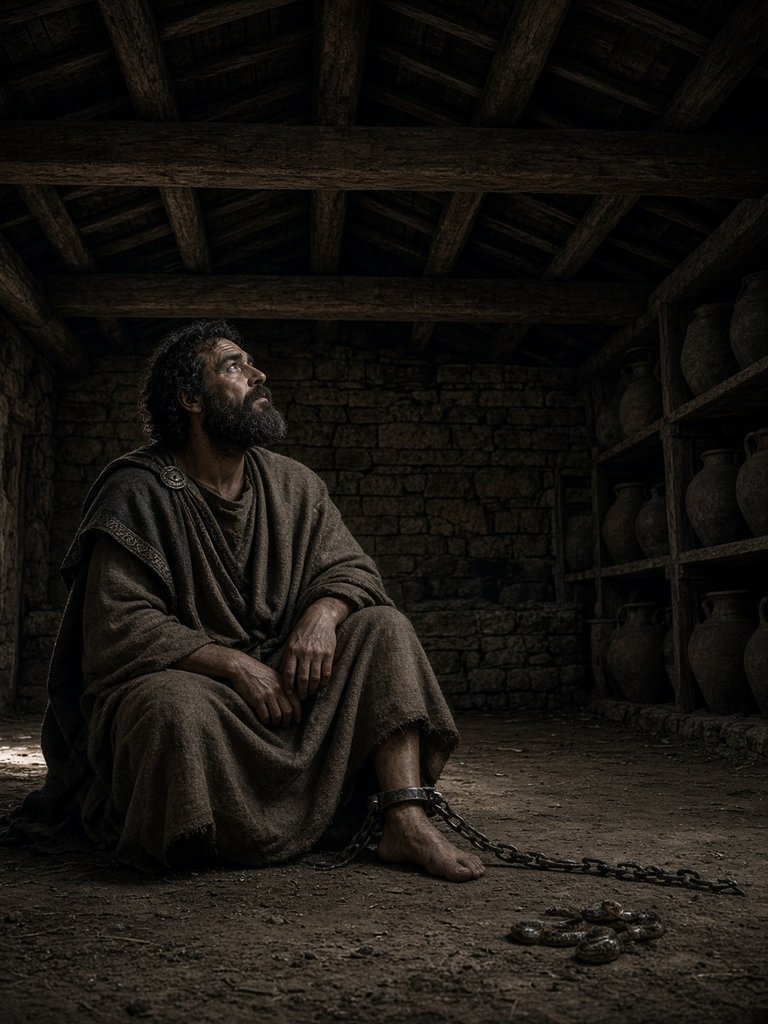
To win the daughter of Neleus as wife for his brother Bias, he went to fetch the cattle of Iphiklos from Phylake, was caught, and was kept a year as a close prisoner before his prophecies won his release and the herd (Odyssey 11.287–297, 15.229–238, paraphrased). Apollodorus tells that snakes he had raised licked his ears clean while he slept, so that he understood the voices of birds and creatures; in prison he heard the woodworms say the roof beam was nearly eaten through, and asked to be moved just before it fell (Apollodorus 1.9.11–12, paraphrased).
He cured the daughters of Proitos, king of Tiryns, of the madness sent on them by the gods, and won a share of the kingdom of Argos for himself and his brother (Herodotus 9.34; Apollodorus 2.2.2, paraphrased). Herodotus says he taught the Greeks the rites of Dionysos (Herodotus 2.49, paraphrased).
Epithets
- μάντις · mantis
- seer
- Ἀμυθαονίδης · Amuthaonidēs
- son of Amythaon
Symbols and virtues
Prophecy, healing and the understanding of creatures. Symbols: the serpents, the woodworms, the herd of Iphiklos.
Myths
- The cattle of Iphiklos. Odyssey 11.287–297, 15.225–242.
- The serpents and the woodworms. Apollodorus 1.9.11–12.
- The daughters of Proitos. Herodotus 9.34; Apollodorus 2.2.2.
Cult and places
- Aigosthena. Sanctuary of Melampous with a yearly festival (Pausanias 1.44.5).
In the poets
“He was descended from Melampus, who used to live in Pylos, the land of sheep; he was rich and owned a great house.”Homer, Odyssey 15.225–227, tr. Samuel Butler (1900), public domain.
Sources
Homer, Odyssey 11.287–297, 15.222–256; Herodotus 2.49, 9.34; Apollodorus 1.9.11–13, 2.2.2; Pausanias 1.44.5.
Quotations in public-domain translations (Evelyn-White 1914, Butler 1898/1900, Taylor 1792); other authors paraphrased.