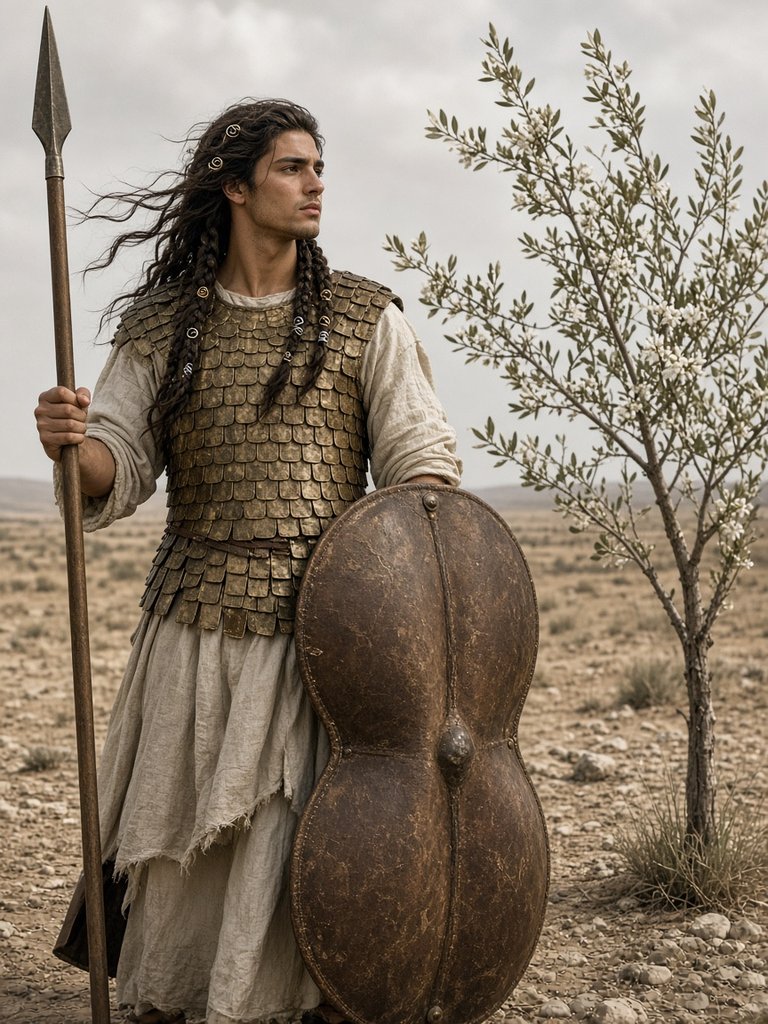
Euphorbos, son of Panthous and brother of Polydamas, is the first to wound Patroklos after Apollo has stunned him: “Euphorbus son of Panthous a Dardanian, the best spearman of his time, as also the finest horseman and fleetest runner, came behind him and struck him in the back with a spear, midway between the shoulders” (Iliad 16.806–809, tr. Butler). Then he runs back into the crowd, leaving Hektor to finish him.
He stands over the body to claim the armour, and Menelaos kills him. Homer mourns his beauty: “His hair which was like that of the Graces, and his locks so deftly bound in bands of silver and gold, were all bedrabbled with blood” (Iliad 17.51–52, tr. Butler), and compares him to a young olive tree uprooted by a storm.
The philosopher Pythagoras claimed that in a former life he had been Euphorbos, and recognised his shield hanging in the temple of Hera at Argos (Diogenes Laertius 8.4–5; Ovid, Metamorphoses 15.160–164, paraphrased).
Epithets
- Πανθοΐδης · Panthoïdēs
- son of Panthous
- ἐϋμμελίης · eümmeliēs
- of the good ash spear
Symbols and virtues
Youthful beauty cut down; the soul’s rebirth. Symbols: the silver and gold hair clasps, the olive sapling.
Myths
- Wounding Patroklos. Iliad 16.806–817.
- Death by Menelaos. Iliad 17.1–60.
- Pythagoras’ earlier life. Diogenes Laertius 8.4–5.
Cult and places
- Argos. His shield was shown in the Heraion (Diogenes Laertius 8.5; Pausanias 2.17.3).
In the poets
“His hair which was like that of the Graces, and his locks so deftly bound in bands of silver and gold, were all bedrabbled with blood.”Homer, Iliad 17.51–52, tr. Samuel Butler (1898), public domain.
Sources
Homer, Iliad 16.806–817, 17.1–60; Diogenes Laertius 8.4–5; Ovid, Metamorphoses 15.160–164; Pausanias 2.17.3.
Quotations in public-domain translations (Evelyn-White 1914, Butler 1898/1900, Taylor 1792); other authors paraphrased.