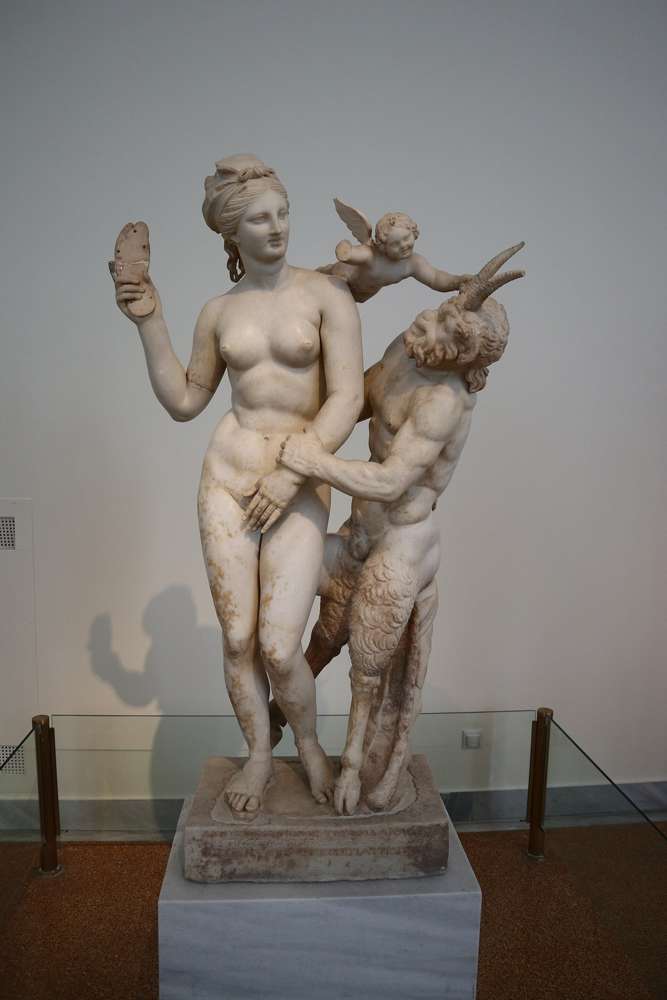
George E. Koronaios, CC0, via Wikimedia Commons

Eros came into being at the beginning, with Earth and Tartaros, “fairest among the deathless gods, who unnerves the limbs and overcomes the mind and wise counsels of all gods and all men” (Theogony 120–122). He went with Aphrodite at her birth (Theogony 201–202). In the Orphic account sung by Aristophanes’ birds he hatched golden-winged from the egg of Night (Birds 693–699). For Plato’s Diotima he is a great spirit between gods and mortals, the longing that leads the soul from beautiful bodies to Beauty itself (Symposium 202d–212a).
Epithets
- Λυσιμελής · Lysimeles
- loosener of limbs (Theogony 121; Sappho fr. 130)
- Γλυκύπικρος · Glykypikros
- bittersweet (Sappho fr. 130)
- Πρωτόγονος · Protogonos
- first-born, in the Orphic poems
Domains and symbols
Desire and the union of opposites; friendship; the soul’s longing for beauty. Admire: love that ascends. Sacred symbols: wings, the bow and arrows, the torch, the rose.
Myths
- First of the gods. He arose after Chaos, Earth and Tartaros (Theogony 116–122).
- The egg of Night. Night laid a wind-egg in the depths of Erebos, and from it Eros sprang with golden wings (Aristophanes, Birds 693–699).
- The ladder of love. Diotima teaches Socrates to climb from one beautiful body to all, to beautiful souls, laws and knowledge, and at last to Beauty itself (Plato, Symposium 210a–212a).
Cult sites
- Thespiai. His oldest image was an unwrought stone; Praxiteles’ marble Eros stood there too (Pausanias 9.27.1–3). The Erotidia were held there every four years (Plutarch, Amatorius 748f).
- The Academy, Athens. An altar of Eros stood before the entrance (Pausanias 1.30.1).
Festivals
- Erotidia. At Thespiai, every fourth year.
Offerings
Roses, honey, sweet cakes and incense. Today: offer flowers on behalf of a friendship or a marriage.
Beneath the Divine Mind
Eros is the Divine Mind as longing: the pull that draws every being back toward its source, personified and deified as the first-born god. Plotinus calls the soul’s love for the Good its true Eros (Enneads VI.7.22, VI.9.9). Like every god he stands beneath the One (The One and the Many), and his road is the path to henosis.
Honouring Eros today
- Altar. A rose, a torch or candle.
- Offerings. Honey and flowers.
- Reading. Read Diotima’s speech in the Symposium.
- Hymn. Recite the Orphic hymn below.
Hymn
I call great Eros, source of sweet delight, holy and pure, and lovely to the sight; darting, and wing’d, impetuous fierce desire, with Gods and mortals playing, wand’ring fire.Orphic Hymn 58, To Eros, 1–4. Tr. Thomas Taylor (1792), public domain; divine names as given on Hemera.
Images
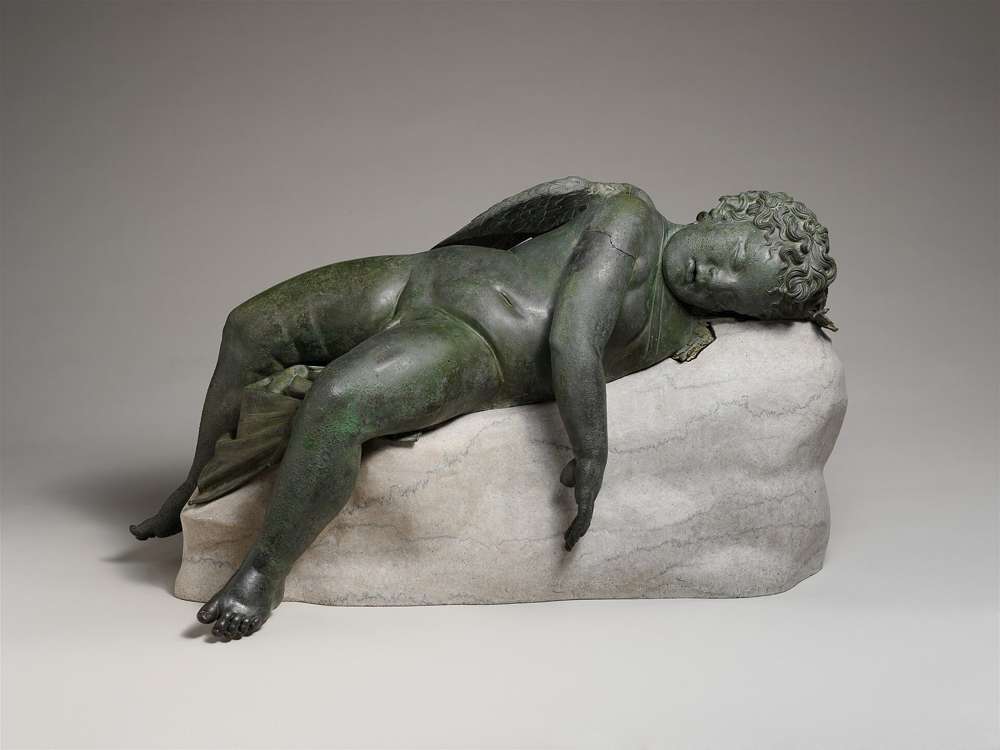
Metropolitan Museum of Art, CC0, via Wikimedia Commons

Sources
Hesiod, Theogony 116–122, 201–202; Sappho fr. 130; Aristophanes, Birds 693–699; Plato, Symposium 178b, 202d–212a; Plotinus, Enneads VI.7.22 and VI.9.9; Orphic Hymn 58; Pausanias 1.30.1 and 9.27.1–3; Plutarch, Amatorius 748f.
Quotations in public-domain translations (Evelyn-White 1914, Butler 1898/1900, Taylor 1792); other authors paraphrased.