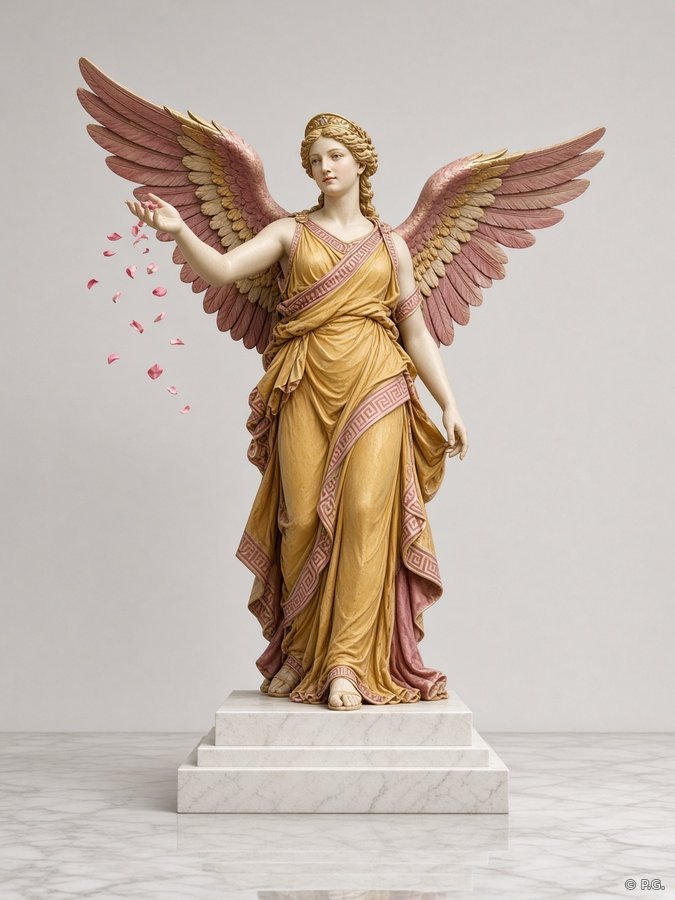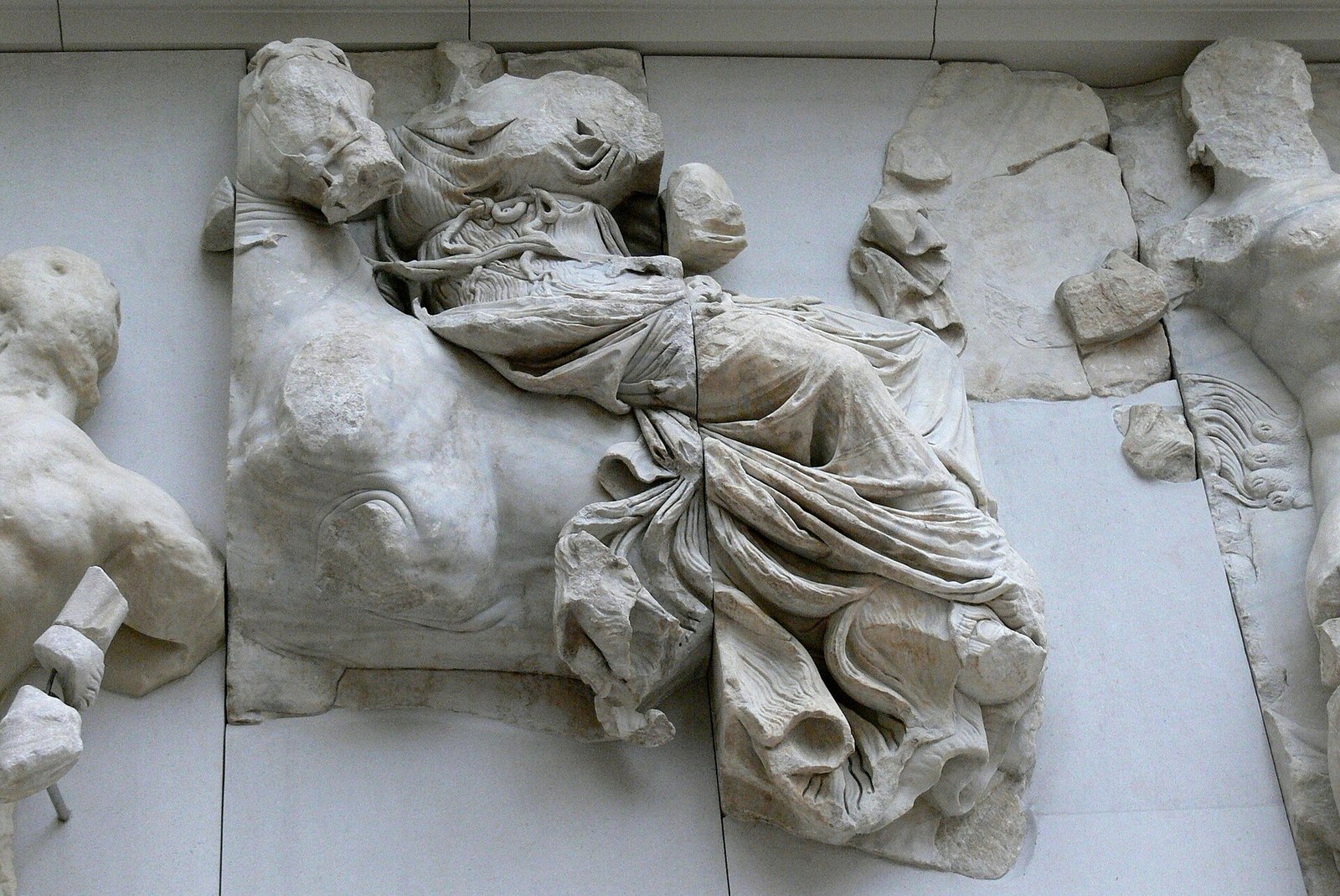
Eos, the Dawn, daughter of Hyperion and Theia, brings light to gods and men (Theogony 371–374). To Astraios she bore the winds and the stars (Theogony 378–382); to Tithonos, Memnon and Emathion (Theogony 984–985). Homer opens day after day with her: “when early-born rosy-fingered Dawn appeared”.
Epithets
- Ῥοδοδάκτυλος · Rhododaktylos
- rosy-fingered (Homer, passim)
- Κροκόπεπλος · Krokopeplos
- saffron-robed (Iliad 8.1)
- Ἠριγένεια · Erigeneia
- early-born (Odyssey 2.1)
Domains and symbols
The dawn and every new beginning; the waking of labour; grief for the lost young. Admire: diligence, hope. Sacred symbols: wings, the saffron robe, the chariot of the morning.
Myths
- Tithonos. She asked Zeus to make her lover Tithonos deathless, but forgot to ask that he stay young (Homeric Hymn to Aphrodite 218–238).
- Memnon. Her son Memnon, “the glorious son of bright Dawn”, came to fight at Troy (Odyssey 4.187–188); in the lost Aithiopis Achilles killed him and Eos won him immortality (Proclus, Chrestomathy).
- Orion. She took Orion for her lover, and the gods grudged it (Odyssey 5.121–124).
Offerings
Saffron, flowers and frankincense at first light. Today: greet the dawn before beginning the day’s work.
Beneath the Divine Mind
Eos is the Divine Mind as beginning: the first light before the sun, personified and deified as the Dawn. Like every god she stands beneath the One (The One and the Many).
Honouring Eos today
- Dawn. A short prayer at first light.
- Offerings. Saffron, flowers, frankincense.
- Hymn. Recite the Orphic hymn below.
Hymn
Hear me, O Goddess! whose emerging ray leads on the broad refulgence of the day; blushing Eos, whose celestial light beams on the world with red’ning splendours bright.Orphic Hymn 78, To Eos, 1–4. Tr. Thomas Taylor (1792), public domain; divine names as given on Hemera.
Images
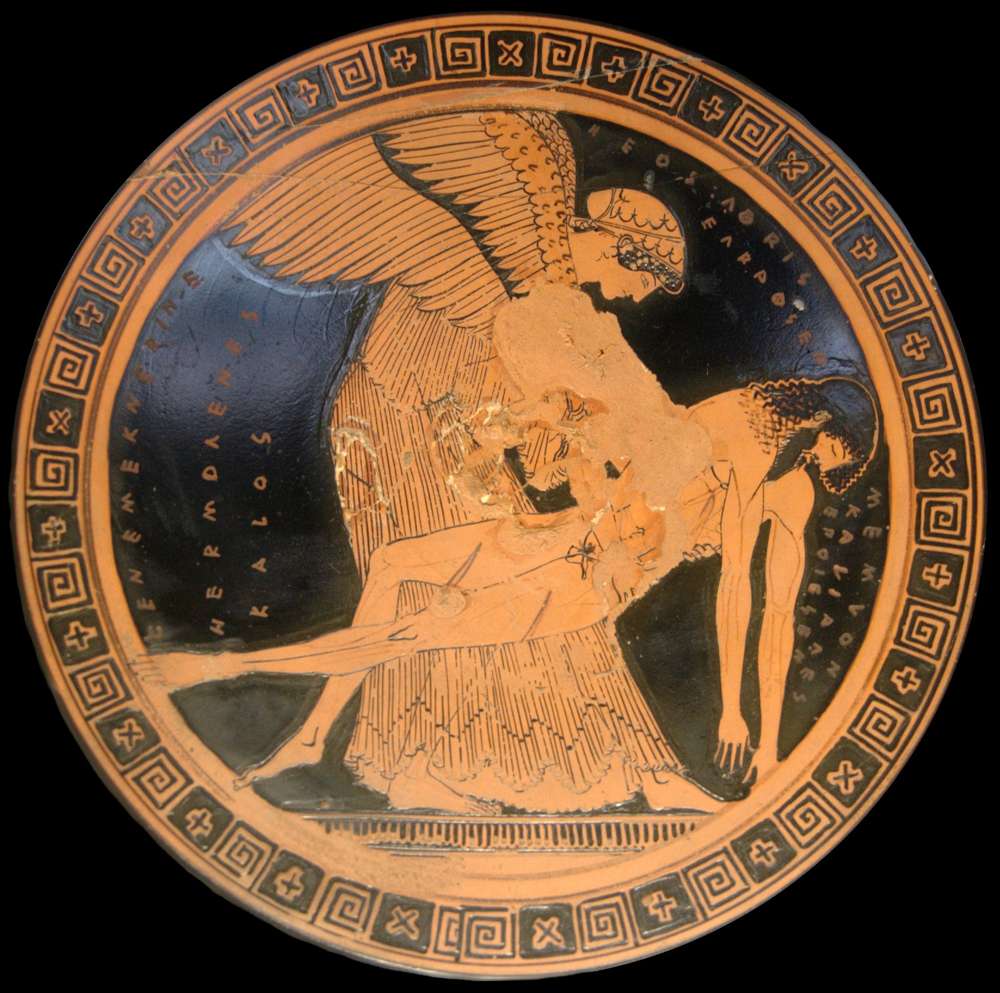
Signed by Douris (painter) and Kalliades (potter), Public domain, via Wikimedia Commons

Sources
Hesiod, Theogony 371–382, 984–987; Homer, Iliad 8.1, Odyssey 2.1, 4.187–188, 5.121–124; Homeric Hymn to Aphrodite 218–238; Orphic Hymn 78.
Quotations in public-domain translations (Evelyn-White 1914, Butler 1898/1900, Taylor 1792); other authors paraphrased.