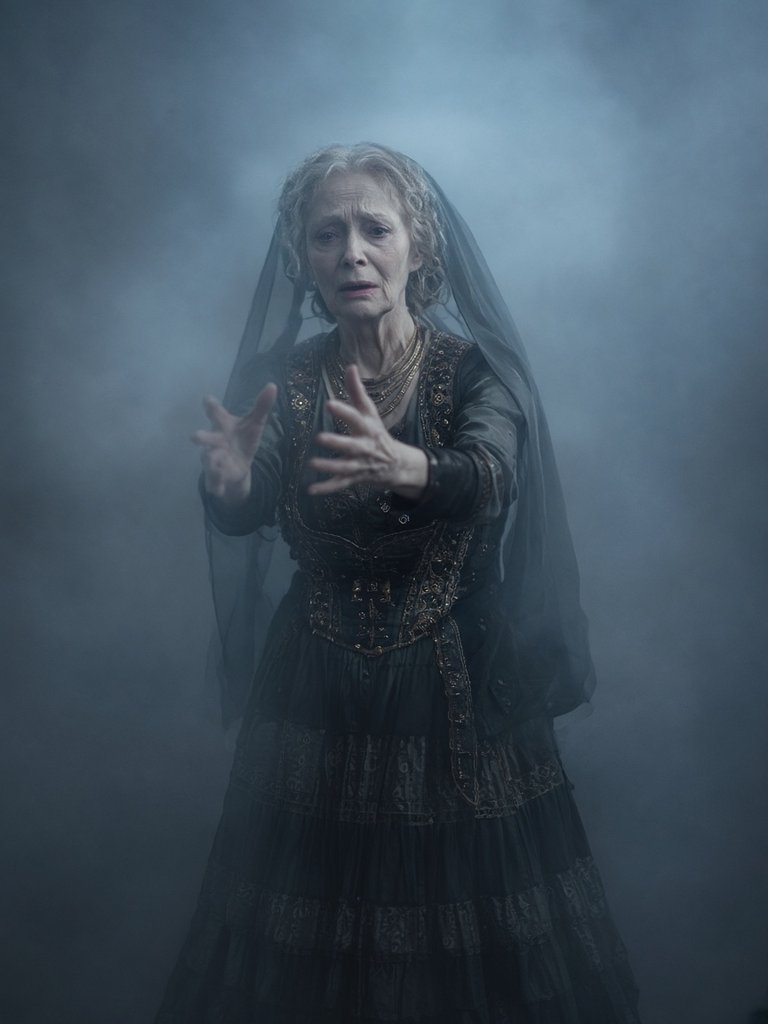
Antikleia, daughter of Autolykos and wife of Laertes, is the mother of Odysseus. Her father named the baby Odysseus when he visited Ithaka at his birth (Odyssey 19.399–412, paraphrased). She was alive when Odysseus sailed for Troy, but he finds her among the dead: “Then came the ghost of my dead mother Anticlea, daughter to Autolycus. I had left her alive when I set out for Troy and was moved to tears when I saw her” (Odyssey 11.84–87, tr. Butler).
After he has heard Teiresias, she drinks the blood and knows him. She gives him news of home, of Penelope, Telemachos and the grieving Laertes, and tells how she died: “my longing to know what you were doing and the force of my affection for you—this it was that was the death of me” (Odyssey 11.202–203, tr. Butler).
Three times Odysseus tries to embrace her, and three times she slips from his arms like a dream. She explains that this is the way of the dead once the fire has consumed the body (Odyssey 11.204–224, paraphrased).
Epithets
- Αὐτολύκου θυγάτηρ · Autolukou thugatēr
- daughter of Autolykos
- μήτηρ Ὀδυσσῆος · mētēr Odussēos
- mother of Odysseus
Symbols and virtues
A mother’s love stronger than death. Symbols: the veil, the shade that cannot be held.
Myths
- Naming of Odysseus. Odyssey 19.399–412.
- Among the dead. Odyssey 11.84–89.
- News of home. Odyssey 11.152–203.
- The failed embrace. Odyssey 11.204–224.
In the poets
“My longing to know what you were doing and the force of my affection for you—this it was that was the death of me.”Homer, Odyssey 11.202–203, tr. Samuel Butler (1900), public domain.
Sources
Homer, Odyssey 11.84–89, 11.152–224, 15.353–360, 19.399–412.
Quotations in public-domain translations (Evelyn-White 1914, Butler 1898/1900, Taylor 1792); other authors paraphrased.