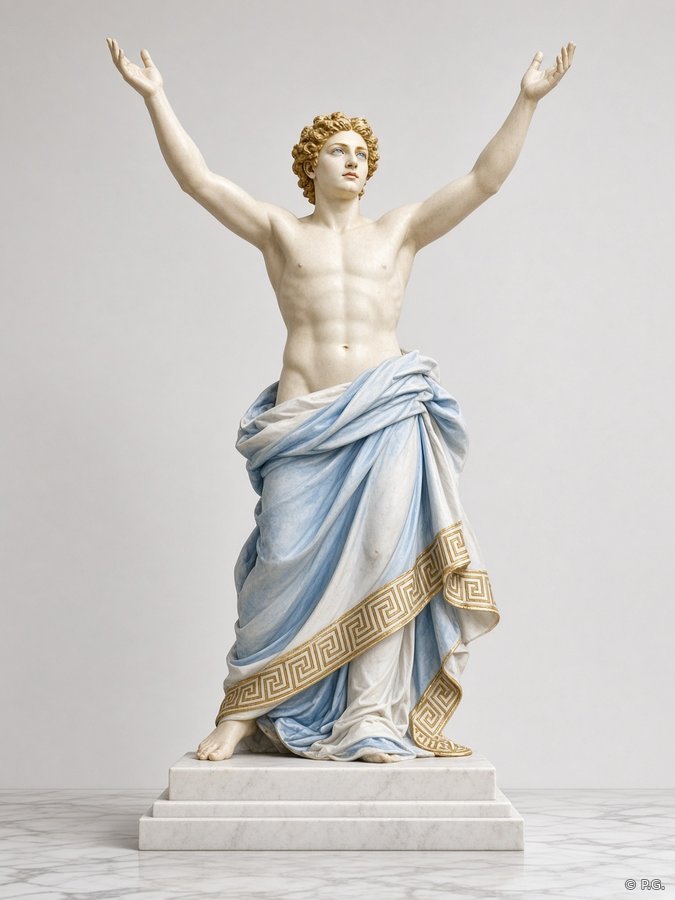
Miguel Hermoso Cuesta, CC BY-SA 4.0, via Wikimedia Commons

Aither is the bright, pure upper air above the clouds, the air the gods breathe. He is the son of darkness: “of Night were born Aether and Day, whom she conceived and bare from union in love with Erebus” (Theogony 124–125). Light thus comes out of darkness, and Hesiod sets Aither and Hemera (Day) together as the bright children of the night.
Zeus himself dwells there: Agamemnon prays to him as the god of the dark clouds “dwelling in the aither” (αἰθέρι ναίων, Iliad 2.412). In a fragment of Euripides a speaker points to the boundless aither on high that holds the earth in its embrace, and calls it Zeus (fragment 941). The Orphic hymns honour Aither as the fiery, life-giving element, “the world’s best element” (Orphic Hymn 5).
Epithets
- Αἰθήρ · Aither
- the bright upper air
- Ὑψιφανής · Hypsiphanes
- shining on high (Orphic Hymn 5.4)
Domains and symbols
The upper air and its light, purity, the dwelling of the gods. Admire: clarity, a clean mind. Sacred symbols: the bright sky, rising incense; saffron, the fumigation of his Orphic hymn.
Myths
- Child of Night and Erebos. With his sister Hemera (Theogony 124–125).
- The dwelling of Zeus. Zeus “dwelling in the aither” (Iliad 2.412).
- Fire of the cosmos. Called the fire that rules on high in the Orphic hymn (Orphic Hymn 5).
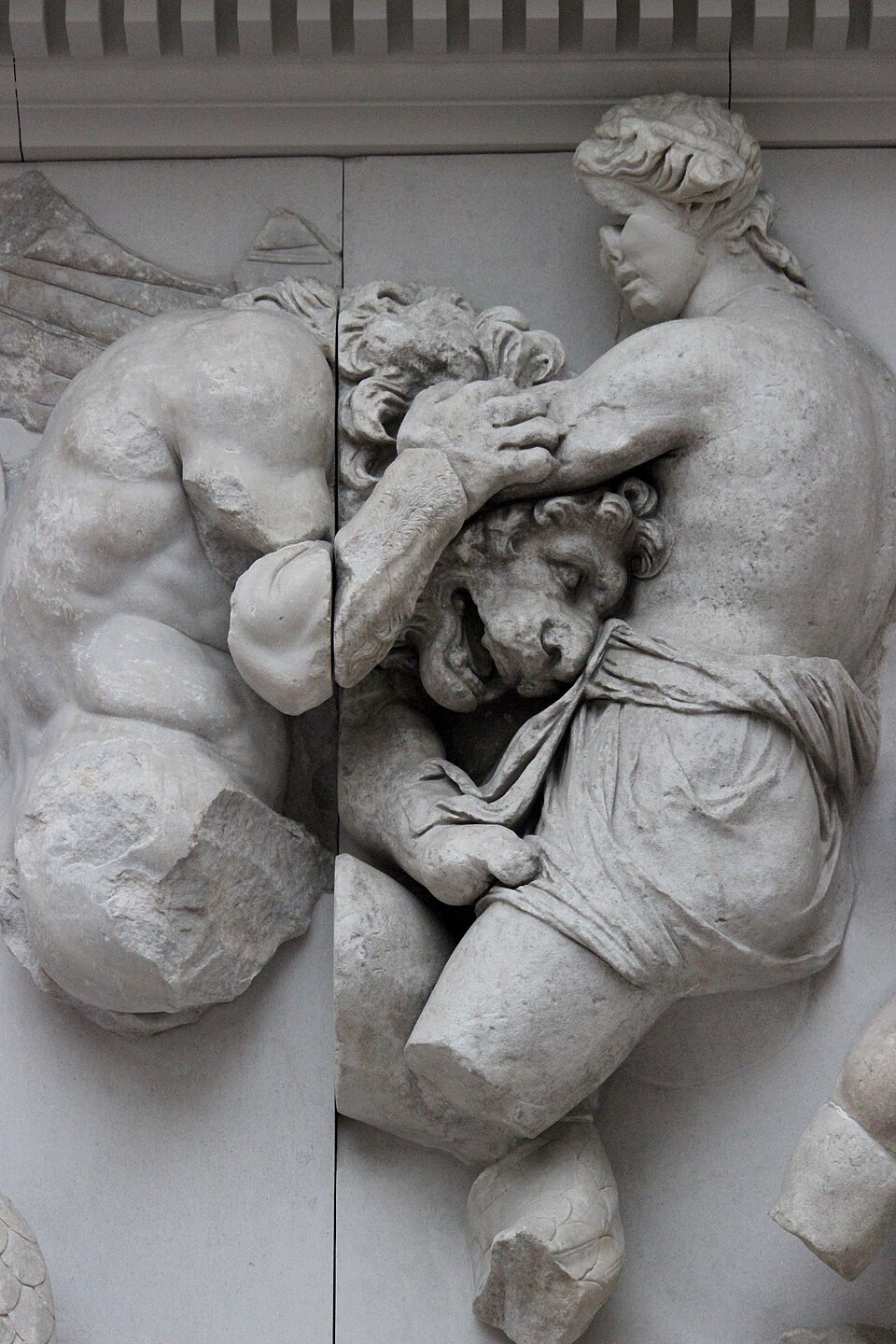
- Against the Giants. A god identified as Aither fights on the Pergamon Altar.
Offerings
Saffron, the fumigation of his Orphic hymn. Today: incense rising in clear air.
Beneath the Divine Mind
Aither is the Divine Mind as purity: the air above the clouds where the gods are said to live. The soul that rises is said to become light and clear as aither. Like every god he stands beneath the One (The One and the Many).
Honouring Aither today
- Incense. Burn saffron or frankincense and watch the smoke rise.
- Clarity. Spend a moment under the open sky.
- Hymn. Recite the Orphic hymn below.
Hymn
O Ever untam'd Fire, who reign'st on high in Zeus' dominions ruler of the sky; The glorious sun with dazzling lustre bright, and moon and stars from thee derive their light.Orphic Hymn 5, To Fire (Aither), 1–4. Tr. Thomas Taylor (1792), public domain; divine names as given on Hemera.
Sources
Hesiod, Theogony 124–125; Homer, Iliad 2.412; Euripides, fragment 941 (Nauck); Orphic Hymn 5; Great Altar of Pergamon, south frieze.
Quotations in public-domain translations (Evelyn-White 1914, Butler 1898/1900, Taylor 1792); other authors paraphrased.